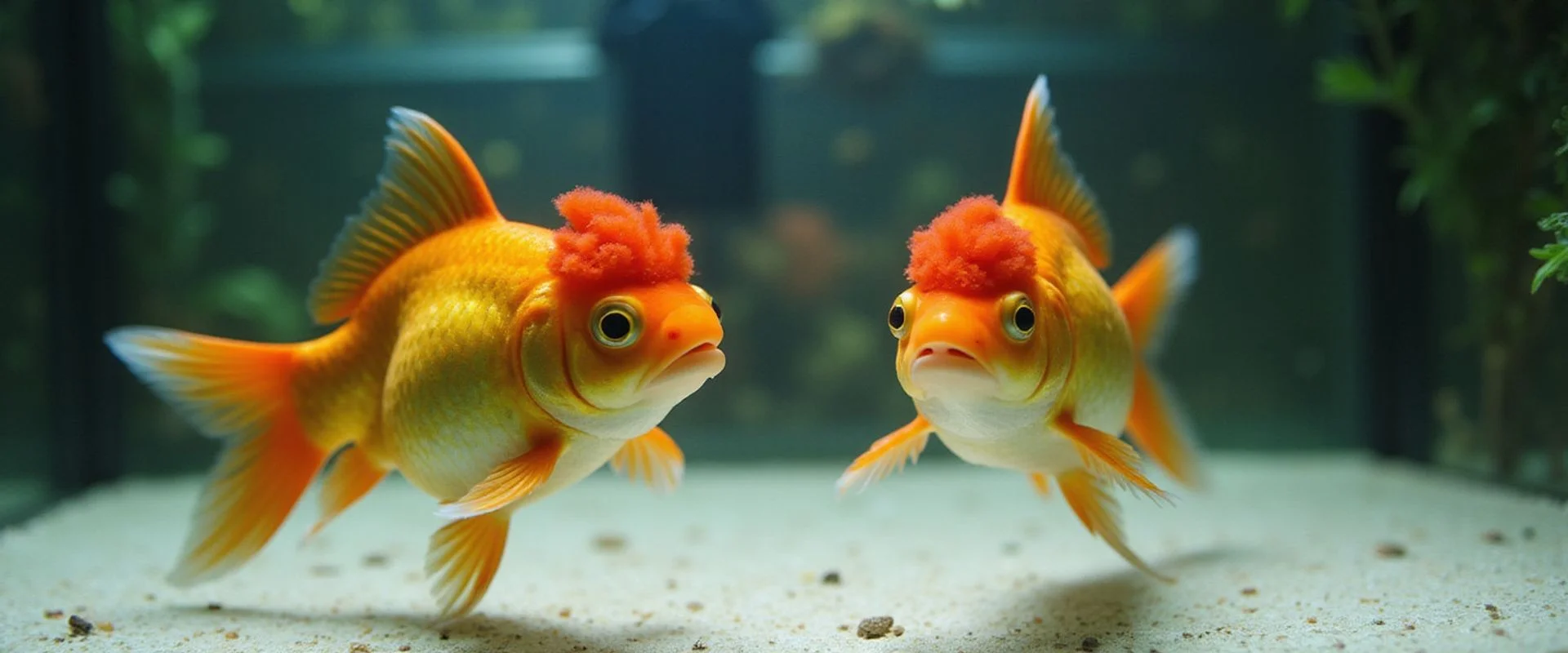
Why Goldfish Need Much Bigger Tanks Than You Think
The 1-gallon-per-inch rule is a lie. Real goldfish tank-size requirements, by species and lifespan.
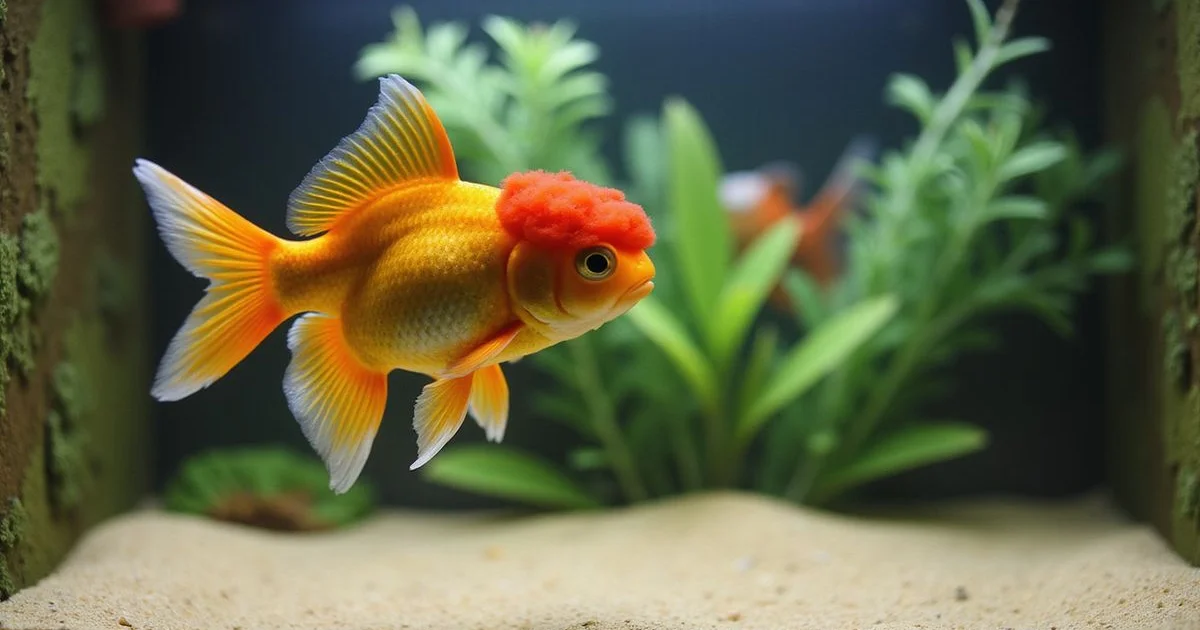
We get this question every week, and it’s one of the most important for any new fish owner. You’ve brought home a goldfish, maybe from a carnival or a pet store, and want to give it a good life.
The honest answer is that your new friend needs far more space than most people think. That tiny bowl or small starter kit just isn’t going to work.
So, let’s go over the real numbers for goldfish tank size, explain why the classic goldfish bowl is so harmful, and show you exactly what’s needed for a healthy, long-lived pet.
The actual numbers
The right goldfish tank size depends entirely on the type of goldfish. There are two main categories: fancy, double-tailed goldfish and single-tailed, common goldfish. Their needs are very different.
Our minimum recommendations line up with what most experienced aquarists suggest.
| Goldfish type | Adult size | Minimum tank |
|---|---|---|
| Single fancy (oranda, ranchu, ryukin, telescope) | 6-8 inches | 30 gallons |
| Each additional fancy | +10 gallons | |
| Common, comet, shubunkin | 10-12+ inches | Outdoor pond, 200+ gallons |
| Koi | 18-24+ inches | Outdoor pond, 1,000+ gallons |
Why the bowl kills
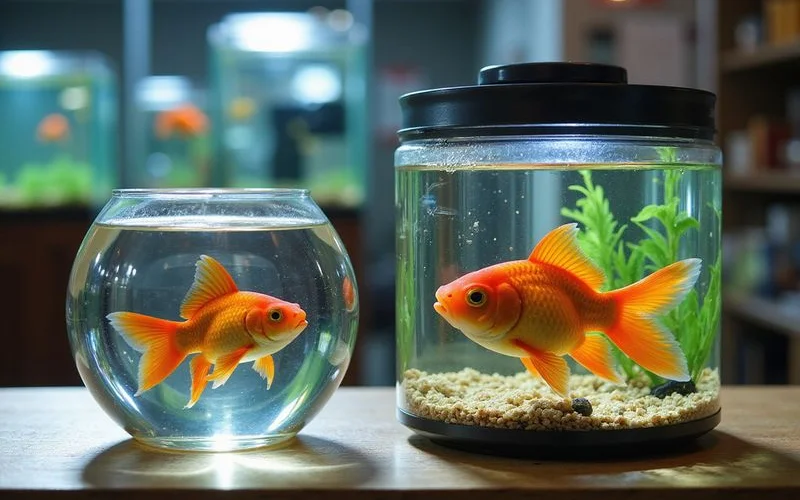
A 1-gallon goldfish bowl is not a suitable home, not even for a short time. The issues are severe and create a fatal environment for the fish.
Here are the three main problems:
- No filter. Goldfish are heavy waste producers. Without a filter, toxic ammonia from their waste builds up. Even at levels as low as 0.25 parts per million (ppm), ammonia can be toxic and cause lasting damage. In a small bowl, these levels can spike within hours.
- No oxygenation. A bowl has very little surface area, which limits the oxygen exchange between the air and water. Goldfish have a high need for dissolved oxygen, and a bowl simply can’t provide enough for them to breathe properly.
- Volume is too small. The tiny volume of water has no buffer. Water temperature can swing wildly, and waste concentrates to deadly levels almost immediately. Daily water changes aren’t enough to counteract this instability.
A fish in a bowl often dies within months from ammonia poisoning, oxygen starvation, or organ failure. The bowl might get the fish home, but it can’t sustain its life.
The “fish grow to tank size” myth
You may have heard that a goldfish will only grow to the size of its tank. This is a dangerous myth based on a misunderstanding of what is actually happening.
A fish in a tank that’s too small isn’t staying small because it’s healthy. It’s because its growth is stunted. This stunting is caused by a combination of stress, poor water quality, and the buildup of their own growth-inhibiting hormones.
While the fish’s external body and skeleton may stop growing, its internal organs do not. This leads to compression, organ damage, and ultimately, a painful and shortened life. A goldfish that “stays small” is a fish that is slowly dying.
What 30 gallons gets you
Providing the proper goldfish tank size makes a huge difference in lifespan. A single fancy goldfish in a well-filtered 30-gallon tank can live for 10 to 15 years, and some live much longer. A goldfish named Tish, won at a fair in 1956, lived to be 43 years old.
Compare that to the few months a fish might survive in a bowl.
A larger volume of water is more stable. It dilutes waste more effectively, holds a steadier temperature, and provides room for a healthy biological filter to establish. For two fancy goldfish, we recommend moving up to a 40 or 50-gallon tank. For three, a 60-gallon tank is a good starting point. When it comes to goldfish, bigger is always better.
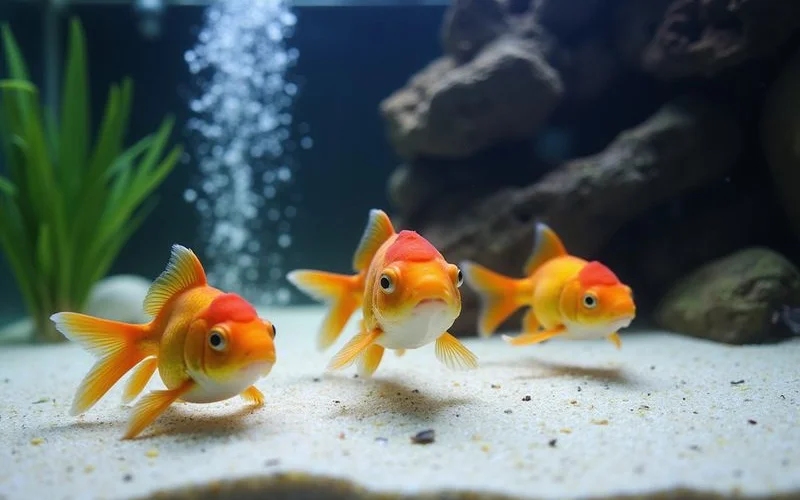
Equipment for a goldfish tank
Getting the right equipment is just as important as the tank itself. Goldfish have specific needs due to their high waste output and oxygen requirements.
- Filter rated 8 to 10x tank turnover. Because goldfish are so messy, you need powerful filtration. A filter should turn over the total volume of the tank at least four to ten times per hour. For a 30-gallon tank, an AquaClear 110 hang-on-back (HOB) filter is a great choice. For tanks over 50 gallons, we recommend a canister filter like a Fluval or Eheim for more capacity.
- Air stone. An air stone connected to an air pump increases water circulation and boosts oxygen levels, which is critical for goldfish.
- Sand or smooth gravel substrate. Goldfish love to forage in the substrate. To prevent injury to their delicate fins and mouths, use sand or smooth, rounded gravel. Avoid sharp or small gravel that could be swallowed.
- No heater needed. Goldfish are coldwater fish and are comfortable at typical room temperatures between 65 to 75°F.
- Hardy live plants. Soft-leafed plants will likely be eaten. Hardy species like Anubias and Java Fern are tough enough to survive with goldfish.
Pond fish are pond fish
It’s a simple rule we follow. Common goldfish, comets, and shubunkins are pond fish. They are athletic swimmers that can easily grow over a foot long. A young comet goldfish can grow an inch a year, and sometimes much faster in their first year. Koi grow even larger.
These fish get too big for any standard indoor aquarium. If you want to keep comets or koi, you need an outdoor pond to give them the space they require to live a full, healthy life.
We sell pond fish seasonally in the spring and early summer. Our team does not install ponds, but if you’re planning one, see our guide on koi vs goldfish for Sarasota ponds and we can offer a referral to a trusted local installer.
What we’d put in a starter goldfish tank
For someone new to goldfish, we recommend a setup that is simple, effective, and provides a great home.
A 30-gallon aquarium kit is an excellent start for one oranda or ranchu goldfish. We would equip it with a sand substrate, an AquaClear 70 HOB filter, and a properly sized air stone. A few hardy plants attached to driftwood, like Anubias, would complete the setup. The total cost for equipment would be around $250, plus the cost of the fish itself, which can range from $25 to $80 for a quality fancy goldfish.
You can Browse our goldfish stock online to see what we have available. Or, come into the store and our team will help you put together a setup that ensures your new pet has a long, healthy life. That little cup from the big-box store isn’t a starter home, it’s an ending.