Have you ever looked at your aquarium and just had a feeling that something was a little off?
We see it all the time. That’s exactly why we offer free water testing on every single visit, with no purchase required.
Our team believes the best way to keep an aquarium thriving is to understand what’s happening inside it. Reading the test results with you, right here at the counter, is the fastest way we can help you learn the nitrogen cycle and build a stable, healthy tank for the long haul.
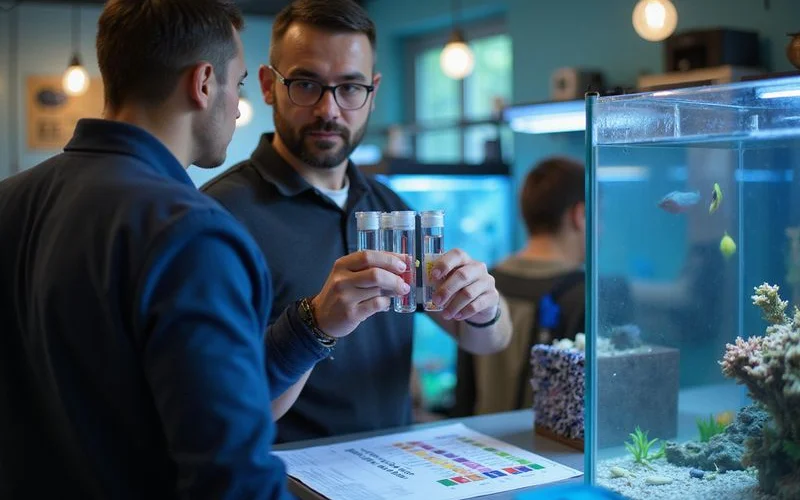
How to bring us a sample:
Getting an accurate reading starts with a good sample. For the most reliable results, try to take the water sample right before a scheduled water change, not immediately after. This gives us a true snapshot of what’s happening in your tank.
Here’s a quick checklist for you:
- Bring at least 100ml (about half a cup) in a clean, sealed container. A rinsed yogurt cup or a small food storage container works perfectly.
- Pull the water from the middle of the tank, away from the surface or substrate.
- Make sure your tank lights have been on for a little while before you take the sample.
- Water chemistry can change over time, so please bring the sample in within a few hours of collecting it.
And for our saltwater clients, there’s no need for a separate sample. We can measure salinity and all other parameters from the same container.
What we test:
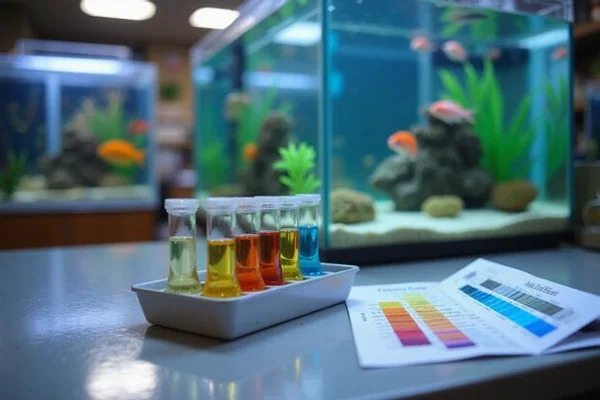
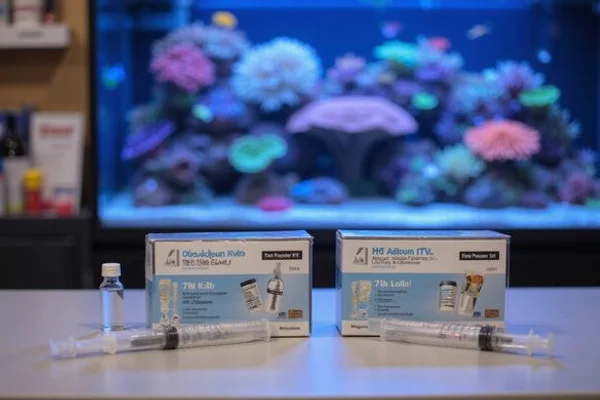
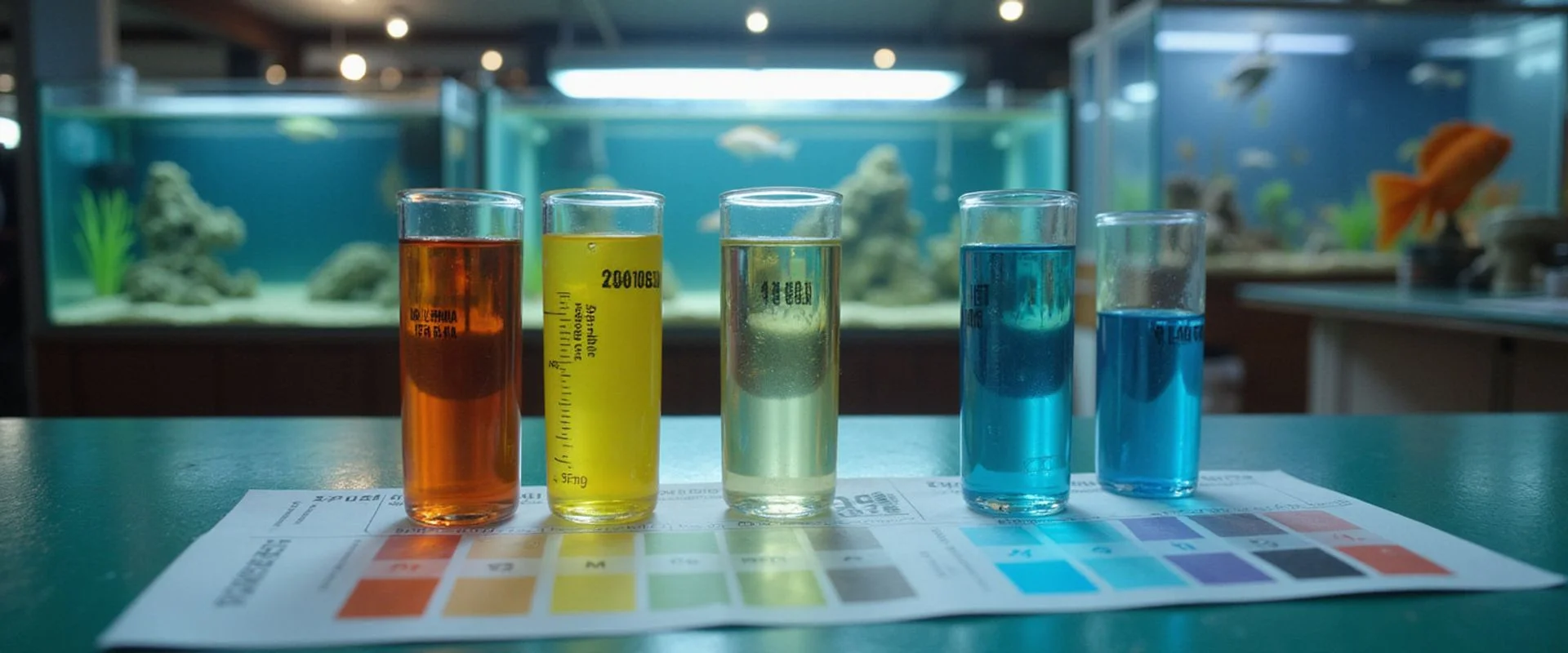
We use professional-grade test kits, like the ones from API and Salifert, to give you precise readings. This helps you get a much clearer picture than some basic home kits might provide.
Here’s a breakdown of what we check for and, more importantly, what it means for your fish.
Freshwater:
- Ammonia: This is the number one killer of aquarium fish and should always be at 0 ppm. It’s produced by fish waste and uneaten food.
- Nitrite: Also highly toxic, nitrite appears when a tank’s biological filter is just starting to establish. Like ammonia, this should be 0 ppm.
- Nitrate: The end product of the nitrogen cycle. It is much less toxic, but high levels (above 40 ppm) can stress fish and fuel algae growth.
- pH: This measures how acidic or alkaline your water is. Most freshwater community fish are happy in a range of 6.8 to 7.8.
- KH (Carbonate Hardness): Think of KH as a buffer that keeps your pH stable. Low KH can lead to sudden, dangerous pH swings.
- Phosphate: Often introduced through fish food or tap water, high phosphate levels are a primary cause of stubborn algae blooms.
Saltwater (adds):
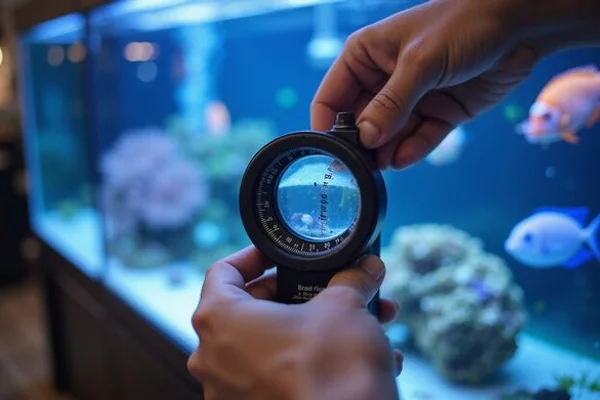
- Specific Gravity (Salinity): We use a calibrated digital refractometer to get an exact reading of the salt level, which is crucial for marine life.
- Alkalinity: This is tied to KH and is vital for stabilizing pH in a reef tank.
- Calcium & Magnesium: These two elements are essential building blocks for coral skeletons and healthy growth.
If you want to understand the chemistry behind these numbers, our guide on the nitrogen cycle explained for beginners is the perfect place to start.
For those of you setting up a brand-new tank and needing a daily testing routine, we have specific walkthroughs for cycling your first freshwater tank and for cycling a saltwater aquarium.
Our experience over the years has shown a clear pattern. The customers who bring in a sample weekly while their tank is cycling, and then monthly for checkups, are the ones who enjoy stable, beautiful aquariums for years.
Those who only test when a fish looks sick often face much bigger problems.
Let us help you be in the first group. Stop by anytime for a free water test.