The Nitrogen Cycle Explained for Beginners
Ammonia to nitrite to nitrate, the bacteria that drive it, and why every troubleshooting talk in our shop starts here.
When a customer comes in with sick fish, the first question we ask is “what are your water parameters?” The second, almost always, is “have you cycled the tank?” The nitrogen cycle aquarium is the absolute foundation of any healthy freshwater or saltwater system.
Our experience has shown that once you understand this process, a majority of common fishkeeping problems become much easier to diagnose and solve.
This guide will walk you through the key components of the cycle, where the helpful bacteria live, and how to protect them. We will also cover how to read your test results and keep your aquarium stable.
The three players
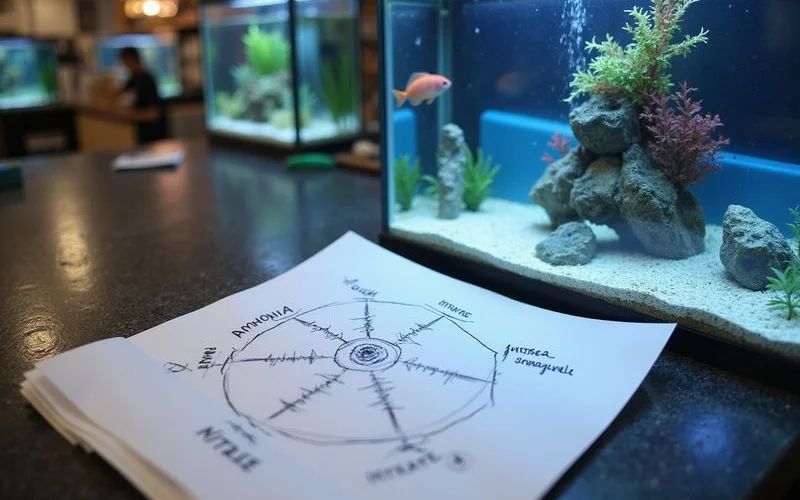
The entire nitrogen cycle is about converting toxic fish waste into a much safer compound. Fish waste and uneaten food produce ammonia (NH3), which is highly toxic and can cause gill damage and severe stress at levels as low as 0.25 parts per million (ppm).
Two main groups of beneficial bacteria perform this conversion.
- Nitrosomonas bacteria consume ammonia and produce nitrite (NO2) as a byproduct. Nitrite is also very toxic to fish, as it interferes with their ability to absorb oxygen.
- Nitrospira bacteria then consume the nitrite and produce nitrate (NO3). Nitrate is far less toxic and is managed by routine maintenance.
You remove the resulting nitrate with weekly water changes of about 25% to 30%. These bacteria do the heavy lifting for you, day in and day out, as long as their colony is healthy.
Where the bacteria live
The beneficial bacteria do not live in the water column. They colonize surfaces, primarily the biological media inside your filter, but also on gravel, rocks, plants, and the glass itself.
The vast majority, often over 90%, live in your filter, which is why your filter choice and maintenance are so important.
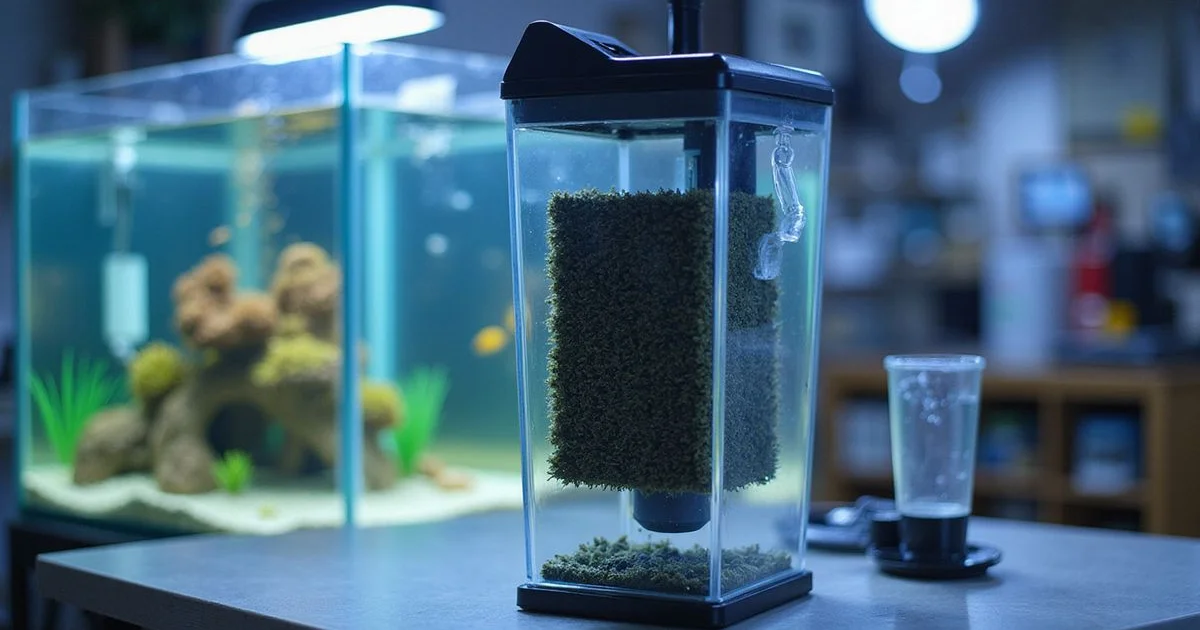
A hang-on-back or canister filter is designed to hold specific bio-media, like ceramic rings or porous sponges, that provide a home for these bacteria. The key factor is surface area. More surface area provides a home for more bacteria, which gives your tank a greater capacity to process waste.
Surface area and the role of biological filtration
Beneficial bacteria need two things to thrive: a surface to cling to and access to oxygenated water. This is why media with massive internal surface area, like the sintered glass structure of Seachem Matrix, is so effective.
Different filter media offer different levels of surface area, making them suitable for different tank sizes and bioloads.
| Media Type | Primary Use Case | Key Characteristic |
|---|---|---|
| Sponge | Small tanks, pre-filters | Excellent mechanical and biological filtration for its size. |
| Ceramic Rings | Canister & HOB filters | Good surface area, provides structure for water flow. |
| Sintered Glass | High-demand systems | Extremely porous, offering the most surface area per volume. |
| Plastic Bio-Balls | Wet/dry or trickle filters | Provides good oxygen exchange but has less surface area. |
One of the most critical rules in fishkeeping is to never replace all of your filter media at once. Doing so removes your entire bacterial colony, causing the nitrogen cycle to crash and ammonia levels to spike dangerously. We recommend rinsing media in old tank water and replacing only one piece at a time every few months.
Dechlorinators: why and when
Municipal tap water in the US contains disinfectants like chlorine or chloramine to make it safe for drinking. These chemicals are lethal to beneficial bacteria and will instantly damage fish gills.
Many water suppliers, including Sarasota’s, use chloramine because it’s more stable. It’s crucial to always use a water conditioner.
We consistently rely on two excellent products.
- Seachem Prime: This is a fantastic all-in-one conditioner. It neutralizes chlorine and chloramine and also has the unique ability to temporarily detoxify ammonia and nitrite for up to 48 hours, making it invaluable during a new cycle or an emergency. Just one capful (5ml) treats 50 gallons.
- Fritz Complete: Another reliable option that performs the same core function of removing chlorine and chloramine. You can use either one with confidence by following the dosage instructions on the bottle.
You should dose your tank every time you do a water change or top-off with tap water. There are no exceptions to this rule if you want to keep your fish and your cycle safe.
What kills your cycle
If your ammonia or nitrite levels are suddenly rising in an established tank, your cycle may be stalling or crashing. The cause is usually one of a few common issues.
- Chlorine or Chloramine: Adding untreated tap water is the fastest way to kill your bacterial colony.
- Medications: Many common fish antibiotics, such as erythromycin, can destroy your filter bacteria. We recommend using a separate hospital tank for treatment whenever possible.
- Replacing All Filter Media: As mentioned above, this removes the vast majority of your beneficial bacteria at once.
- Lack of an Ammonia Source: Bacteria need to eat. If a tank goes without fish or another ammonia source for several weeks, the colony will begin to starve and die off.
- Sudden Temperature Drops: Bacterial colonies are most active and efficient in warmer water, typically between 77-86°F. Their activity slows dramatically in cold water.
Reading test results
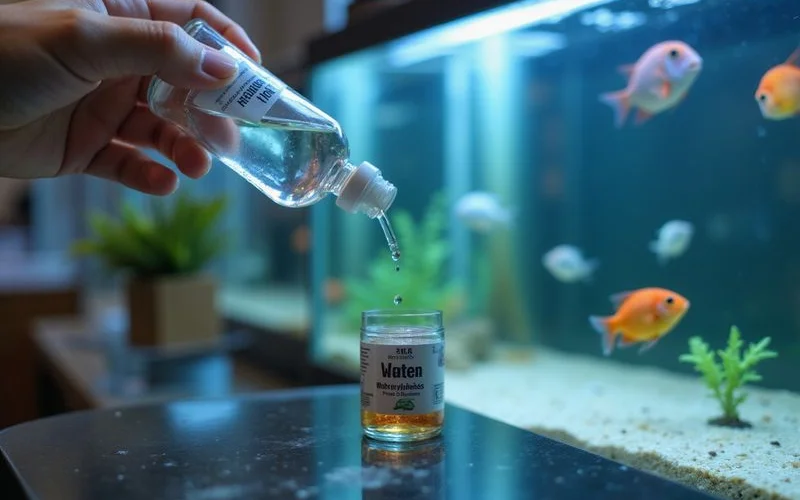
For testing, we find that liquid reagent kits provide the most accurate readings. The API Freshwater Master Test Kit is a popular and reliable choice for home aquarists.
A healthy, fully cycled, and properly stocked freshwater aquarium will consistently show the following parameters.
- Ammonia: 0 ppm
- Nitrite: 0 ppm
- Nitrate: 5 to 20 ppm
- pH: Stable
Levels for ammonia or nitrite above 0 ppm indicate a problem. This could be a new tank that isn’t finished cycling, a recent disruption to the bacterial colony, or a sign that the tank is overstocked or under-filtered. We consider nitrate levels under 40 ppm to be safe, but a water change is needed if they climb higher.
Free testing for life
We offer free water testing for life, with no purchase required. It’s part of our commitment to helping you succeed.
Bring us a sample of at least 100ml in a clean container, and we’ll run the tests for you and explain the results. You can find more details on our free water testing page.
Once your nitrogen cycle aquarium is stable, you can explore our community fish stock with confidence. Every fish we sell is quarantined for two weeks to ensure it is healthy and ready for its new home.