Best Beginner Freshwater Fish for Sarasota Families
Eight first-tank-friendly species for a Sarasota family aquarium, what works, what to skip, and the 20-gallon kit to start with.
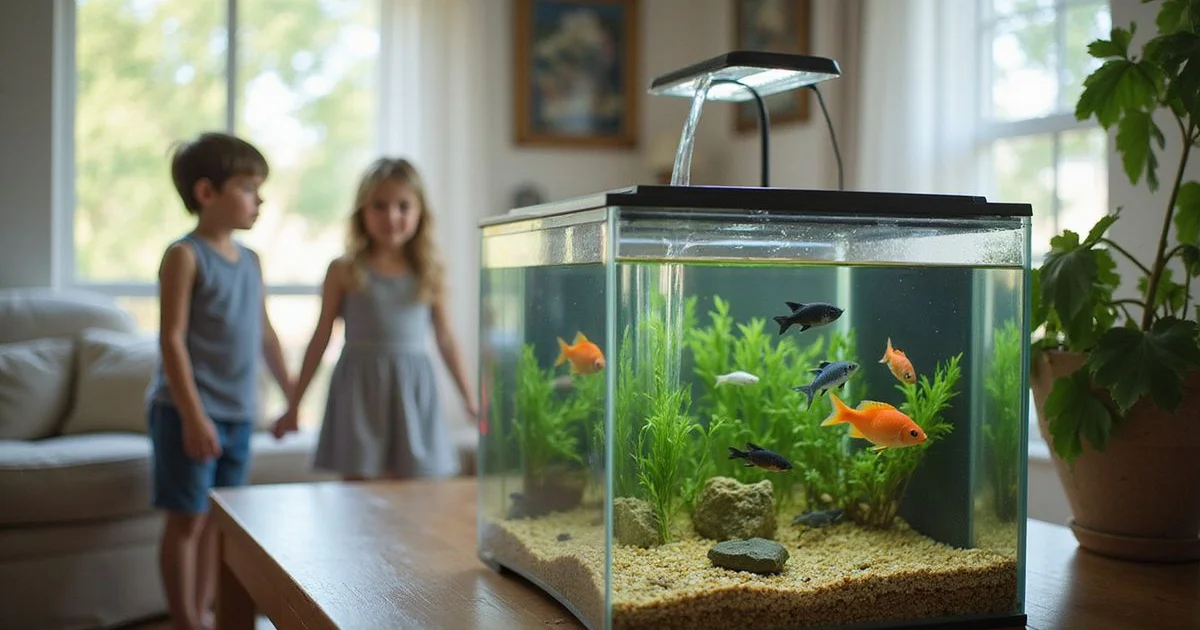
You know the feeling when you’re setting up that first family aquarium. The goal is simple: keep the fish alive long enough for the kids to stay excited about their new hobby.
Choosing the wrong fish can mean a trip back to the store in a week, trying to figure out what happened.
But if you pick the right species, you end up with a beautiful, thriving tank that becomes a centerpiece in your home, just like it did for Jennifer K.’s family over in Lakewood Ranch. We’re going to walk through the best options for a Sarasota family’s first 20-gallon community tank, making sure you start off on the right foot.
The shortlist
Here are the eight species we consistently recommend for a brand new family aquarium. They are resilient, active, and perfect for getting started.
1. Zebra danios
These are fantastic top-level swimmers that bring a ton of energy to an aquarium. Zebra danios are fast, peaceful, and incredibly hardy. They also tolerate a wider temperature range than most tropical fish, comfortably living in water from 60 to 80°F.
Our team suggests getting a school of at least six. This will encourage their natural behavior and fill the upper third of the tank with constant, fascinating motion. A 2022 study in the journal Zebrafish highlighted their complex schooling patterns, which kids find endlessly entertaining.
2. White cloud mountain minnows
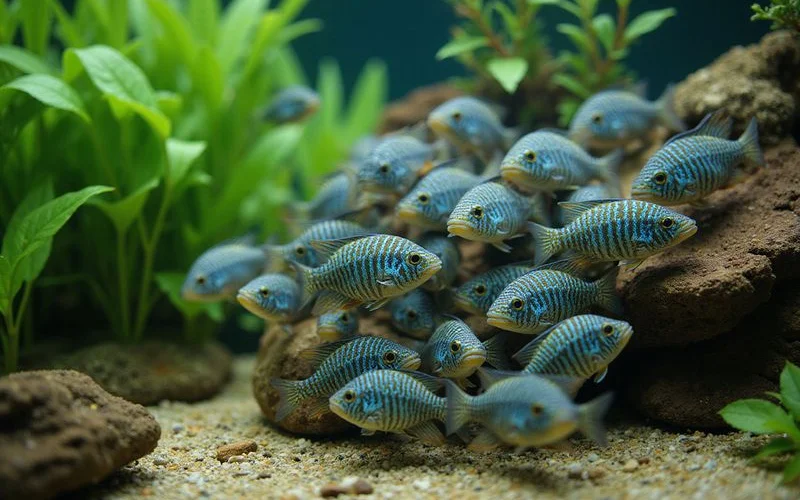
These little fish are tough, beautiful, and budget-friendly, often costing around $3 each. White cloud mountain minnows are peaceful schooling fish that are remarkably tolerant of temperature swings. This makes them a great choice for a kid’s bedroom where the air conditioning might not be perfectly consistent. Their iridescent shimmer makes them look like tiny swimming jewels.
3. Platys
Platys are a classic beginner fish for a reason. You can typically find them for $3 to $5, and they are as hardy as they come. We carry them in a dozen different color patterns, with popular varieties like the red wag, sunset, and the iconic “Mickey Mouse” platy (named for the pattern at the base of its tail).
They are livebearers, which means they give birth to free-swimming fry. Kids absolutely love watching the tiny babies appear in the tank.
4. Mollies
Mollies are another fantastic livebearer, just a bit larger than platys, usually reaching two to three inches. They have that same renowned toughness that makes them great for beginners. A school of black mollies creates a stunning contrast against a backdrop of green plants. An added bonus for us here is that they prefer slightly hard water, which is a perfect match for Sarasota’s typical tap water parameters.
5. Corydoras (peppered or panda)
These are the clean-up crew you want on the bottom of your tank. Corydoras are schooling bottom-dwellers, and they’re incredibly charming. We recommend getting a group of four to six of the same species, like the Peppered Cory or the Panda Cory.
They constantly sift through the substrate, which helps keep it clean. It’s crucial to give them a soft substrate like fine sand or smooth gravel, as sharp gravel can damage their sensitive barbels, which they use to find food.
6. Ember tetras
If you love the look of neon tetras but worry about their sensitivity, ember tetras are your answer. They are smaller than neons but significantly hardier. These schooling fish are completely peaceful and have a brilliant, fiery orange color. A school of eight to ten in a planted tank truly looks like a cluster of floating embers.
7. Harlequin rasboras
Harlequin rasboras are active mid-water swimmers that add a splash of color and movement. They are known for tolerating the water quality swings common in a beginner’s tank much better than most tetras. Their distinct look, a copper-orange body marked with a black triangle, makes them a standout in any community setup.
8. Kuhli loaches
Kids find these little eel-shaped bottom dwellers absolutely fascinating. Kuhli loaches are quirky, social, and completely peaceful. You’ll want to get a group of at least four, as they feel most comfortable together. They tend to be shy during the day, often hiding in driftwood or caves, but become much more active around dusk.
What to skip
We see so many new aquarium owners pick these particular fish, only to lose them within a few weeks. Our team is here to help you avoid that initial heartbreak.
- Bettas in cups. A betta needs a heated, filtered tank of at least 5 gallons. The cup is just for transport, not a permanent home. You can find more details in our guide on the minimum tank size for a betta.
- Common goldfish in a 10-gallon. That tiny goldfish can grow to 8 inches or more and needs a 30-gallon tank at minimum. They are also coldwater fish and produce a lot of waste, making them unsuitable for a tropical community tank.
- Common plecos. The “pleco” sold in most big-box stores can grow to a massive 18 to 24 inches. If you want a manageable algae-eater, we suggest a bristlenose pleco, which stays around 4 to 5 inches as an adult.
- Neon tetras (in a brand-new tank). Neons are wonderful fish, but they are quite sensitive to the unstable water parameters of a new aquarium. We advise waiting about three months for the tank to fully mature before adding them.
- Glofish or “color-injected” species. These fish are often prone to stress and health issues. We don’t carry them due to the questionable ethics of their creation and their generally poor hardiness.
The starter kit (about $200)
For a Sarasota family that wants to do this right the first time, here is the gear we recommend.
| Item | Price Estimate (USD) | Why We Recommend It |
|---|---|---|
| 20-Gallon Glass Tank | $60 - $80 | A great starting size that’s stable and provides enough room. |
| 100W Adjustable Heater | $25 - $35 | Brands like Fluval or Eheim offer reliable temperature control. |
| AquaClear 50 HOB Filter | $45 - $55 | This model has a large capacity for beneficial bacteria. |
| Sand or Smooth Gravel | $15 - $25 | Protects bottom-dwellers and is easy to clean. |
| Hardy Live Plants | $20 - $40 | Java fern, anubias, and amazon swords are nearly indestructible. |
| Water Dechlorinator | $8 - $12 | Seachem Prime or Fritz Complete instantly makes tap water safe. |
You’ll also want to pick up an API Freshwater Master Test Kit, which runs about $25 to $35. This kit is essential for monitoring the water during the initial setup and beyond.
Cycle first, fish second
The biggest mistake new hobbyists make is adding fish to a brand new tank on the same day. This almost always leads to problems. Your tank needs to “cycle,” which is the process of building up a colony of beneficial bacteria to process toxic fish waste like ammonia.
Our guide to cycling your first freshwater tank explains the entire 4 to 6 week timeline.
Throughout this process, we offer free water testing. Just bring us a sample anytime from your tank, and our team will let you know exactly when it’s safe and ready for your first fish.
Bring the kids
We encourage you to make this a family project from the start. Our in-store consultations are always family-friendly.
Bring a photo of the spot where you plan to put the aquarium, and we can map out the entire project together. Once your tank is fully cycled, you can see our community fish selection and pick out your new residents.