Minimum Tank Size for a Healthy Betta
Why 1-gallon bowls fail, why 5 gallons is the floor, and what the betta actually needs in that 5 gallons.
We get the question in our store every week. “I have a 1-gallon betta bowl, is that enough?”
The honest answer is no, and as professionals, we can’t sell you one in good conscience. A betta might survive for a little while, but it will never thrive.
That tiny bowl unfortunately shortens a betta’s natural 3 to 5-year lifespan to just a few stressful months. It’s a common misconception, but a home aquarium needs to be a stable, healthy environment, and that’s just not possible in one gallon of water.
Let’s walk through why a small bowl fails, what the minimum tank size for a betta should be, and exactly what you need for a setup that helps your fish live a full, vibrant life.
Why bowls fail
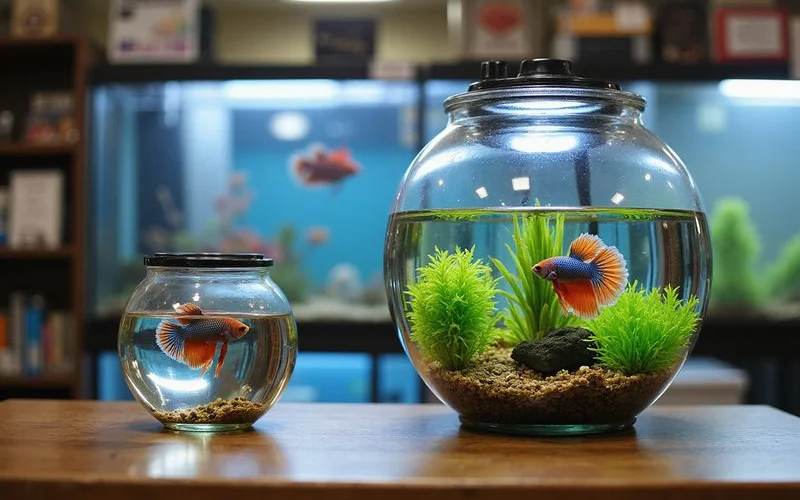
A 1-gallon bowl has three fatal problems that we see lead to sick fish time and time again.
-
No heater. Bettas are tropical fish from Southeast Asia and need stable water temperatures between 78 and 82°F to thrive. Most air-conditioned US homes can drop to 70°F or lower, especially overnight. This constant chill suppresses a betta’s immune system, making them lethargic and vulnerable to diseases they could otherwise fight off.
-
No filter. Fish waste and uneaten food produce ammonia, which is extremely toxic. Without a filter housing a colony of beneficial bacteria to process this waste, the ammonia builds up quickly. Signs of ammonia poisoning include red or bleeding gills, gasping for air at the surface, and lethargy. In a bowl, you’re left with two bad options: stressful 100% water changes every other day or letting the fish slowly get sick.
-
Volume too small for stable biology. A 1-gallon volume is too small to sustain a stable nitrogen cycle, the process where beneficial bacteria convert toxic ammonia into less harmful nitrates. Ammonia levels can spike to dangerous levels overnight, causing a “tank crash” that is often fatal.
The small cup from a chain store is designed for transport, not long-term housing. A bowl on a desk is only a slight improvement and isn’t a suitable home.
What 5 gallons gets you
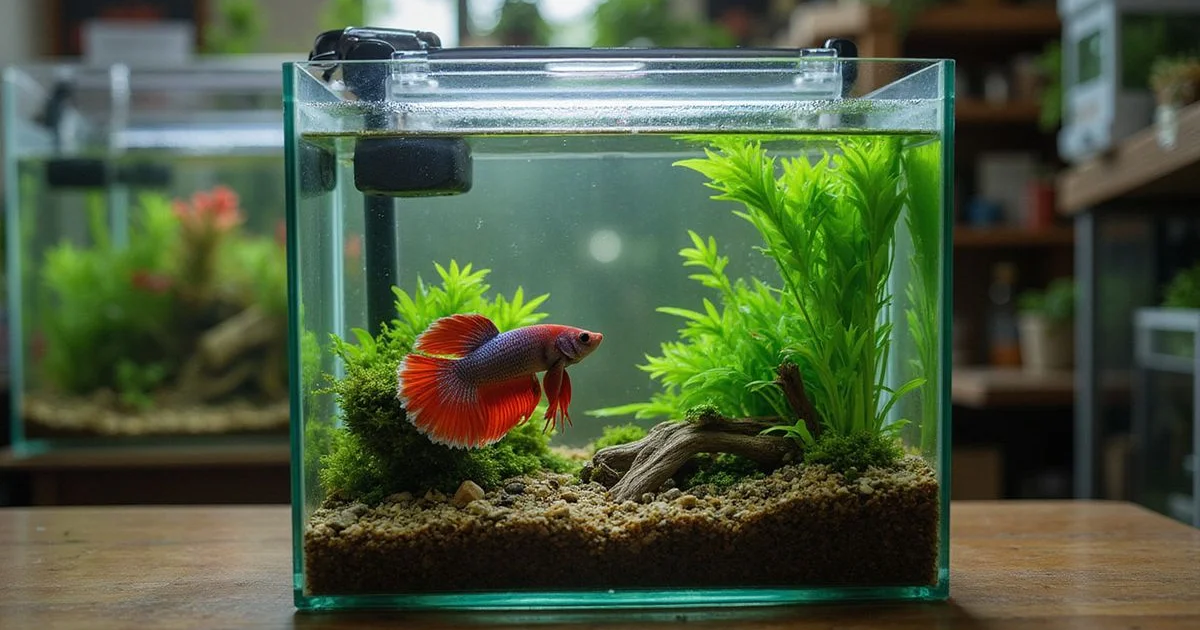
A 5-gallon betta tank is the smallest size we recommend for a betta to truly live well. It’s the minimum size that allows you to create a stable, healthy environment with proper equipment.
With a heater and a low-flow filter, you get:
- Stable temperature. You can set an adjustable heater to 79°F and create the consistent tropical environment your betta needs.
- Filtered water. A gentle sponge filter or a small hang-on-back filter provides enough surface area for beneficial bacteria to establish a healthy nitrogen cycle.
- A stable cycle. A 5-gallon volume is large enough to process waste effectively, preventing the dangerous ammonia and nitrite spikes common in smaller tanks.
- Room to swim. With enough space, bettas are active and curious. In cramped bowls, they often become lethargic and stressed.
- Enrichment. You have room for live or silk plants, a floating betta log for resting near the surface, and maybe a catappa leaf, which can release beneficial tannins into the water.
The 5-gallon kit
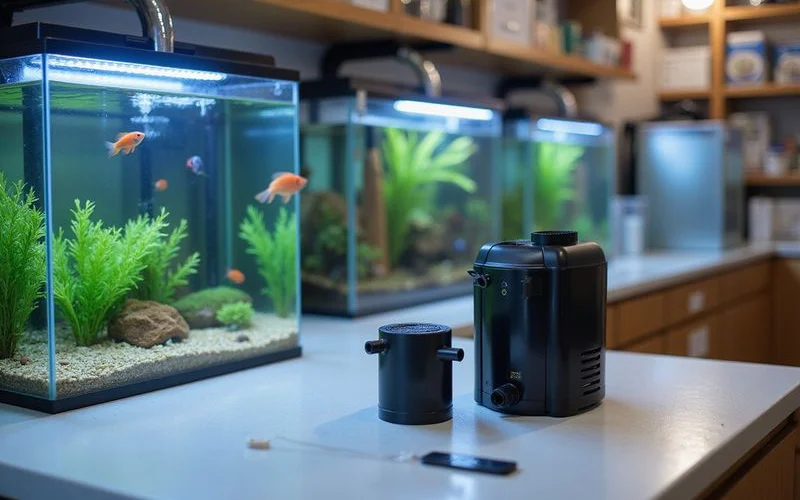
Putting together a proper 5-gallon betta tank is straightforward and typically costs between $90 and $150. Here’s a list of reliable components we often recommend to our customers:
| Component | Price Range | Recommended Products |
|---|---|---|
| 5-Gallon Glass Tank | $30 - $50 | Standard Aqueon or Marineland 5.5-gallon tanks are excellent starting points. |
| Adjustable Heater | $20 - $35 | A 25-watt adjustable heater like the Fluval Submersible or Cobalt Aquatics Mini-Therm is reliable. |
| Low-Flow Filter | $15 - $30 | An air-pump-driven sponge filter is ideal. Alternatively, a quiet hang-on-back like the AquaClear 20 works well. |
| Plants & Decor | $15 - $30 | Live Java Fern or Anubias are hardy beginner plants. For artificial options, choose soft silk plants. |
| Substrate | $10 - $15 | Smooth gravel or sand prevents fin damage. CaribSea Super Naturals is a good, safe choice. |
| Water Conditioner | $8 - $12 | Seachem Prime is essential for removing chlorine and chloramine from tap water during water changes. |
What to skip
- Plastic plants with sharp edges. These are notorious for tearing delicate betta fins, which can lead to bacterial infections like fin rot. Always choose live plants or soft silk alternatives.
- Decorations with small or rough holes. Castles, skulls, and other decor can have sharp edges inside that can snag and injure your betta.
- A marimo ball in a bowl. While marimo balls are interesting, they do not replace the function of a filter or a heater. They can’t fix the fundamental problems of a bowl.
- Mirrors for “exercise.” Using a mirror for more than a minute or two can cause prolonged stress. It triggers a betta’s territorial aggression, and the constant state of high alert can weaken its immune system.
- Multiple male bettas in one tank. This will almost always result in fighting, severe injury, or death. They should always be housed alone.
Bigger is better
If you have the space for a 10 or 20-gallon planted tank, we strongly encourage it. A larger water volume provides an even greater buffer against changes in water chemistry, making it more stable and forgiving. A betta will use every inch of the space, becoming more active and displaying more natural behaviors.
A larger tank also opens up the possibility of adding a few peaceful betta tank mates that work. The extra room helps minimize territorial disputes.
For a look at our full lineup of healthy, quarantined bettas, including halfmoons, plakats, and crowntails, please browse our betta stock. We’re always happy to help you size the perfect tank for your space, right here in the store.
If you run into any health issues, our guide to common betta diseases is the best place to start.