Common Betta Diseases — Fin Rot, Ich, and Dropsy
ID, root cause, and treatment for the four diseases most likely to affect your betta. Plus the prevention rules that beat all of them.
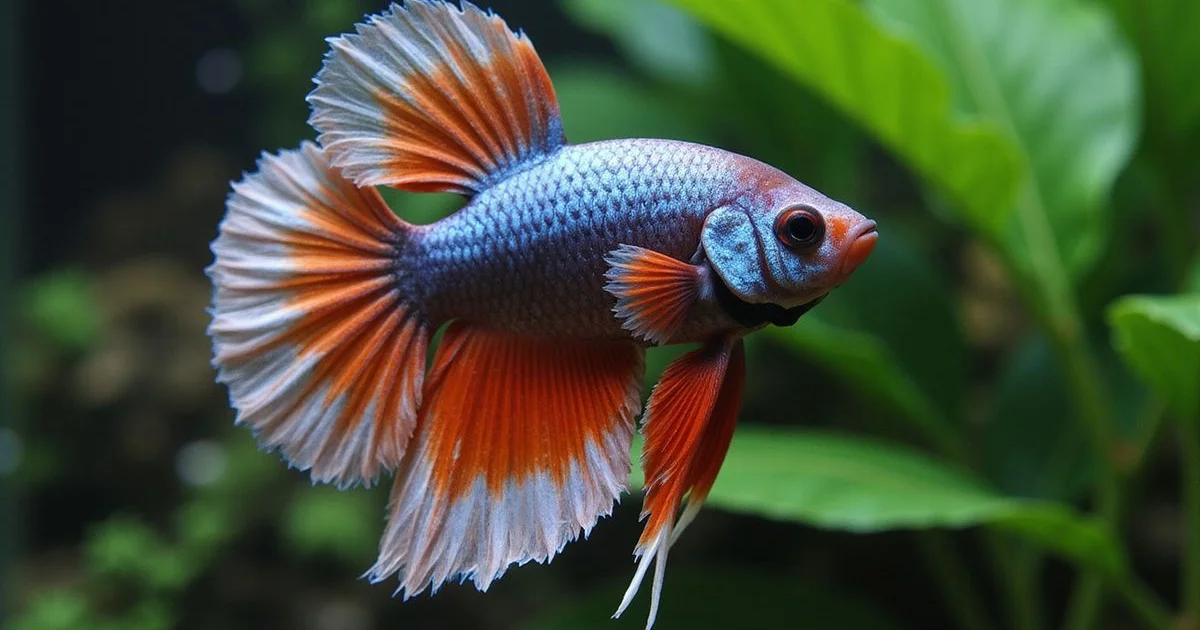
You know how it feels when you notice something is just a little off with your betta. It’s a common experience for even the most dedicated owners, and it almost always ties back to the water he’s living in.
Bettas are surprisingly resilient, but their health is a direct reflection of their environment. Nearly every common betta disease we see, from fin rot to ich, can be traced back to water quality, temperature instability, or a tank that’s simply too small.
The good news is that most of these issues are very treatable, especially with early action.
So, let’s walk through the most common ailments you might encounter. We’ll cover the signs to watch for, the proven treatments we use in our shop, and the simple prevention steps that make all the difference.
1. Fin rot
We see betta fin rot more than any other health problem; it’s incredibly common.
Signs. You’ll notice the edges of the fins look ragged or frayed. The tips might turn white, and as the condition worsens, you may see red streaks. In advanced cases, the fin tissue deteriorates and recedes back toward the body.
Cause. This is a bacterial infection, typically from common aquatic bacteria like Aeromonas or Pseudomonas. These bacteria are always present, but they become a problem when a betta is stressed by poor water quality, water that is too cold, or physical injury to the fins.
Treatment.
- Test your water immediately. If you have any ammonia or nitrite readings, that’s the first problem to solve.
- Perform a 30% water change using a quality dechlorinator like Seachem Prime.
- Double-check that your heater is functioning correctly and maintaining a stable temperature between 78 and 82°F.
- Add pure aquarium salt (not table salt) at a dose of 1 teaspoon per gallon of water. Be sure to dissolve the salt in some tank water before adding it to the aquarium to prevent burns.
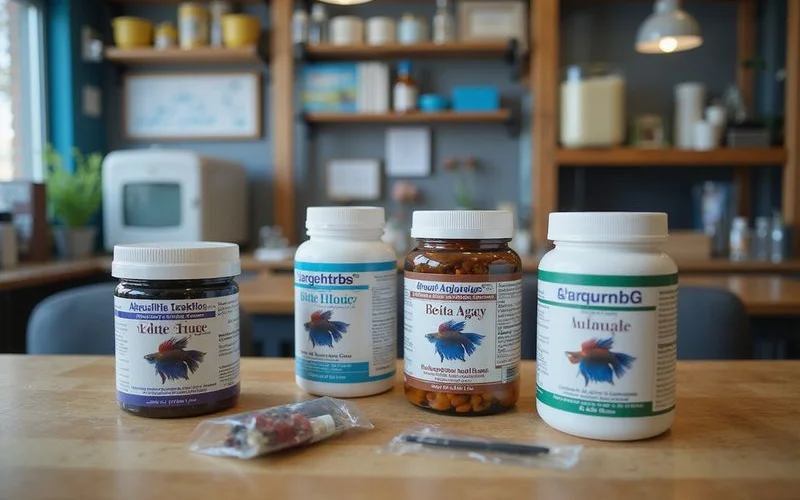
- If the rot continues to advance after a few days, it’s time for medication. We recommend Fritz Maracyn II or Seachem ParaGuard, dosed according to the manufacturer’s instructions.
- For severe cases, moving the betta to a separate hospital tank with daily 50% water changes is the best course of action.
If you find fin rot keeps returning, it’s a clear signal that there is a persistent, underlying issue with the water quality or tank environment that needs to be addressed.
2. Ich (white spot disease)
Signs. The classic sign of betta ich is small white spots, like tiny grains of salt, scattered across the body and fins. You might also see your betta “flashing,” which is when they rub their body against objects in the tank to try and scratch off the parasites. Other symptoms include clamped fins and general lethargy.
Cause. Ich is caused by a protozoan parasite called Ichthyophthirius multifiliis. It has a complex life cycle and is often triggered by stress, especially from sudden temperature changes. A single organism can multiply into hundreds, making early treatment critical.
Treatment. The key to betta ich treatment is understanding the parasite’s life cycle. The medication only works on the free-swimming stage, not when it’s attached to the fish.
- Slowly raise the tank temperature to between 84 and 86°F over a 24-hour period. This speeds up the parasite’s life cycle, moving it into the treatable stage faster. At these warmer temperatures, the life cycle completes in about 3 to 6 days.
- Add aquarium salt at a dosage of 1 teaspoon per gallon.
- Keep the heat elevated for a full 14 days, even after you see the last spot disappear, to ensure all lingering parasites are eliminated.
- For medication, products like Ich-X are highly effective. If you have shrimp, snails, or sensitive plants in the tank, avoid treatments containing copper, like Mardel CopperSafe.
3. Dropsy
This is the most difficult condition to treat and, unfortunately, often has a poor prognosis.
Signs. The tell-tale sign of dropsy is a bloated body where the scales stick out, giving the fish a “pinecone” appearance. This is usually accompanied by lethargy and a refusal to eat.
Cause. Dropsy isn’t a disease itself but a symptom of a severe internal issue, usually a bacterial infection that leads to kidney failure and massive fluid buildup inside the body. By the time you can see the pineconing, the internal damage is already extensive.
Treatment. The chances of recovery are low, but here is the best course of action to try.
- Move the betta to a hospital tank to manage treatment and water quality more easily.
- Add pure, unscented Epsom salt (magnesium sulfate) at a rate of 1 tablespoon per 5 gallons. Epsom salt is a diuretic that can help draw the excess fluid out of the fish’s body, reducing the swelling. Do not use aquarium salt.
- Use a high-quality, broad-spectrum antibiotic. Products like Seachem Kanaplex or Fritz Maracyn Two are recommended because their active ingredients (kanamycin and minocycline, respectively) are absorbed through the skin and gills, which is vital if the fish isn’t eating.
- Be prepared for the possibility that the fish may not survive. This is a very advanced condition, and treatment is often unsuccessful.
4. Velvet (gold dust disease)
Signs. A betta with velvet will have a fine, gold or rust-colored dusty sheen on its body. This can be hard to see, but it becomes more apparent if you shine a flashlight on the fish in a dark room. Infected fish are often lethargic, breathe rapidly, and may rub against objects.
Cause. Velvet is caused by a dinoflagellate parasite called Oodinium. It is highly contagious and aggressive, and because part of its life cycle involves photosynthesis, it thrives in tanks with lighting.
Treatment. This parasite spreads quickly, so you need to treat the entire aquarium, not just the fish.
- Dim the lights or turn them off completely for the duration of the treatment to inhibit the photosynthetic stage of the parasite’s life cycle.
- Slowly raise the water temperature to 82°F.
- Treat the water with a commercial medication designed for velvet. We find that Mardel CopperSafe or Seachem ParaGuard are effective choices. Follow the bottle’s instructions precisely.
- A hospital tank is recommended for severe infections to better control the treatment environment.
Prevention rules
Our team finds that consistent care is the best medicine. Following these four rules will prevent at least 90% of the common betta diseases.
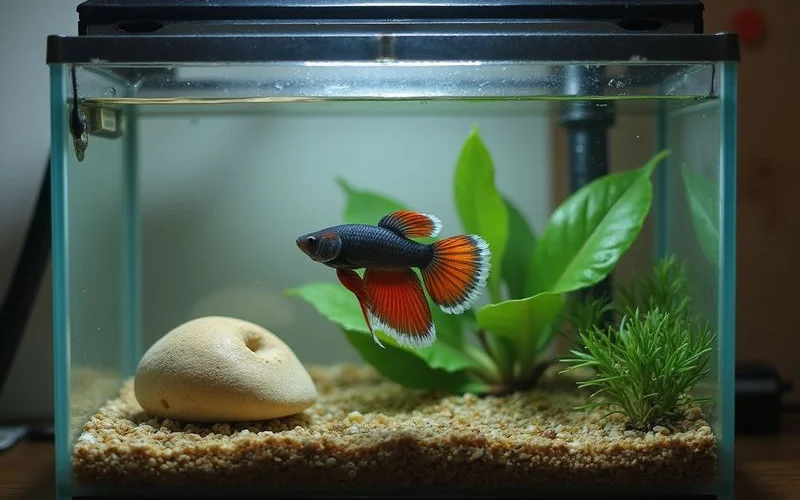
- A proper home. Keep your betta in a heated, filtered tank of at least 5 gallons. You can learn more about the minimum tank size for a betta. Small bowls and vases are a primary cause of stress and illness; a stable, clean environment is the foundation of good health.
- Clean water. Perform a 25% water change every week. Always use a dechlorinator like Seachem Prime to make the new tap water safe. This simple routine prevents the buildup of ammonia and other toxins that weaken a betta’s immune system.
- Natural immune support. Add Catappa leaves, also known as Indian almond leaves, to the tank. As these leaves break down, they release tannins, which have mild antibacterial and antifungal properties. Studies have shown these tannins can even boost a betta’s white and red blood cell counts.
- Quarantine all new arrivals. Before adding any new fish to your betta’s tank, quarantine them in a separate hospital tank for at least two weeks. This gives you time to observe them for any signs of illness and prevents the introduction of parasites like Ich or Velvet into your main aquarium.
For information on other issues, our common freshwater fish diseases guide covers many conditions that can also affect bettas.
If your betta is showing signs of illness and you’re not sure what you’re dealing with, we are here to help. Bring a water sample for free testing and a clear photo of the fish on your phone. We carry the medications you need, including the full lines from Fritz and Seachem, and can help you diagnose the problem. The bettas from our betta stock are all quarantined and conditioned before sale, ensuring you take home a healthy and vibrant fish from the very start.