How to Choose Compatible Community Fish
Aggression, water-parameter overlap, size, and tank-region rules, the 5 compatibility checks we run before selling community fish.
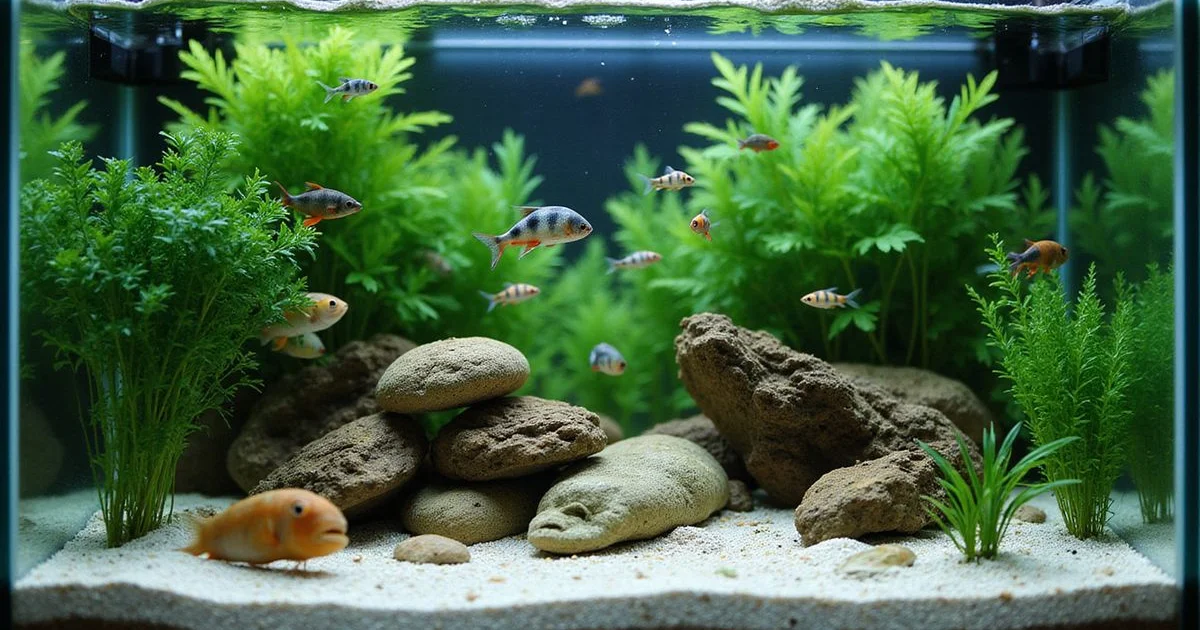
You know how you can walk into any big-box pet store and see a hundred different kinds of fish in a dozen different tanks? It creates the illusion that they can all live together, but that’s rarely the case.
Our team turns down sales every week because a customer wants to pair two fish that just don’t belong in the same aquarium. It isn’t about being difficult, it’s about keeping fish alive and saving you from the frustration of a failed tank.
We run five specific compatibility checks in our heads before finalizing any community tank plan. Once you know them, you can use the exact same mental checklist to build a peaceful aquarium.
1. Aggression spectrum
Community fish generally fall into three behavioral groups, and mixing them incorrectly is the most common reason a tank fails.
- Peaceful schoolers and bottom dwellers. This group includes most tetras, rasboras, danios, corydoras, and kuhli loaches. These fish are true community players and get along with almost anything that won’t eat them.
- Semi-aggressive and territorial. Fish like barbs, most gouramis, bettas, and many dwarf cichlids like kribensis fall here. They often claim a part of the tank as their own, especially during breeding, and may bully smaller or more timid fish.
- Predatory and aggressive. This category is for the true tank bosses like most larger cichlids (think Oscars or Jack Dempseys), Arowanas, and anything else with a mouth big enough to swallow a tank mate. These species typically require a dedicated “biotope” tank designed around their needs.
A truly peaceful community tank is built almost exclusively from that first group. You can often add a single “centerpiece” fish from the semi-aggressive list, like a pearl gourami, without issue. Mixing the peaceful and predatory groups, however, almost always ends with your smaller fish becoming expensive snacks.
2. Water-parameter overlap
Fish from different parts of the world have evolved to thrive in very different water conditions. Forcing them to live together in water that doesn’t suit them is a recipe for chronic stress and poor health.
- Soft, acidic water (pH 6.0-7.0): This is the preference for many South American species like tetras, dwarf cichlids, and bettas.
- Hard, alkaline water (pH 7.5-8.5): This suits livebearers such as platys, mollies, and swordtails, as well as most African cichlids.
Here in Sarasota, our tap water is typically hard and alkaline, often with a pH between 7.6 and 7.9. This is perfect for livebearers but can be stressful for soft-water fish like Cardinal Tetras. You can test your own water’s pH and hardness with a tool like the API Freshwater Master Test Kit to know your starting point. If you want to create a soft-water setup, bring a sample for free testing, and we can show you how to safely adjust it for your target species.
3. Size and territoriality
The adult size of a fish is far more important than its size in the store. That cute, one-inch juvenile convict cichlid might look harmless now, but it will grow into a six-inch terror that will likely kill any peaceful fish you add with it.
Here is a quick rule of thumb to follow. Look up the maximum adult size for every fish you plan to stock. If a small fish can fit into a larger fish’s mouth, it will eventually end up there. A one-inch ember tetra is an easy meal for a full-grown, four-inch angelfish. This isn’t aggression, it’s just nature.
4. Tank-region overlap
Fish naturally inhabit different vertical zones of an aquarium. To prevent overcrowding and stress, it’s best to stock your tank with species that occupy all three regions.
- Top: Hatchetfish, pencilfish, and danios are common top-dwellers.
- Middle: This is the busiest zone, home to most tetras, rasboras, and gouramis.
- Bottom: Corydoras, plecos, and kuhli loaches spend their time foraging along the substrate.
Stocking three different schools of mid-water swimmers, like tetras, rasboras, and barbs, will create a constant traffic jam. Instead, try choosing one schooling fish for the middle, like a group of harlequin rasboras, and a group of active “dither fish” for the top, like Zebra Danios. Dither fish swim openly and can help shy bottom-dwellers, like Apistogramma cichlids, feel more secure and come out of hiding.
5. Common compatibility traps
We see the same preventable mistakes nearly every week. Learning to spot these common traps will save you a lot of trouble.
- Fin nippers with long-finned fish. Tiger Barbs and Serpae Tetras are notorious for shredding the delicate fins of bettas and angelfish. This isn’t a possibility, it’s a certainty. The constant stress often leads to secondary infections on the damaged fins.
- Multiple male bettas. They are called Siamese Fighting Fish for a reason. Housing two males together, even with a divider, causes constant stress from flaring that can shorten their lives.
- Not buying a full school. A group of six is the absolute minimum for any schooling fish. Three neon tetras will spend their lives hiding in a corner, while a group of nine or more will swim confidently in the open.
- Using Common Plecos for “cleanup.” The Common Pleco sold in many chain stores can grow to be 18 to 24 inches long and belongs in a 75-gallon tank or larger. A much better choice for most tanks is the Bristlenose Pleco, which stays a manageable 4 to 5 inches.
- Mixing goldfish with tropical fish. This combination simply doesn’t work. Goldfish are cold-water fish that thrive in temperatures around 65-72°F, while most tropical fish need a steady 75-80°F to stay healthy.
When to ask
The best way to get a clear answer is to bring a photo of your tank and your current stocking list to our store. It doesn’t cost anything, and there’s no purchase required.
Most compatibility questions can be answered in just a few minutes once we see the setup. We will run through the same five checks with you and provide a clear yes, no, or a revised list of options. When you have a solid plan, you can see our community fish selection or get a free in-store stocking review before making a final decision.
For families just starting out, we have a guide that cuts right to the chase. You can check out our beginner-friendly Sarasota family aquarium picks to see species that are known to work well together.