Cycling Your First Freshwater Tank
Fishless vs fish-in cycling, the 4-6 week timeline, daily testing, and how to know when your first fish can go in.
You know the feeling of bringing home your first fish? It’s an excitement we see every day. But too often, we also see the frustration that comes a week later when things go wrong.
The number one reason new aquariums fail is simple, the tank wasn’t “cycled” first. An uncycled tank leads to ammonia poisoning, which is a stressful and often fatal experience for the fish.
A cycled tank just means that the natural, beneficial bacteria needed to process fish waste are fully established. We’re going to walk through how to get this colony started so your fish have a safe, stable home from day one.
Why cycling matters
A cycled aquarium has an established biological filter capable of converting toxic fish waste into a less harmful substance. Fish constantly release ammonia through their gills and waste. Even a tiny amount, as low as 0.25 parts per million (ppm), can cause stress, gill damage, and death.
Two specific groups of beneficial bacteria do all the work here. Nitrosomonas bacteria consume the highly toxic ammonia and convert it into nitrite. Nitrite is also very toxic. Then, Nitrospira bacteria consume the nitrite and produce nitrate, which is much less harmful to fish.
Getting both of these bacteria colonies established from scratch is what we call cycling a freshwater aquarium, and it typically takes 4 to 6 weeks. For a deeper look at the chemistry, you can read about the nitrogen cycle explained for beginners.
Fishless cycling (recommended)
The absolute best way to cycle a new tank is the fishless cycle. It’s the fastest, safest, and most humane method because it involves zero stress for any animals. Our team walks customers through this process every day.
Here is the plan:
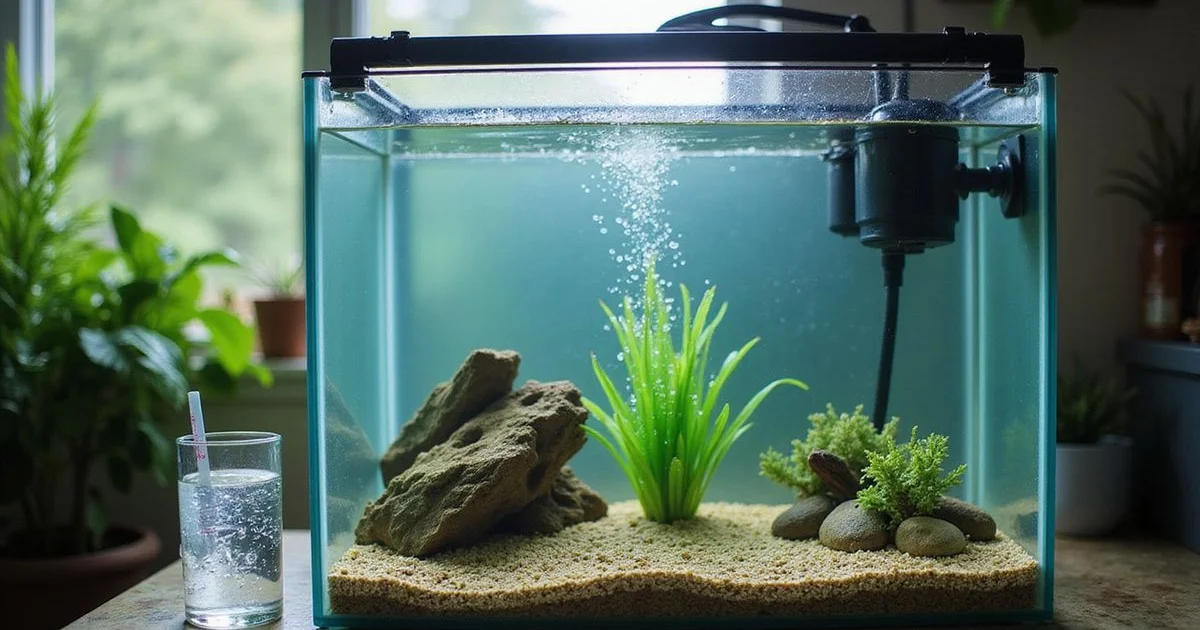
- Set up the tank completely. This includes your substrate, filter, and heater. The filter and heater should be running, with the temperature set between 76 to 80°F. Always treat your tap water with a dechlorinator like Seachem Prime or Fritz Complete. Do not add any fish.
- Add an ammonia source for cycling. The goal is to get a reading of 2 ppm. We recommend using pure ammonia products made for aquariums, like Dr. Tim’s Aquatics Ammonium Chloride. You can also use unscented, detergent-free household ammonia. A good way to check if household ammonia is safe is the “shake test”: if you shake the bottle and it creates lasting suds or foam, it contains soaps (surfactants) and should not be used.
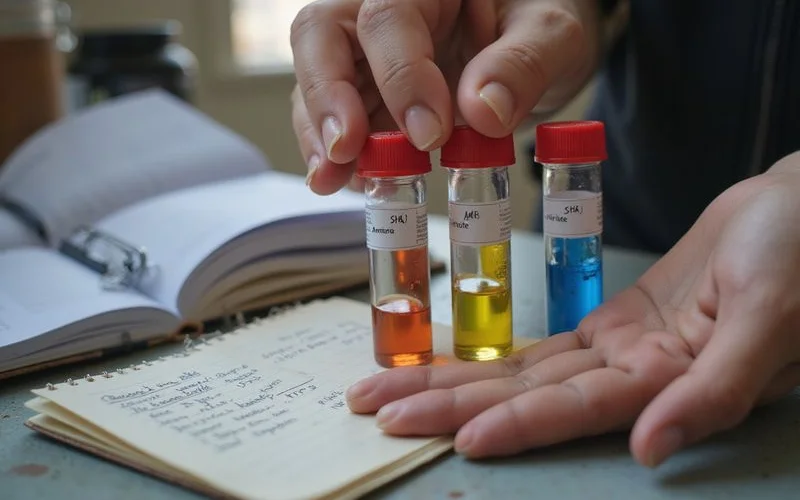
- Test the water daily. You will need a reliable liquid test kit, like the API Freshwater Master Test Kit, to accurately track ammonia and nitrite levels. Log your readings every day to see the progress.
- Watch for the nitrite spike. Usually around the second week, you’ll see the ammonia level start to fall as the nitrite level begins to rise. This is a great sign, it means the Nitrosomonas bacteria are established and working.
- Wait for nitrate. A couple of weeks later, the nitrite level will drop to zero and you’ll see your first nitrate readings. This means the Nitrospira bacteria have colonized.
- Confirm the cycle is complete. Once ammonia and nitrite both read 0 ppm, dose ammonia one last time back up to 2 ppm. Wait 24 hours. If the tests again show 0 ppm for both ammonia and nitrite, your aquarium is fully cycled. The bacteria are now processing ammonia efficiently.
- Do a large water change. A final 50% to 75% water change will lower the built-up nitrates to a safe level for fish. Now, you’re ready to go.
Speeding it up: bottled bacteria
You can significantly shorten the cycling process, often to just one to three weeks, by adding a bottled nitrifying bacteria product. These products provide a concentrated dose of the exact bacteria you need to grow.
Based on our experience and customer feedback, two products consistently deliver great results:
- FritzZyme TurboStart 700: This is a live, refrigerated product, which means the bacteria are active and ready to work immediately. It’s highly concentrated and one of the most effective options for a fast cycle.
- Dr. Tim’s One & Only: This is another highly respected product that uses a potent blend of live nitrifying bacteria to seed your filter.
We recommend these refrigerated or professionally-transported products over many shelf-stable options at chain stores, which can sometimes be less effective. We carry both Fritz and Dr. Tim’s because we’ve seen them work.
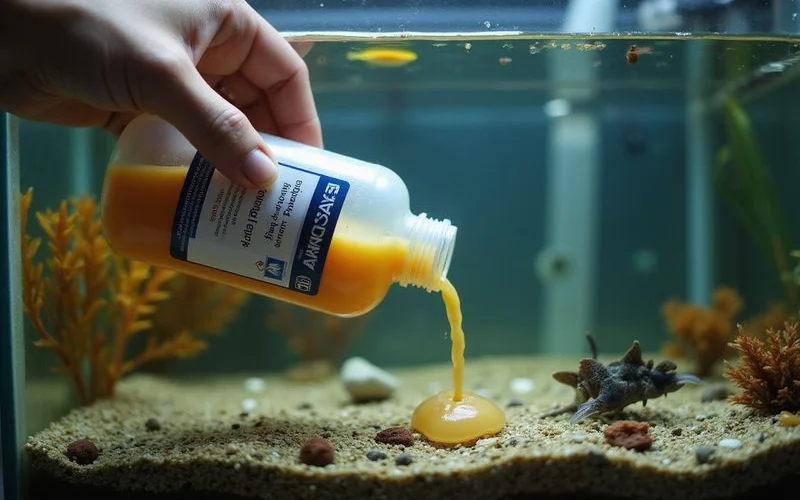
When using bottled bacteria, you add the product according to the directions at the same time you add your ammonia source. You still need to test daily to monitor the process until ammonia and nitrite both consistently read zero.
Fish-in cycling (only if you must)
We strongly advise against this method. However, if you already have fish in an uncycled tank, here is the emergency plan. Be prepared for a lot of work.
- Perform a 25% to 50% water change every single day.
- Dose with Seachem Prime daily. This product detoxifies ammonia and nitrite for about 24-48 hours, offering the fish some protection.
- Test your water at least once a day, preferably twice.
- Stock very lightly. For a 20-gallon tank, this means no more than two very hardy fish, like zebra danios.
- Expect a much longer cycle, often taking 6 to 8 weeks. This is because you can’t allow ammonia to build to the levels that feed a rapid bacterial bloom.
This method is extremely stressful for the fish and significantly increases your workload. The fishless cycle is always the better choice.
Daily test checklist
Consistency is everything when cycling a new aquarium. We suggest printing this chart and taping it to your tank. If you skip a day of testing, you can easily lose track of where you are in the process.
| Day (Approximate) | Ammonia | Nitrite | Nitrate | Notes |
|---|---|---|---|---|
| 1 | Dose to 2 ppm | 0 | 0 | Start Cycle |
| 7 | Dropping slowly | Rising slightly | 0 | Nitrosomonas active |
| 14 | Nearing 0 | Spiking high | Rising slightly | Nitrite Spike! |
| 21 | 0 | Still high | Rising | |
| 28 | 0 | Dropping | Rising steadily | Nitrospira active |
| 35 | 0 | 0 | High | Test for completion |
To confirm the cycle is finished, re-dose ammonia to 2 ppm. If both ammonia and nitrite are 0 after 24 hours, you are done.
Common stalls
Has your cycle stalled with no changes in readings for several days? It happens. From what we’ve seen, it’s usually one of these five issues.
- Chlorine in the water. Tap water contains chlorine or chloramine to make it safe to drink, but it kills beneficial bacteria. Always use a dechlorinator like Prime or Complete for any new water.
- The tank is too cold. Nitrifying bacteria multiply much faster in warmer water. Keep the heater set to at least 76-78°F for the duration of the cycle.
- The pH has crashed. The process of nitrification consumes carbonates and can cause your water’s pH to drop. If the pH falls below 6.5, the bacteria can slow down or stop working entirely. Test your KH (carbonate hardness). If it’s below 4 dKH, you may need to add a buffer.
- Medications were added. Many common fish medications, especially antibiotics, are indiscriminate and will kill your beneficial bacteria. Never medicate a tank during its initial cycle.
- Filter media was replaced. The vast majority of your beneficial bacteria live in the filter media (the sponge, cartridge, or ceramic rings). Never replace all of this media at once. When it’s time to clean it, just swish it gently in the old tank water you removed during a water change.
Free testing while you cycle
Don’t want to buy a test kit just for cycling? We’ve got you covered.
Our team offers free water testing to all our customers. Just bring a 100ml water sample to the store during any open hour, and we’ll run the key tests for you: ammonia, nitrite, nitrate, pH, and KH. We can tell you exactly where your tank is in the cycle and what to expect next. You can find more details on our free water testing page.
Once your cycle is complete and stable, we can help you choose the perfect fish. All of our community fish are held in our store’s quarantine systems for at least two weeks, ensuring they are healthy and ready for their new home.