Tropical Community Fish vs Cichlids — Which Is Right for You?
Behavior, water chemistry, equipment, and time commitment compared. Choosing between peaceful community and a cichlid biotope.
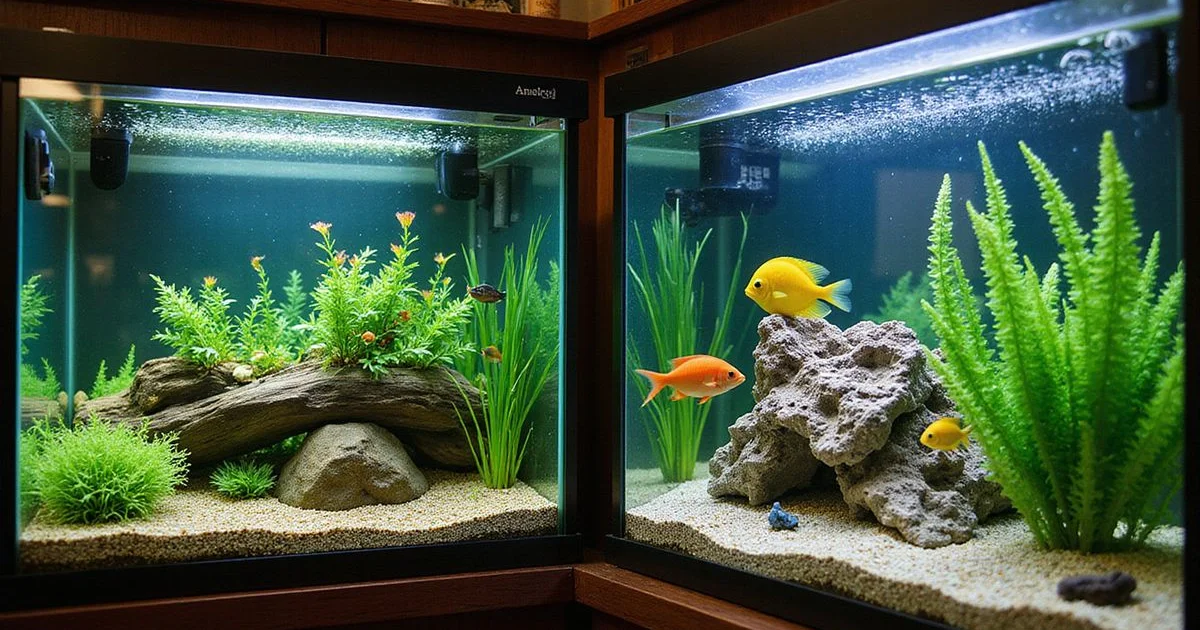
You know that feeling when the first aquarium is running smoothly, the family is hooked, and you start eyeing a spot for a second tank? That’s when the big question usually comes up: do you build a peaceful community tank or dive into the world of cichlids?
Our team sees hobbyists at this crossroads every day. These are two completely different paths, leading to very different experiences.
One setup is like a living art piece, full of graceful motion. The other is more like having a tank full of water puppies with fins and attitude.
Let’s break down the real differences to help you decide which is the right fit for your home or office.
Behavior
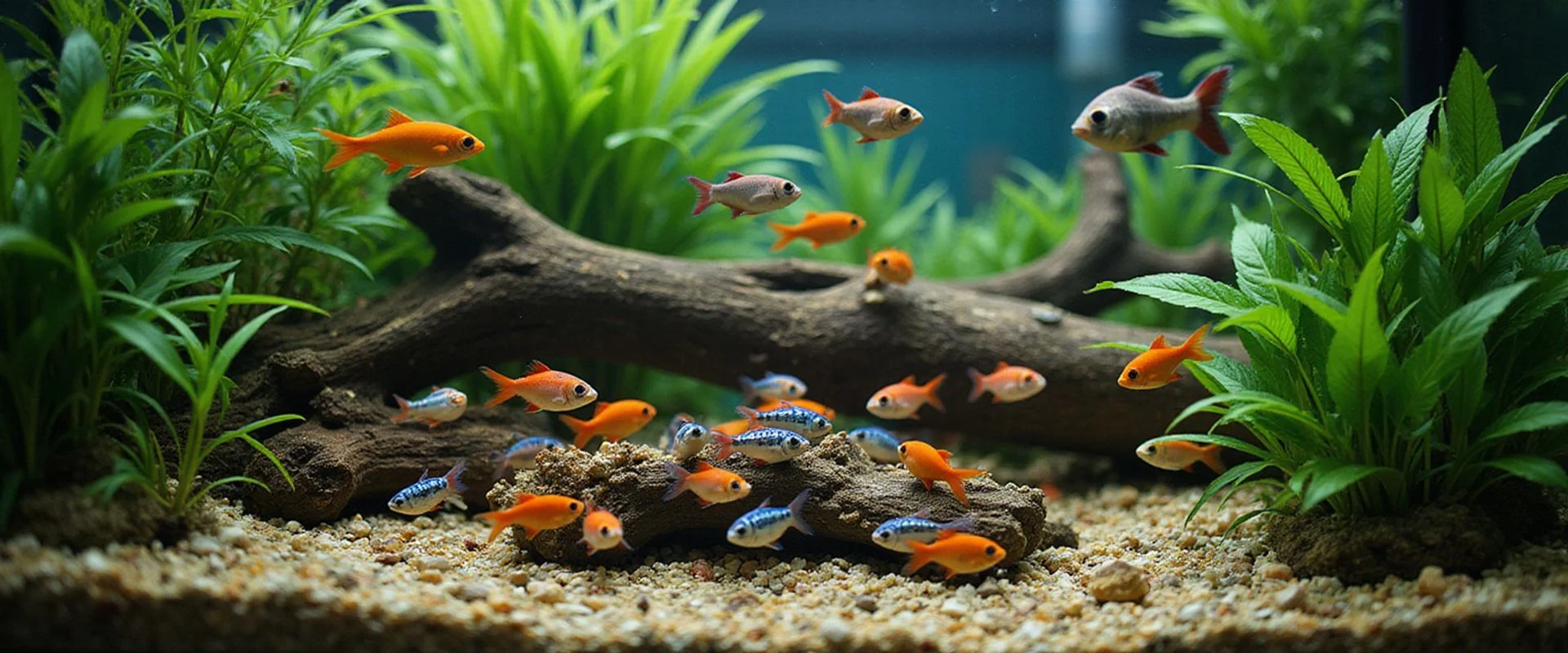
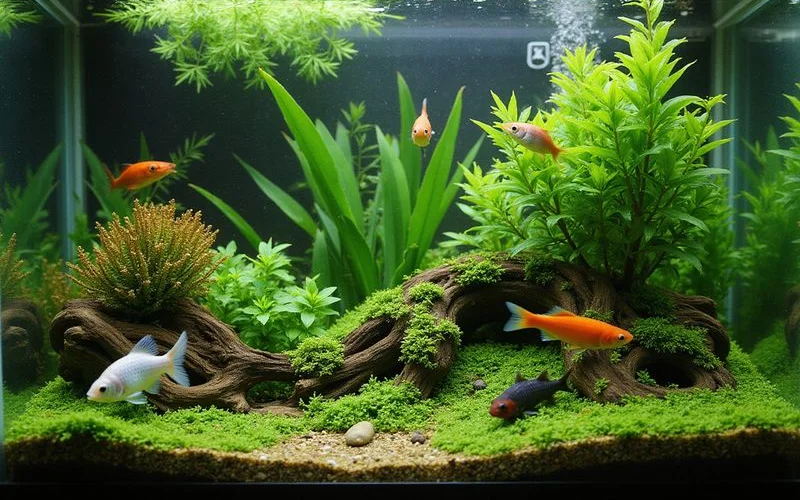
A community tank offers a calm, schooling environment. You’ll see shoals of tetras and rasboras moving as one, while corydoras catfish busily clean the bottom. An occasional centerpiece fish, like a brilliant Dwarf Gourami, might command attention. It’s a tranquil, decorative setup perfect for observation.
A cichlid tank is all about activity and intelligence. Cichlids have distinct personalities. They will recognize you, interact with you at the glass, and even rearrange the rocks to their liking. You get to witness complex social behaviors, but that also includes territory disputes and the occasional fight.
If you want a beautiful, moving art piece, a community tank is your answer. If you want an interactive aquarium with attitude, cichlids are the way to go.
Water chemistry
For a community tank, most fish will thrive in Sarasota’s local tap water, which typically has a pH of 7.6 to 7.9 and a hardness of 8 to 12 GH. All you really need is a quality dechlorinator, like Seachem Prime, and a heater. While some South American tetras prefer softer water, most commercially bred species are adaptable.
African cichlids, like Mbuna from Lake Malawi, need the opposite. They require hard, alkaline water with a pH of 7.8 to 8.6 and a GH between 12 and 20. Our local tap water is a great starting point. You’ll just need to boost it slightly using substrates like CaribSea Aragonite Crushed Coral or mineral additives.
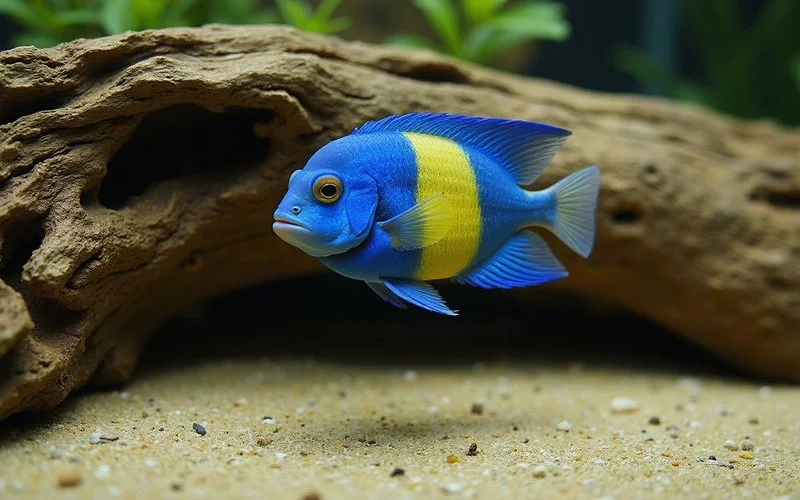
South American cichlids, such as German Blue Rams or Apistogramma, demand soft, acidic water with a pH closer to 6.0 or 7.0. This often requires using reverse osmosis (RO/DI) water and then adding back essential minerals, or using natural items like peat and Indian Almond leaves to create a “blackwater” look.
Equipment differences
While the basic equipment list is the same (tank, heater, filter, light), the specifics for each setup vary quite a bit. The key differences really come down to substrate, rockwork, and filtration power.
- Substrate: Community tanks do well with sand or fine gravel. African cichlid tanks almost require a crushed coral or aragonite substrate to help buffer the water to their preferred high pH. South American setups use sand, often with leaf litter to mimic their natural habitat.
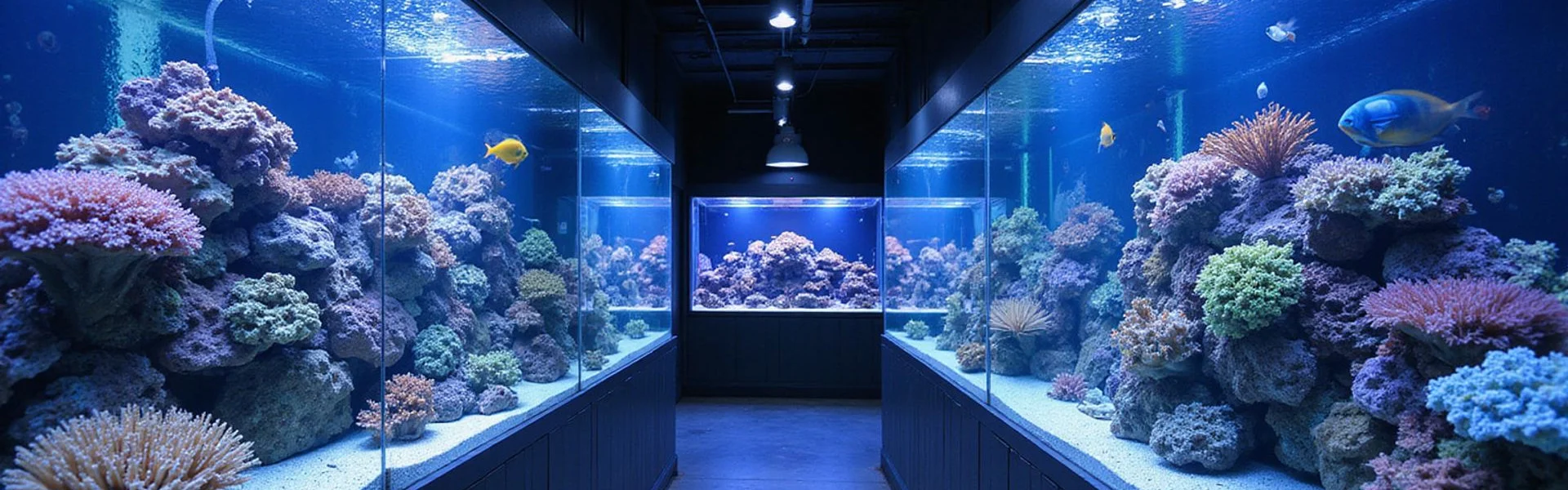
- Rockwork: This is a major difference. African cichlid tanks need lots of stacked rock, like Texas Holey Rock or slate, to create caves and territories. It’s critical to place these rocks on the bottom glass before adding sand, as cichlids will dig and can cause a rockslide.
- Filtration: Cichlids are larger and messier fish, so their tanks need much stronger filtration. We recommend a filter that turns over the tank’s water volume 8 to 10 times per hour. For a community tank, a turnover rate of 5 times per hour is plenty. For a 75-gallon cichlid tank, a powerful canister filter like a Fluval FX series is a common and effective choice.
- Tank size: You can start a beautiful community tank in a 20-gallon aquarium. For African Mbuna, a 75-gallon tank is the practical minimum. This larger size allows for heavy stocking, which helps diffuse aggression so no single fish gets bullied. A pair of smaller South American cichlids, like Kribensis, can live happily in a 30-gallon tank.
Time and maintenance commitment
A community tank requires about 30 minutes of maintenance per week. This usually involves a 25% water change using a gravel vacuum, a monthly water test, and rinsing a filter sponge every few months.
A cichlid tank demands a bit more time, closer to 45 or 60 minutes per week. Their heavier bioload means you’ll need to perform larger weekly water changes, typically 30% to 40%. A tool like the Python No Spill Clean and Fill can make this much easier. Since the fish constantly move your decor, you may also want to reset the rockwork occasionally.
Family and kid considerations
Community tanks are often a huge hit with kids. They love watching the synchronized movements of a school of fish. It’s also very easy to get them involved in feeding time since the fish are peaceful eaters. The lower rate of fish loss also means fewer tough conversations.
Cichlids offer a different kind of engagement. Kids are fascinated by their pet-like personalities and the way they interact with people. But the tank’s social dynamics, which can include fighting and bullying, can sometimes be upsetting for younger children. Having to re-home an overly aggressive fish can be a difficult lesson.
For a first family aquarium, we typically recommend starting with peaceful species. You can see some of our top picks in the beginner’s guide to family aquariums in Sarasota, which features all community fish.
Quick decision matrix
| If you… | Pick… |
|---|---|
| Want a calm, decorative tank | Community |
| Have a 20 to 40 gallon tank | Community (or a SA cichlid pair) |
| Want fish with personality | Cichlids |
| Have 75+ gallons available | An African cichlid biotope is a great option |
| Want to breed fish | Either, but cichlids breed openly |
| Want to avoid water chemistry adjustments | Community |
| Have access to softened or RO water | South American cichlids |
| Have hard Sarasota tap and want an easy setup | African cichlids (or community) |
In-store flow
When you’re ready, bring a picture of your space and an idea of your budget. One of our staff aquarists will walk you through these same questions. Based on your answers, they’ll guide you to either the community fish section or the cichlid section.
Our goal is simple. We would much rather help you find the right setup once than sell you the wrong one twice.
If you want a more detailed planning session, feel free to stop by for a free in-store consultation, available for both walk-ins and appointments.