Cycling a Saltwater Aquarium
Live rock, dry rock, bottled bacteria. The 4 to 8 week timeline, what to test, and when you're ready for fish.
MANDATORY PRE-OUTPUT AUDIT (DO NOT SKIP)
Before outputting, you MUST check Introduction, Conclusion , EVERY <h2> and <h3> section against this checklist:
For the Introduction and Conclusion:
- Is it broken into 1-2 sentence paragraphs?
- Is there at least one 1-sentence paragraph?
- No paragraph exceeds 3 sentences?
- Does the conclusion include a clear Call to Action (CTA) or next step?
- Is there any em dashes (—) in the introduction or conclusion?
For EVERY body section (Exclude Frequently Asked Questions (FAQs) section):
- Count paragraphs. If 4+, does it have a list, table, blockquote, or H3?
- Are there 3+ consecutive H2/H3 sections with only paragraphs? (FORBIDDEN)
- Are lists used effectively to break up dense information?
- Is there any em dashes (—) in the body sections?
If ANY checkbox is unchecked, you must STOP and fix before outputting.
You know how critical the nitrogen cycle is for a healthy saltwater tank. It’s the same biological engine that runs a freshwater system, just with a few marine-specific adjustments for things like live rock and salinity.
Skipping the cycle is a recipe for disaster, often leading to months of replacing dead fish.
Our experience has shown that doing it right the first time is the key to a clean, stable tank that runs beautifully for years. If you need a refresher on the core biology, our guide on the nitrogen cycle explained for beginners covers all the fundamentals.
Here, we’ll walk through the best methods for cycling a saltwater tank and what you need to do to get it right.
The three approaches to cycling a saltwater tank
You have three main options for establishing your tank’s biological filter. Each has its own timeline and set of considerations.
A. Dry rock + bottled bacteria (recommended for new builds)
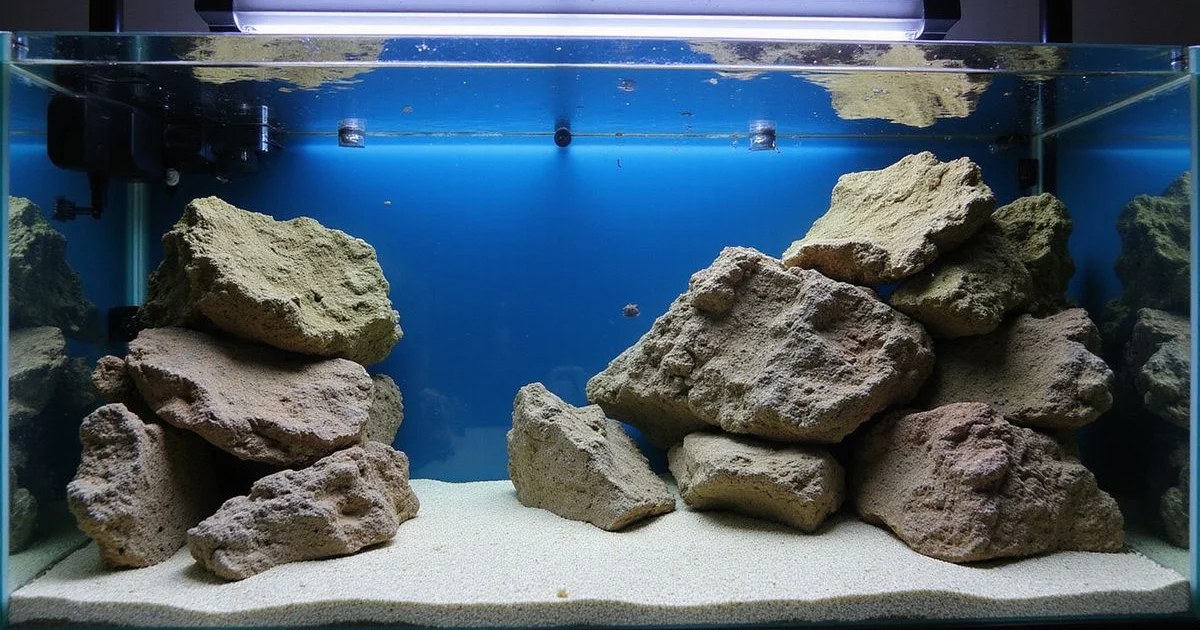
This is the modern, preferred approach for most new aquariums. Using dry rock, like the popular and porous Marco Rocks, means you start with a pest-free foundation that is also more affordable than live rock. It makes aquascaping much cleaner.
When you pair this sterile rock with a high-quality bottled bacteria, such as Fritz TurboStart 900 or Dr. Tim’s One and Only for Saltwater, the cycle typically completes in a reliable 4 to 6 weeks.
Process:
- Aquascape the dry rock in your tank and add a sand bed about two inches deep.
- Mix your saltwater using RO/DI water and a quality reef salt to a specific gravity of 1.025. Let it mix for 24 hours to ensure everything is stable.
- Add the bottled bacteria according to the manufacturer’s directions.
- Dose a pure ammonia source, like Dr. Tim’s Ammonium Chloride, to a concentration of 2 parts per million (ppm). Avoid household ammonia, as it often contains soaps and surfactants that are toxic to aquatic life.
- Test your water daily, watching for the ammonia level to fall as nitrite rises, and then for nitrite to fall as nitrate rises.
B. Live rock cycling
Using live rock from an already established tank is the fastest way to cycle, often finishing in just 1 to 3 weeks. This is because the rock arrives already covered in the beneficial bacteria you need.
The major trade-off is the risk of introducing unwanted hitchhikers. While some are beneficial, like coralline algae and copepods, you could also import pests like Aiptasia anemones or nuisance algae.
Process:
- Aquascape the live rock as soon as it arrives to minimize die-off.
- Mix your saltwater and fill the tank. It’s best to add the water at room temperature first and then heat it in the tank.
- Run a protein skimmer heavily and use activated carbon for the first week. This will help remove the ammonia spikes caused by organisms that died during shipping.
- Test the water daily. The cycle is complete when both ammonia and nitrite consistently read 0 ppm.
C. Pure cycling (no bacterial source)
This method involves simply setting up the tank with sand and water and waiting. It is the slowest approach by far, often taking 8 weeks or more, because it relies on bacteria colonizing the tank naturally from the surrounding environment.
We do not recommend this method unless your budget is extremely tight and you have a lot of patience.
What to test for during the saltwater aquarium cycle
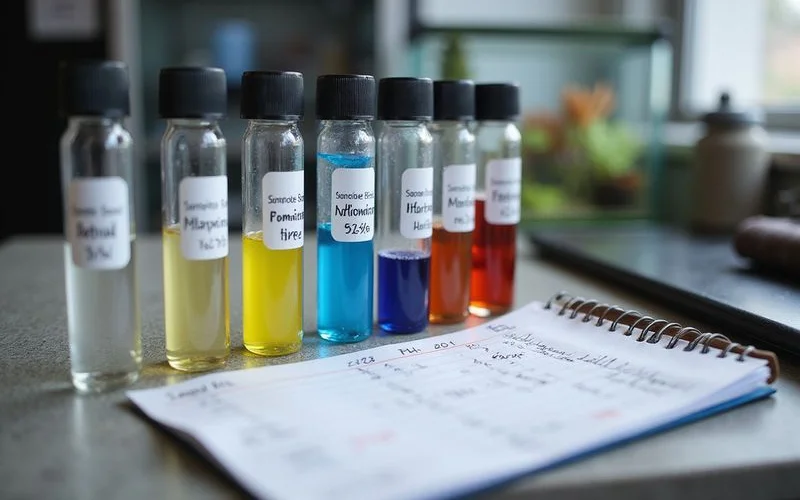
Daily testing is crucial to track your progress. You’ll be looking for a clear pattern in your water parameters.
- Ammonia. After your initial dose, you will see this rise and then begin to fall.
- Nitrite. This will rise as the ammonia level drops. It will then fall as the second type of beneficial bacteria becomes established.
- Nitrate. This is the final product of the cycle. You’ll see it rise and remain present. A water change is needed once it climbs above 20 ppm.
- Salinity. This needs to stay stable at 1.025 specific gravity. You’ll need to top off the tank with fresh RO/DI water regularly to replace water that evaporates.
- pH. A stable pH between 8.1 and 8.3 is ideal. If it drifts, a carbonate buffer like Seachem Marine Buffer can correct it.
The API Saltwater Master Test Kit is a reliable choice for testing ammonia, nitrite, nitrate, and pH. For salinity, we strongly recommend a refractometer over a less accurate swing-arm hydrometer, as refractometers provide more precise readings that aren’t affected by water temperature. We carry both of these essential tools in our store.
The timeline (dry rock + bottled bacteria)
Here is a typical week-by-week look at what to expect when using the dry rock and bottled bacteria method. Timelines can vary based on temperature and specific products used.
| Week | Ammonia | Nitrite | Nitrate | Notes |
|---|---|---|---|---|
| 1 | Dose to 2 ppm, then it drops | Rising | 0 | Bacteria are beginning to establish themselves. |
| 2 | Dropping steadily | Spiking | Starting to appear | You’ve reached the nitrite peak of the cycle. |
| 3 | Low or at 0 ppm | Dropping steadily | Rising | The second stage of bacteria (Nitrospira) is now active. |
| 4 | 0 ppm | 0 ppm | Rising | Time to re-dose ammonia to confirm the cycle is complete. |
| 5 | 0 after 24hr | 0 after 24hr | High | Your tank is ready for its first fish. |
| 6 | Do a 50% water change | Add your first fish. |
To confirm the cycle is finished, dose ammonia back up to 2 ppm around week 4. If you test 24 hours later and both ammonia and nitrite are at 0, your biological filter is fully established and ready.
Bottled bacteria that actually work
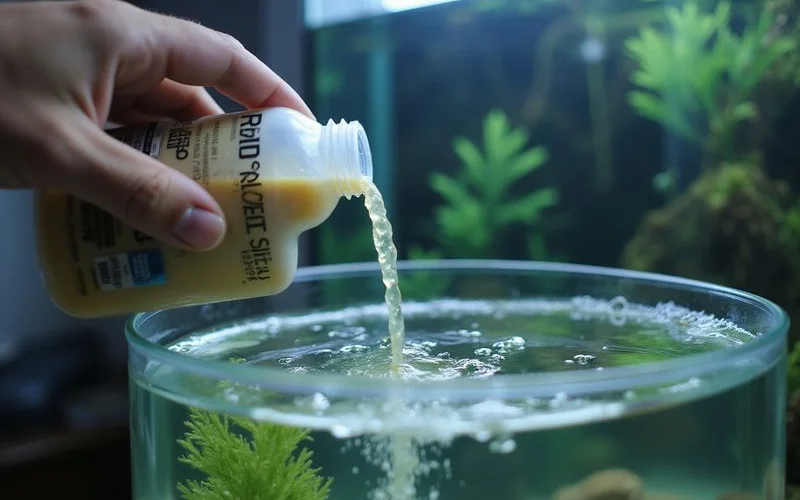
Not all bottled bacteria products are created equal. The most effective ones contain live, active nitrifying bacteria and often require refrigeration to maintain their potency.
- Fritz TurboStart 900: A highly concentrated, refrigerated marine formula known for its fast results.
- Dr. Tim’s One and Only for Saltwater: Another industry standard developed by a marine biologist specializing in nitrifying bacteria.
- Brightwell Aquatics MicroBacterStart XLM: A popular and effective option for jump-starting the nitrogen cycle.
Our team generally advises against using unrefrigerated, shelf-stable products from chain stores. Many of these contain dormant bacteria in spore form, which are less effective, or may contain mostly dead bacteria.
Adding the first fish
Once you have confirmed your cycle is complete, it’s time for the exciting part. But it’s important to proceed slowly.
- Perform a large water change, between 50% and 75%, to lower the nitrates that have built up.
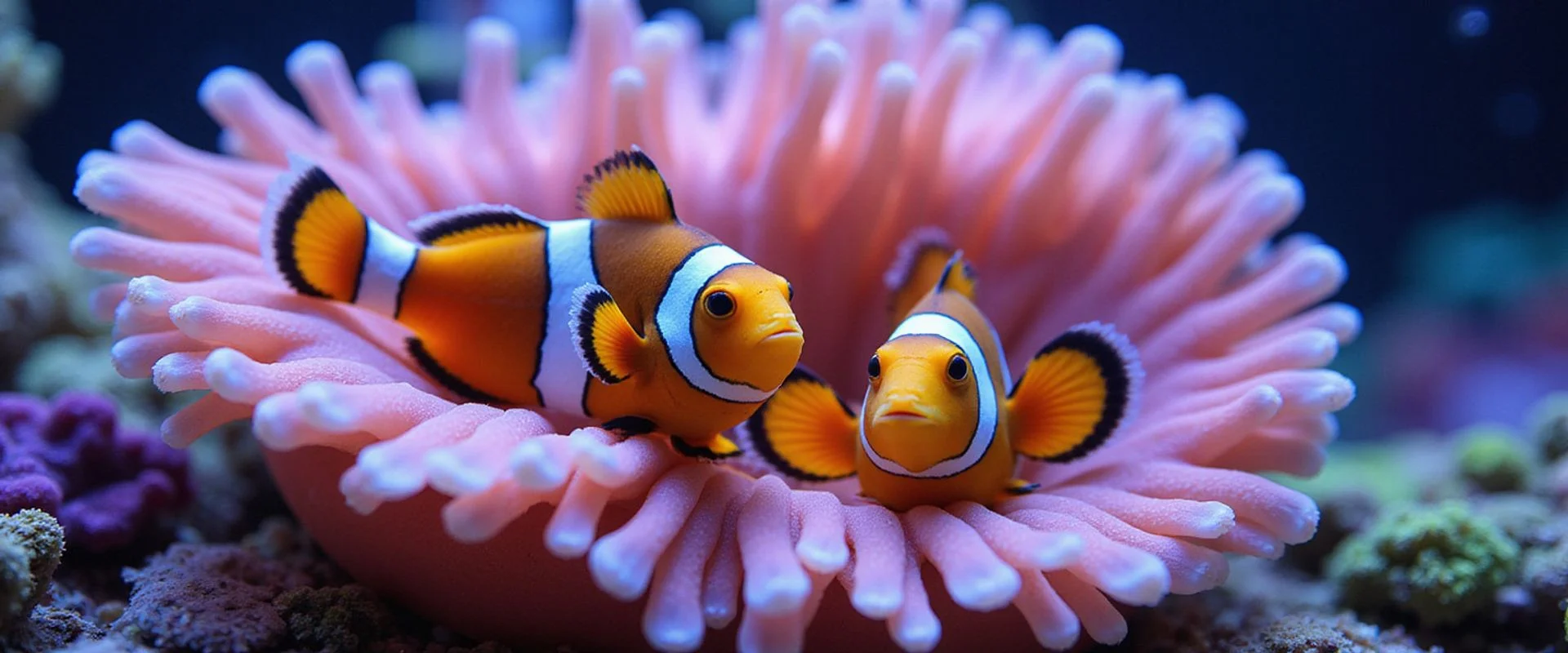
- Add one or two hardy fish. The Ocellaris Clownfish is the classic first choice for a reason, it’s incredibly resilient. Other great options include the Royal Gramma or a Firefish Goby.
- Wait at least 2 to 3 weeks before adding any more fish.
Every time you add a new fish, your tank’s bioload increases. This causes a small, temporary ammonia spike while the bacterial colony grows to catch up. If you add too many fish at once, you risk overwhelming the new biological filter and triggering a dangerous mini-cycle.
What to do if the cycle stalls
If your ammonia or nitrite levels get stuck and don’t drop for over a week, your cycle may have stalled. This is a common issue with a few clear causes.
- Incorrect Salinity: Your specific gravity should be stable at 1.025.
- Low Temperature: The ideal temperature range for marine bacteria is 78°F to 80°F. The process will slow considerably in colder water.
- pH Crash: The nitrogen cycle is an acidic process that can deplete your water’s buffers. If the pH drops below 7.8, bacterial activity slows dramatically. Using a buffer can correct this.
- Use of Antibiotics: Certain fish medications, like those containing erythromycin, will kill your beneficial bacteria and stop the cycle.
- High Ammonia Levels: Dosing ammonia above 5 ppm can actually inhibit the very bacteria you’re trying to grow. If this happens, a partial water change is needed to lower the concentration.
Free testing while you cycle
Don’t want to buy test kits just for the cycling process? We can help.
Drop off a 100ml water sample at our store anytime. We offer free testing for ammonia, nitrite, nitrate, pH, KH, and salinity, with no purchase required. You can see our guide to free water testing for proper sample collection tips.
Once your cycle is complete, our saltwater stock is fully quarantined and ready for your tank. Every fish we sell goes through our comprehensive 2-week quarantine protocol. And if you’re deciding what kind of tank to run, our guide comparing a FOWLR vs reef tank explains what you can keep with your equipment.