Beginner Saltwater Fish — What Works in Your First Tank
Six hardy saltwater species for a first FOWLR or reef tank, plus the species to absolutely skip until year two.
You’ve probably heard that saltwater tanks are more forgiving than people think, and it’s true, but with a major catch. That forgiveness depends entirely on starting with the right fish.
Choosing the wrong first fish, like a tang in a small tank or a goby with no sand, can lead to months of frustration and setbacks.
Our goal is to help you skip that frustration. We’ve built a shortlist of the best beginner saltwater fish that are genuinely hardy, interesting, and set you up for success from day one.
What “beginner” means
A “beginner” fish isn’t just one that looks good. From our professional experience, it means the fish meets four strict criteria.
It must be hardy, eat prepared foods readily, tolerate reasonable water parameter swings, and not harass or kill its tank mates. The list of fish that check all these boxes is shorter than most people realize.
A hardy fish can handle the small fluctuations common in a new tank, such as salinity between 1.024 and 1.026 specific gravity and a temperature of 75-78°F. For food, we look for fish that eagerly accept high-quality pellets, like New Life Spectrum, and frozen foods like mysis shrimp.
1. Ocellaris Clownfish (Amphiprion ocellaris)
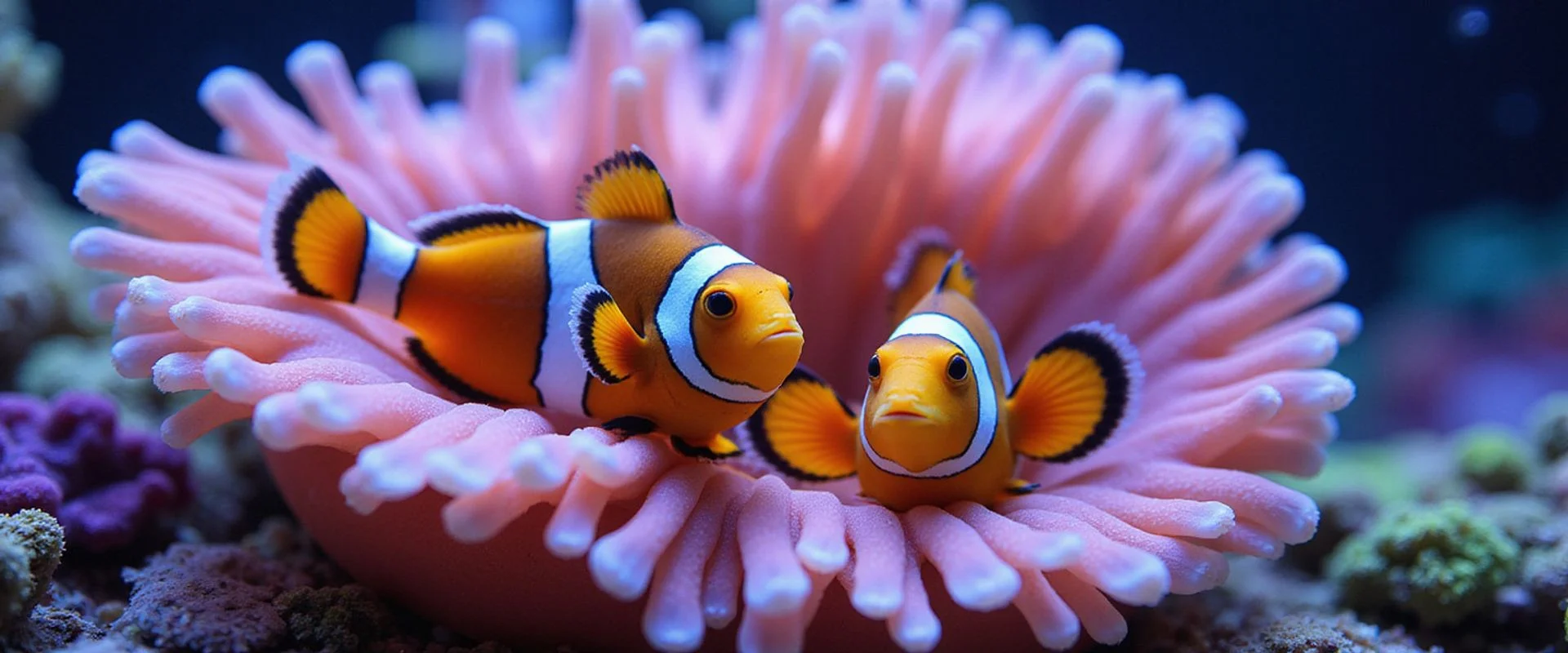
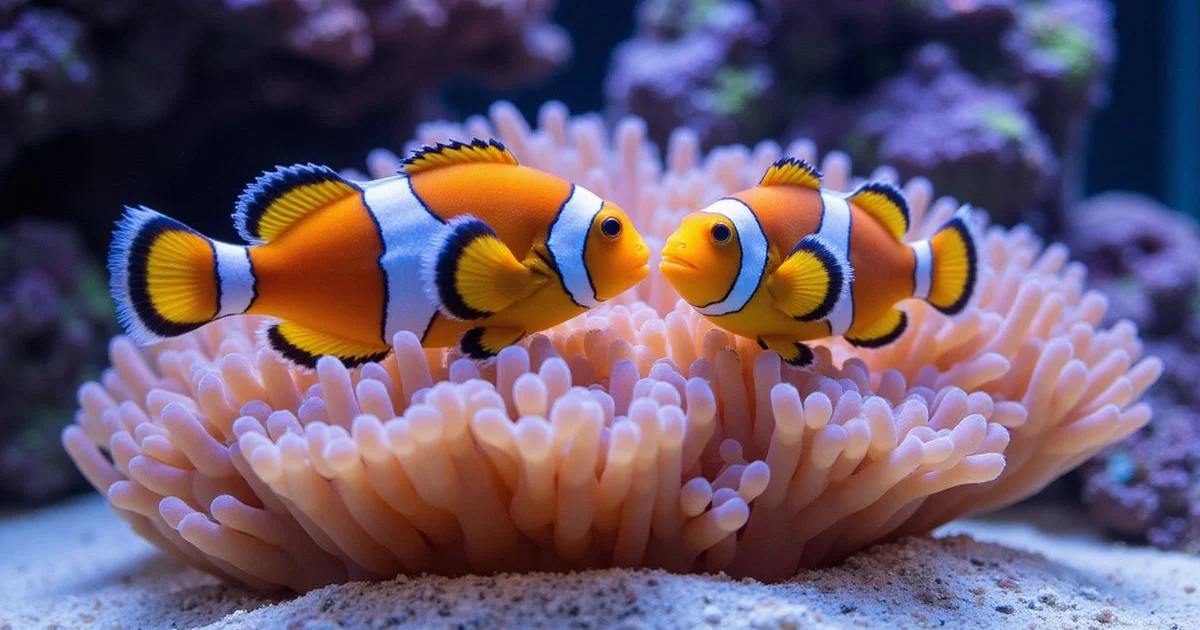
The Ocellaris Clownfish is the textbook first saltwater fish for a reason. They are tough as nails, eat almost anything you offer, and have a peaceful disposition. Their iconic look is instantly recognizable, and they are known for forming strong pair bonds.
You can find them in the standard orange and white, but also in dozens of designer morphs like Snowflake or Picasso. A standard Ocellaris typically costs between $25 and $50, with designer varieties costing more.
We recommend stocking a single fish or a bonded pair in a tank of at least 30 gallons. A common mistake is adding a third clownfish to an established pair; the existing pair, led by the dominant female, will almost always kill the intruder.
2. Royal Gramma (Gramma loreto)
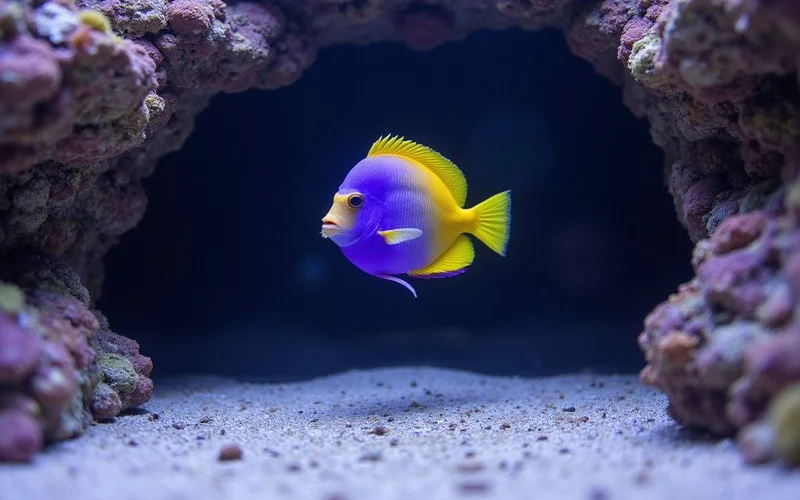
The Royal Gramma offers a stunning splash of color with its bright purple front half and a vibrant yellow tail. It’s a mostly peaceful fish that eats well and spends its time darting in and out of rock caves. This behavior makes it an excellent addition for a reef tank with plenty of live rock.
A Royal Gramma will typically cost between $25 and $50.
Get only one per tank. They are very territorial with their own kind and will fight if kept together in a standard home aquarium. You may also see them do a wide-mouthed “yawn,” which is actually a threat display to warn other fish to stay away from their chosen cave.
3. Firefish (Nemateleotris magnifica)
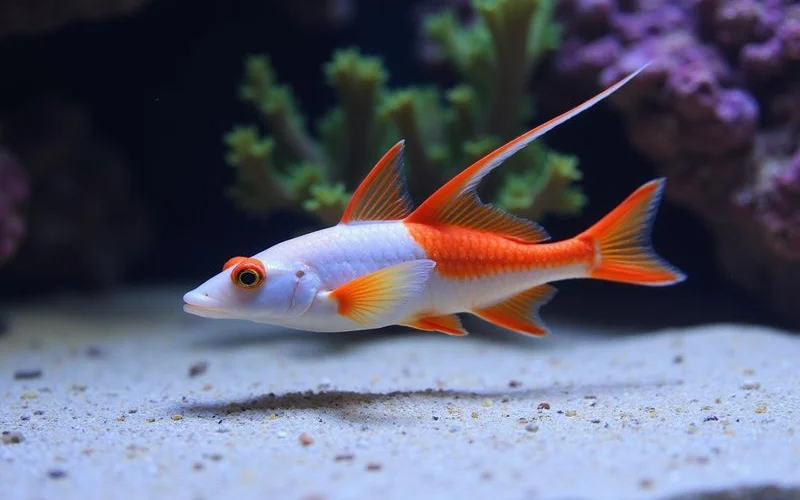
The Firefish is a slim, elegant fish that hovers over the sand, its long dorsal fin extended like a flag. Its white body transitions to a brilliant red-orange tail. While they can be skittish at first, they usually warm up and become more visible after a few weeks of feeling secure.
A key point of planning is a tight-fitting lid. Firefish are notorious jumpers, especially when startled. We’ve found that mesh lids are an excellent option because they secure the tank while allowing for proper gas exchange, unlike solid glass tops.
4. Six-Line Wrasse (Pseudocheilinus hexataenia)
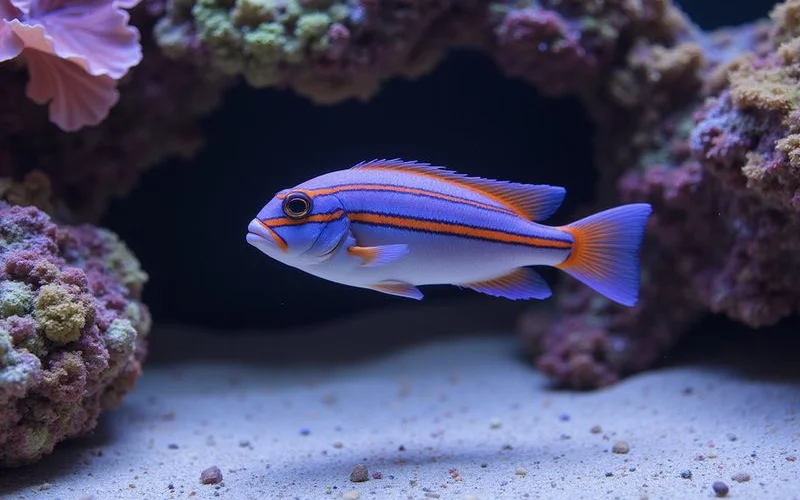
With six bold, horizontal stripes of purple and orange, the Six-line Wrasse is an active and engaging fish. It readily eats prepared foods and provides a great benefit by hunting for bristleworms and other small pest invertebrates.
The main caveat with this fish is its potential for aggression as it matures. Its speed and assertive nature mean it can easily outcompete slower fish for food. To manage this, we always advise adding a Six-line Wrasse as the last fish to your tank, after more peaceful inhabitants are already established.
5. Yellow Watchman Goby (Cryptocentrus cinctocephalus)
This bright yellow goby is hardy, peaceful, and fascinating to watch, especially when paired with a pistol shrimp. The two form a symbiotic relationship, with the nearly blind shrimp digging a burrow while the goby stands guard. This duo is one of the most rewarding dynamics you can have in a reef tank.
To succeed with this fish, you need a sand substrate at least 3 inches deep and a pistol shrimp partner, like a Tiger Pistol Shrimp. You must stock both the goby and the shrimp at the same time so they can pair up and create their shared home.
6. Banggai Cardinalfish (Pterapogon kauderni)
The Banggai Cardinalfish has a striking silver body with bold black stripes and long, elegant fins. It’s a peaceful, slow-moving fish that is easy to feed. We recommend buying captive-bred Banggais, which are now widely available. Over-harvesting in their native habitat, the Banggai Archipelago in Indonesia, has made supporting captive breeding programs more important than ever.
A mated pair works well in a 40-gallon tank or larger with other calm tank mates. These fish are mouthbrooders, meaning the male will hold the eggs in his mouth until they hatch, which is an amazing behavior to witness.
What to skip in your first six months
- Yellow Tang and other tangs. These fish need 75-gallon tanks at a minimum for their active swimming patterns. They are also highly susceptible to common parasites like Ich and diseases like Head and Lateral Line Erosion (HLLE).
- Mandarinfish (Dragonet). A true specialist, this fish eats only live copepods. Your tank needs to be mature, typically over a year old, with a large, self-sustaining copepod population. You should be able to see tiny pods scurrying on the glass at night before even considering one.
- Angelfish. Most large angels, like the French or Queen, become too aggressive for a community tank. Many dwarf angels in the Centropyge family are known to nip at and destroy corals.
- Butterflyfish. Most species are specialists that require very specific diets and pristine water conditions, making them unsuitable for new aquarists.
- Damselfish. While very hardy, most damselfish, especially varieties like the Domino or Blue Devil, are incredibly aggressive. They often become tank bullies that prevent you from adding any peaceful fish later.
- Lionfish. Their beauty is undeniable, but their venomous spines pose a safety risk to you, and their predatory nature means they will eat any tank mate small enough to fit in their mouth.
Quarantine matters
Even the hardiest beginner saltwater fish can die quickly if they are introduced with a disease like Marine Ich or Velvet. We quarantine every saltwater fish we receive for at least two weeks before it goes on sale, and you can see our quarantine protocol for details.
On top of our process, we strongly recommend you perform a second quarantine in a separate hospital tank for 4 to 6 weeks. This extended period covers the full lifecycle of common parasites like Cryptocaryon irritans (Ich), which can take up to 28 days to complete. A simple 10-gallon tank with a heater and sponge filter is all you need for this crucial step.
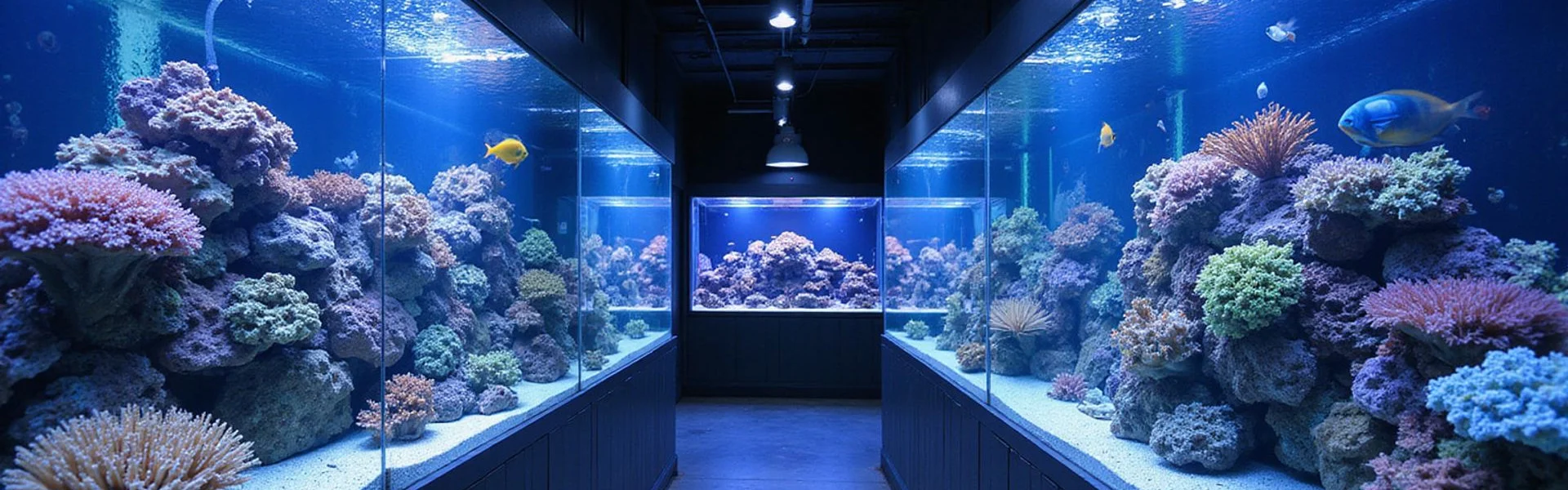
For more on setting up your system, see our guide on FOWLR vs reef tank. When adding new fish, using the drip method is required reading for their safety. When you’re ready to get started, our saltwater stock is housed in our dedicated marine room, with every fish observed and cared for by our expert team.