The Gulf Coast Quarantine Protocol — Why We Wait 2 Weeks
Our prophylactic 2-week QT process for every fish. The meds, the parameters, the daily observation routine, and why it matters for reef tank survival.
You know the excitement of adding a new fish to your tank. But you also know the risk that one sick fish can wipe out an entire established reef system.
The most critical thing we do isn’t selling fish. It’s our mandatory two-week saltwater fish quarantine protocol that every single animal goes through before it even sees the sales floor.
This process is the single best way to protect your investment and our animals.
Here’s our exact fish quarantine protocol, why we do it, and what happens every step of the way.
Why two weeks
A two-week quarantine is the minimum safe period to observe and treat for the two most devastating reef tank diseases: ich (Cryptocaryon irritans) and marine velvet (Amyloodinium ocellatum).
At typical reef temperatures of 78-80°F, the parasitic life cycles for these diseases last between 7 and 14 days. A 14-day treatment window covers this entire cycle, which is essential for catching infections that don’t show symptoms for the first week.
Many chain stores and smaller shops skip a proper quarantine to move inventory faster. This often means they sell fish that appear healthy but are actually carrying parasites. When you add that fish to your display tank, the parasites can multiply and cause a catastrophic crash about 10 days later.
On arrival
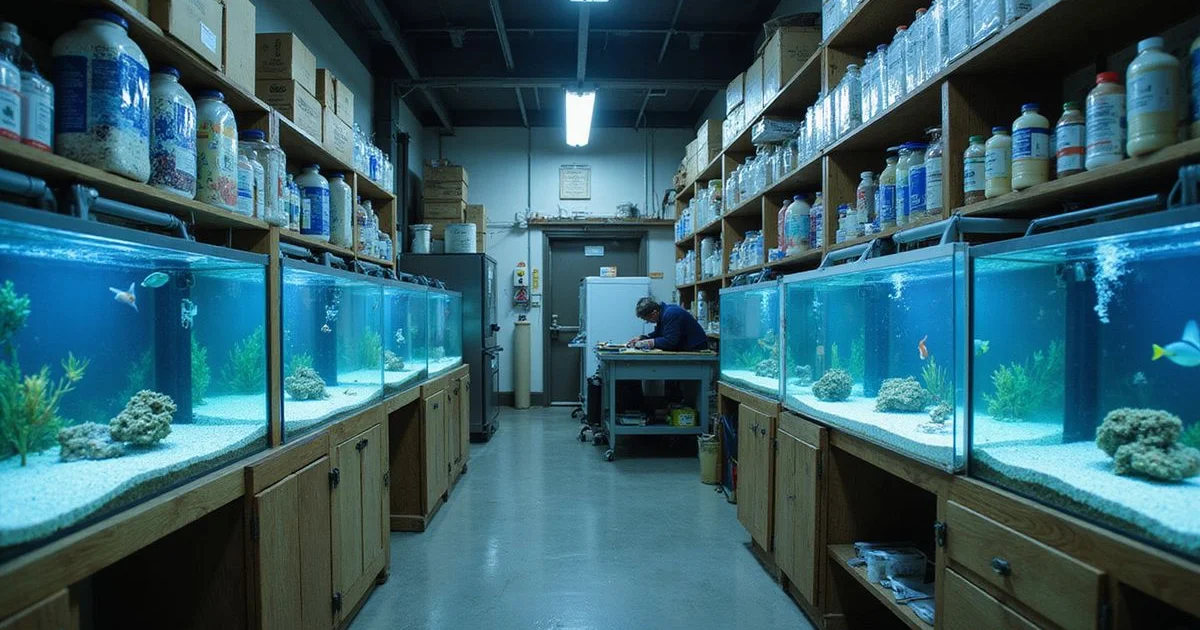
Our process begins the moment fish arrive from our suppliers. They are never floated in our display tanks, they go directly from their shipping bags into our dedicated quarantine system.
Our team immediately gets to work on a few key steps.
- We check the shipping bag’s pH and temperature. A fish that has been in transit for a long time will be in water with high ammonia and a low pH. Opening that bag and exposing it to clean, high-pH water can cause a fatal ammonia shock.
- Our team performs a slow drip acclimation. This process takes 60 to 90 minutes and gradually matches the fish’s water to our quarantine system parameters: a specific gravity of 1.025, a temperature of 78 to 80°F, and a pH of 8.1 to 8.3. This minimizes stress far better than just floating the bag.
- We conduct a detailed visual inspection. Our aquarists note any visible symptoms like clamped fins, rapid breathing, torn fins, or visible ich spots. Any fish showing obvious signs of sickness is moved to a separate, dedicated hospital tank for more intensive care, not our main quarantine system.
Treatment in QT
Once acclimated, fish begin a standardized treatment protocol based on their species and tolerance.
For most fish
The standard treatment involves using a proven copper-based medication.
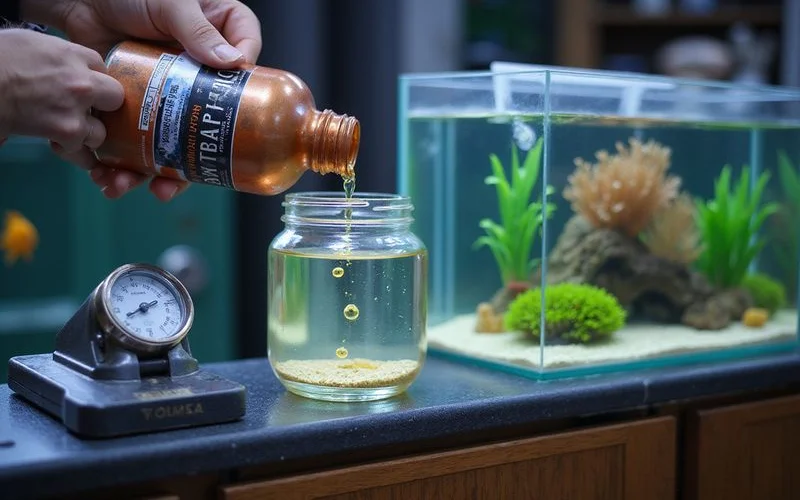
- Fritz Mardel Coppersafe is dosed to a therapeutic level of 2.0 to 2.5 parts per million (ppm). This chelated copper is stable and effective against external parasites.
- The therapeutic level is held for the full 14 days.
- We test the copper level daily using a reliable test kit, like a Salifert copper test kit, to ensure the dose remains effective without becoming toxic.
For copper-sensitive fish
Some fish cannot tolerate copper medication. This includes mandarinfish, scaleless species like some blennies, and tangs that arrive highly stressed. For these animals, we use an alternative method.
- Hyposalinity is our method of choice. We gradually lower the specific gravity of the water to 1.009 and hold it there for 14 days. This kills marine ich through osmotic pressure without any medication.
- This is a slower process that requires careful monitoring with a calibrated digital refractometer to ensure the salinity is stable.
For invertebrates
Invertebrates like shrimp, crabs, and corals cannot tolerate copper or hyposalinity.
- These animals go through an observation-only quarantine.
- We may perform a Lugol’s iodine dip for certain corals to remove pests. Snails often receive a brief freshwater dip, which effectively removes pyramidellid snails that prey on prized tridacnid clams.
Daily observation
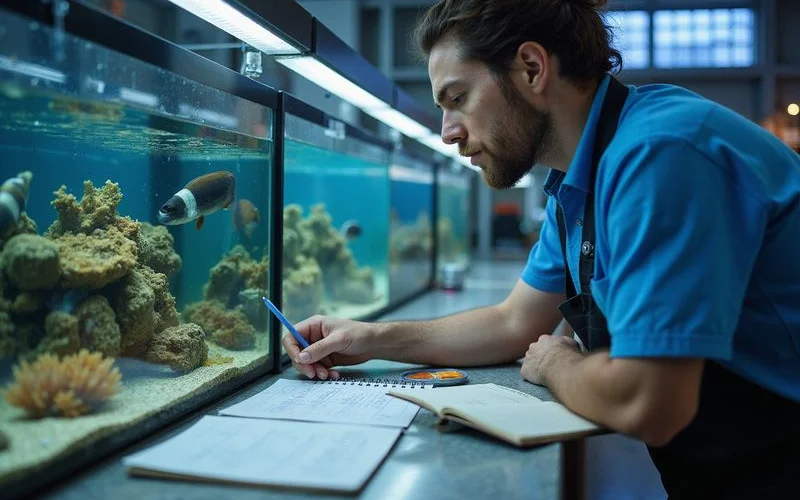
Medication is only half the battle. Every quarantine tank is visually inspected by our aquarists at least twice a day for subtle signs of distress.
Here’s what we look for:
- Behavior: Is the fish swimming normally or hiding? Is it “flashing,” which is a term for scratching its body against surfaces? We also monitor its breathing rate.
- Appearance: We check for clamped fins, color changes, and fin damage. We look for the salt-grain-sized spots of ich or the fine, gold-dust appearance of velvet.
- Feeding Response: Are they actively eating prepared foods? Our gold standard is getting them to accept frozen mysis shrimp, and pellets are a great bonus.
A senior staff aquarist, often Marcus, reviews the quarantine logs every single morning. Any fish that isn’t responding well to treatment will have its quarantine period extended. No fish moves to the sales floor until it is healthy and stable.
Conditioning onto food
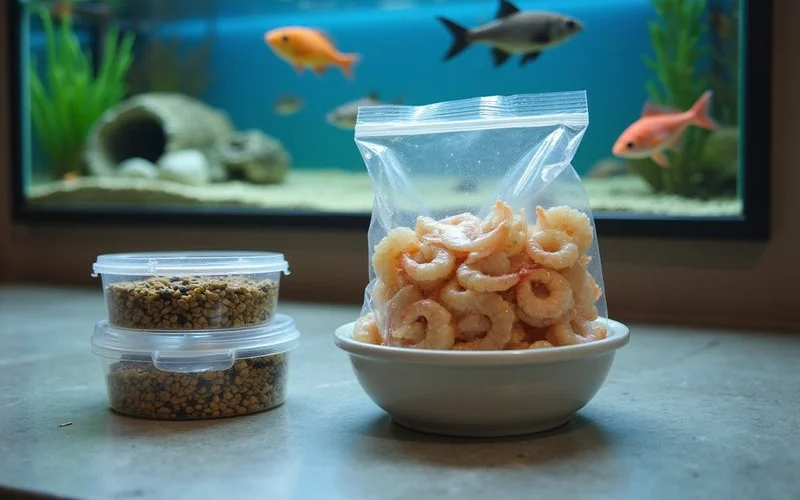
Wild-caught marine fish frequently arrive in shock and may refuse to eat for several days. A crucial part of our quarantine protocol is conditioning them to accept prepared aquarium foods like frozen mysis shrimp, brine shrimp, and high-quality pellets such as New Life Spectrum (NLS).
A fish that won’t eat prepared foods in our system is unlikely to survive in yours. We simply do not sell fish that are not eating well. For picky eaters, we sometimes use appetite stimulants like Seachem GarlicGuard mixed with their food to encourage a feeding response.
Release to sales floor
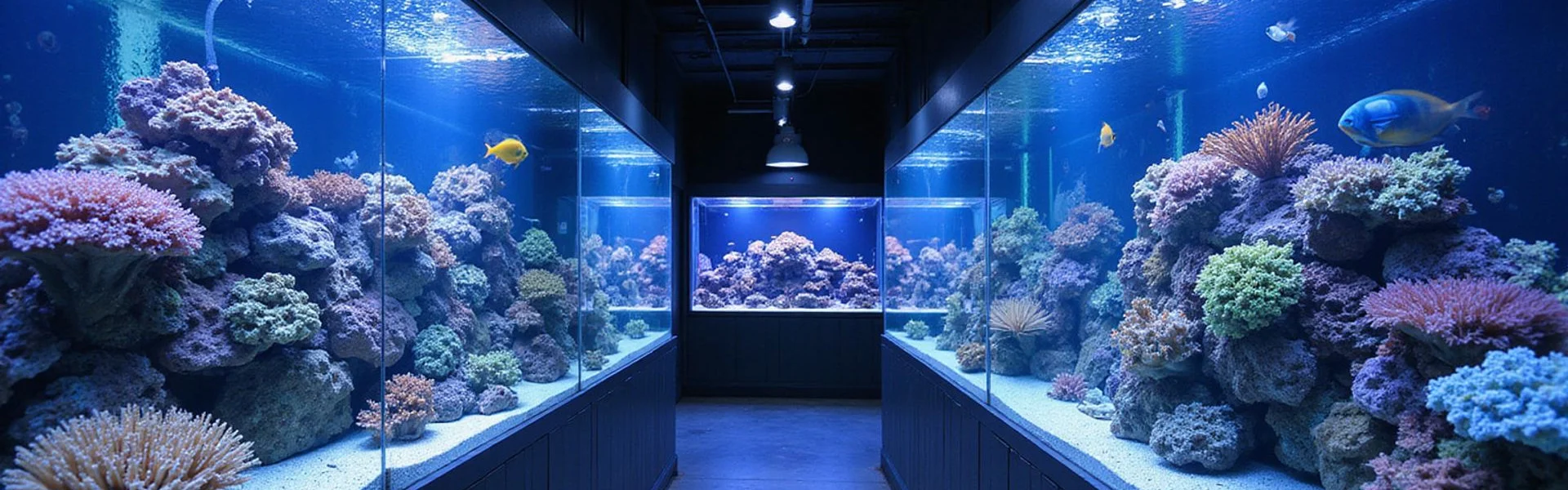
Only after a fish has passed the full 14-day quarantine, held at a therapeutic treatment level, and is actively eating prepared foods does it move to our display sales tanks.
As an extra layer of protection, each one of our sales systems runs its own dedicated UV sterilizer. This helps prevent any cross-contamination in the unlikely event a parasite gets through our rigorous protocol.
At pickup
When you choose a fish, our job isn’t done. We ensure the transition to your home is as smooth as possible.
- We bag your fish in clean saltwater directly from its sales tank.
- Our team sends you home with drip-acclimation supplies, or provides clear instructions if you have your own equipment.
- We test your tank water if you bring a sample, allowing us to match the bag’s water parameters as closely as possible to your home system.
You can follow our proven drip acclimation method for the final step at home. We also strongly recommend you run your own 4 to 6 week home quarantine. Think of it as an insurance policy. Check our guide on common saltwater diseases for a list of things to watch for.
Why it costs more
Yes, our fish cost more than what you might find at a big-box chain store. There’s a very direct reason for that.
A proper quarantine process has significant costs: dedicated tank space, medications, high-quality food, skilled labor for daily observation, and the cost of the fish that unfortunately don’t survive quarantine and never make it to the sales floor.
The tradeoff is a healthy, conditioned fish that survives the trip home and thrives in your tank. The cheapest fish you can buy is the one that lives. Everything else is just a slow, frustrating refund. Our saltwater stock is a direct reflection of the healthy, stable animals we would put in our own tanks.