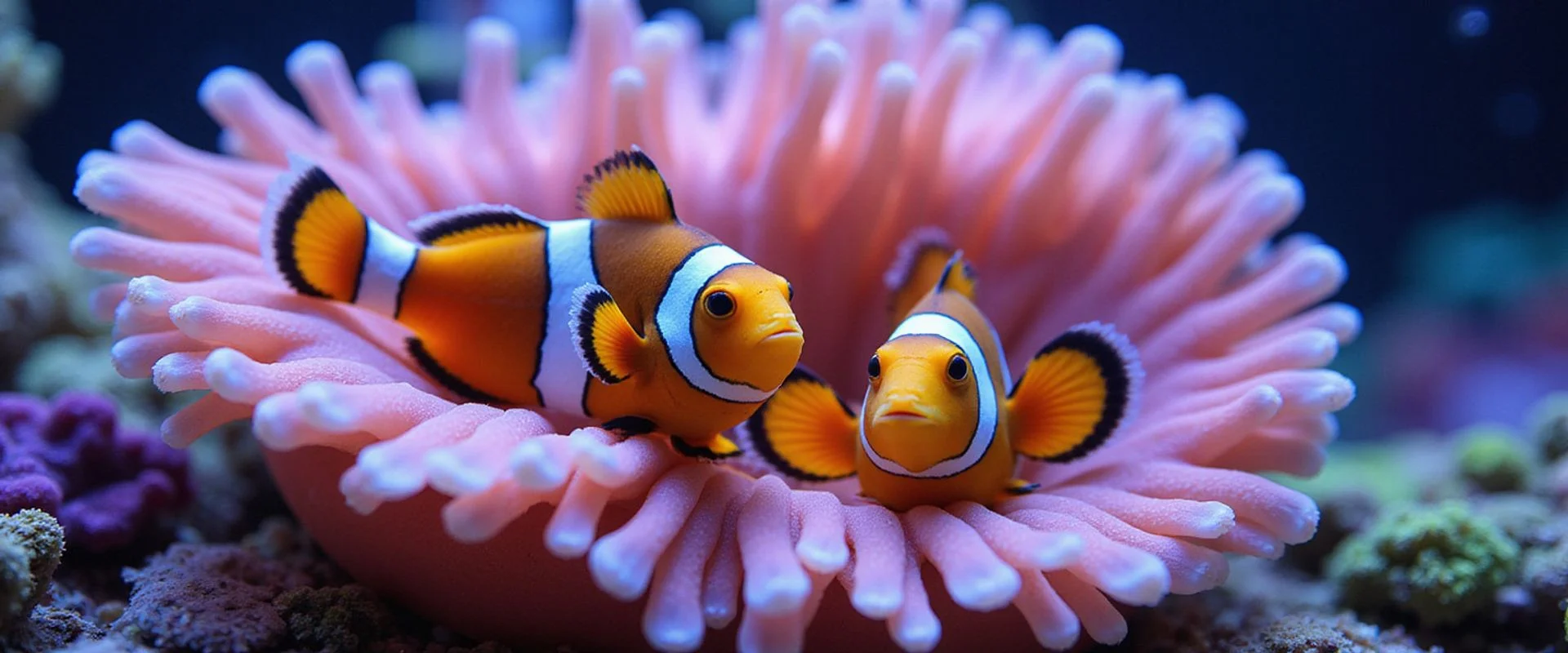
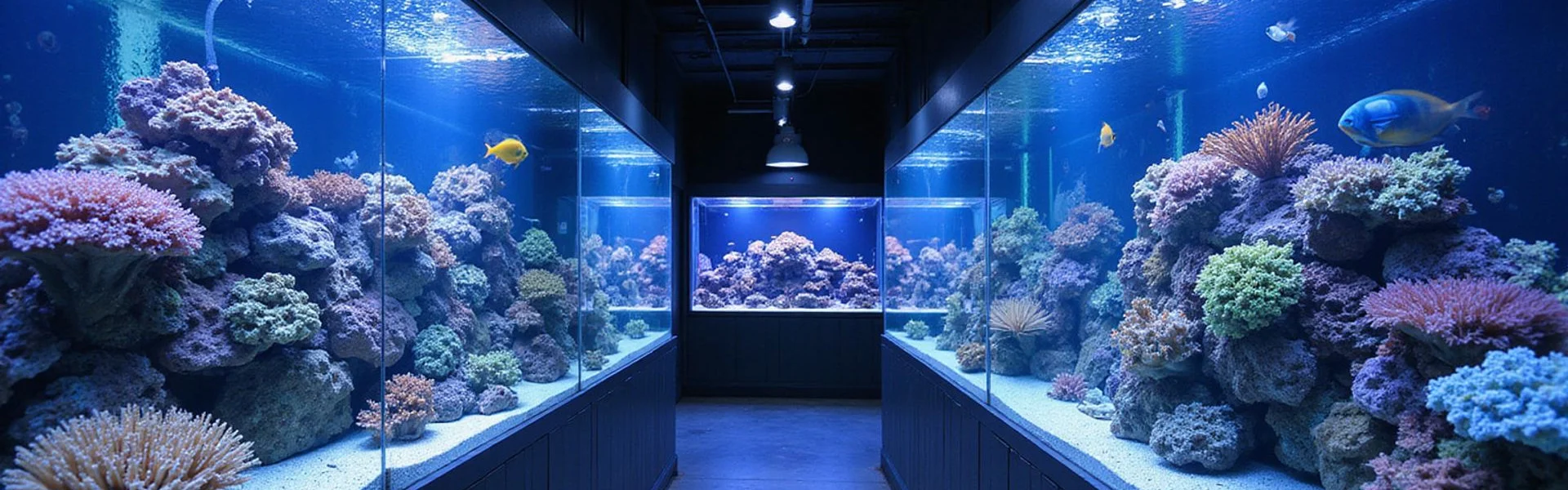
FOWLR vs Reef Tank — Which Setup Is Right for You?
Cost, equipment, livestock, and maintenance compared. Why most reefers start FOWLR and graduate.
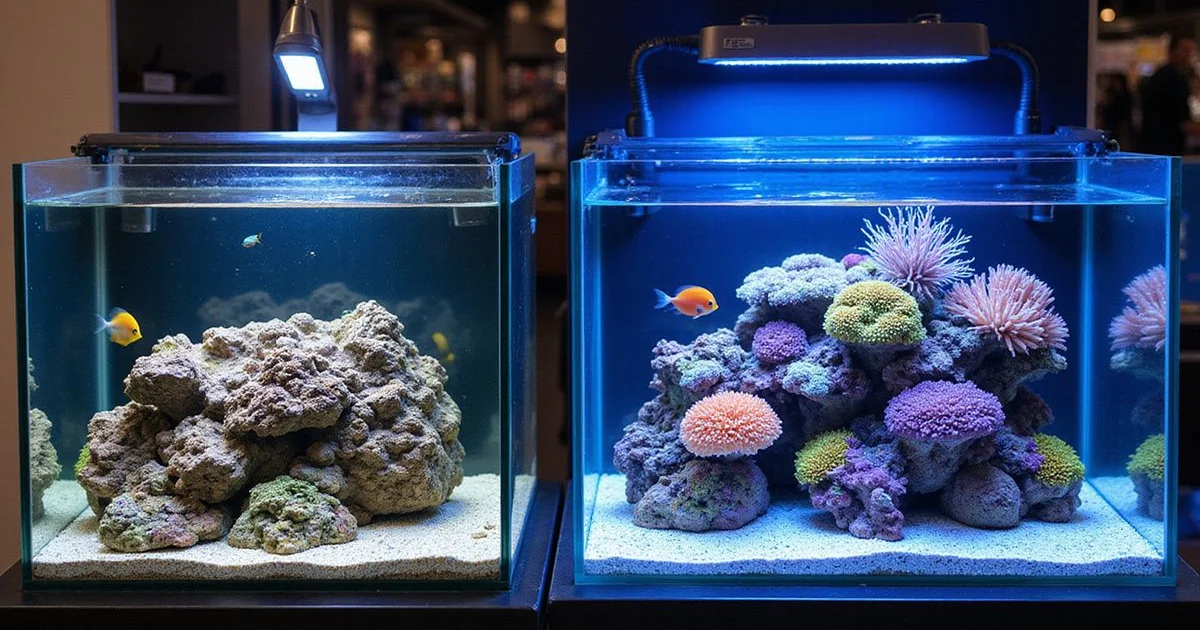
You know how every saltwater aquarium journey begins with one big question: do you want to build your world around the fish, or around the coral? This is the classic FOWLR vs. reef tank decision.
A FOWLR (Fish-Only With Live Rock) setup is your path to keeping larger, more charismatic fish. It’s simpler and more forgiving. A reef tank, on the other hand, is a vibrant underwater garden, but it demands more precision, more equipment, and more of your time.
Making the right choice from the start saves a lot of frustration and money down the road.
We’re going to break down the real differences in cost, equipment, livestock, and maintenance time. Let’s get into the practical details so you can decide which setup is the right one for you.
What each is
A FOWLR tank is a saltwater aquarium that contains live rock, sand, and fish. There are no corals or delicate invertebrates. This means you can get by with less intense lighting and the water chemistry is much simpler to manage. The big advantage is a wider selection of fish, including stunning species like large angelfish, butterflyfish, and even predators that would destroy a coral reef.
A Reef tank also has live rock, sand, and fish, but it adds corals into the mix (like soft corals, LPS, and SPS). This addition changes everything. You’ll need high-output lighting that provides Photosynthetically Active Radiation (PAR) for the corals to grow. Water chemistry must be incredibly stable, which requires regular testing and dosing of elements like calcium, alkalinity, and magnesium that corals consume. Your fish selection is also limited to species that are certified “reef-safe” and won’t eat your expensive corals.
Cost
A reef tank is a significant step up in cost, primarily due to lighting and the ongoing expense of supplements and livestock. For a standard 75-gallon build, the initial investment for a reef-ready setup is often 50% higher than a comparable FOWLR system.
Here’s a look at the estimated startup costs for a 75-gallon system.
| Item | FOWLR | Reef |
|---|---|---|
| Tank, sump, return pump | $700 | $700 |
| Skimmer | $300 | $400 (oversized for reef) |
| Lighting | $200 (Current USA) | $700 (2x AI Hydra 32) |
| Powerheads | $100 | $200 |
| Live rock + sand | $300 | $300 |
| Salt + RO/DI water | $50/month | $80/month (more frequent changes and dosing) |
| Test kits | $40 (Ammonia, Nitrite, Nitrate) | $80+ (Adds Ca, Alk, Mg, PO4) |
| Initial total | ~$1,700 | ~$2,500+ |
| First-year livestock | $300 | $800+ |
These numbers can change, but the ratio generally holds true. A 2026 breakdown of reef tank startup costs showed that a 75-gallon system can easily range from $3,000 to $6,000 once all equipment and initial livestock are included. For a more detailed look at these expenses, you can see our full guide on reef tank cost in Florida.
Equipment differences
The single biggest equipment difference between a FOWLR and a reef tank is the lighting. After that, the demands on your filtration and flow also increase significantly when you add corals.
Lighting
FOWLR tanks only need lighting that makes the fish look good. A simple and affordable LED light like the Current USA Orbit Marine, which costs around $150 to $200, is perfectly fine. Reef tanks, however, need light that provides PAR (Photosynthetically Active Radiation) to fuel coral photosynthesis. This is a non-negotiable requirement. For a 75-gallon tank, you’ll need powerful lights like a pair of AI Hydra 32s or EcoTech Radion XR15s, which can cost between $700 and $1,000. Demanding SPS corals often require PAR levels of 250-400, which basic lights simply cannot produce.
Flow
Basic flow in a FOWLR tank is enough to keep waste suspended so the filter can grab it. In a reef tank, especially one with SPS corals, you need strong, chaotic flow to deliver nutrients and remove waste from the coral’s surface. This often requires at least two higher-quality powerheads, like those from EcoTech or Neptune Systems, which are designed to create that turbulent environment.
Skimmer
Both setups need a protein skimmer, which is the heart of your filtration system. For a reef tank, we recommend getting a skimmer that is rated for a larger tank. Excess organic compounds in the water can inhibit coral growth and health far more than they affect fish. A quality skimmer for a 75-gallon reef, like a Reef Octopus Classic 110-INT or a Bubble Magus Curve 5, will do a better job of pulling out waste before it breaks down.
Dosing
A FOWLR tank does not require any chemical dosing beyond a salt mix for water changes. A reef tank, however, is a different story. As corals grow, they consume calcium, alkalinity, and magnesium from the water. You have to replenish these elements daily, either manually or with an automated dosing pump, to keep your water parameters stable.
Livestock differences
Your choice between a FOWLR and a reef tank fundamentally determines the types of fish you can keep. One offers variety in personality and size, while the other focuses on a community that coexists with delicate corals.
FOWLR
This is where you can have the “showstopper” fish. Because there are no corals to worry about, your options open up to most marine species. This includes beautiful angelfish like the Emperor or Queen Angelfish, various butterflyfish, and interesting predators like lionfish, puffers, and eels in a large enough tank. If your dream is to keep a Harlequin Tuskfish or a Miniatus Grouper, a FOWLR tank is your best option.
Reef
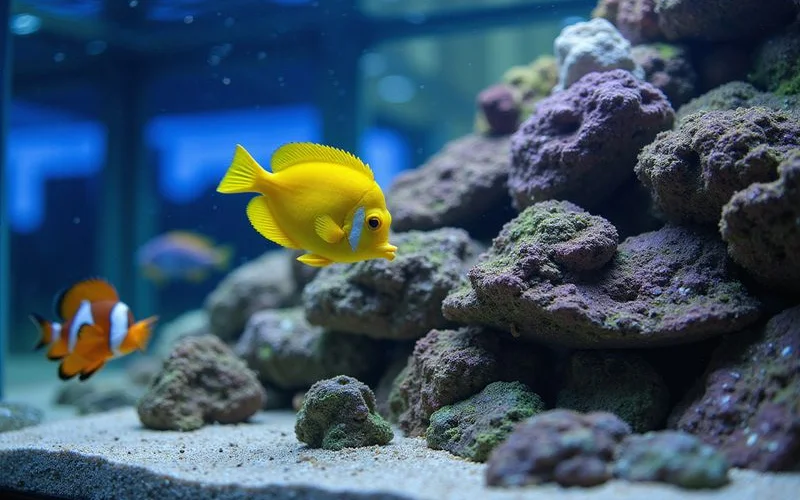
In a reef tank, every fish must be “reef-safe,” meaning it won’t nip at or eat corals and invertebrates. This restricts you to a specific list of fish, though there are still many great choices. Popular reef-safe fish include clownfish, gobies, blennies, the Royal Gramma, firefish, and certain wrasses. Larger fish like tangs can be kept, but only in tanks that are large enough to accommodate their activity level. You generally have to avoid most large angelfish and butterflyfish.
Maintenance differences
The weekly time commitment is one of the most practical differences between the two systems. A reef tank easily requires double the maintenance time of a FOWLR setup.
FOWLR
Maintenance is straightforward. A typical week involves a 10-20% water change, testing for ammonia, nitrite, nitrate, and salinity, and emptying the skimmer cup. This routine usually takes about 30 minutes per week.
Reef
The core tasks are similar, but with several critical additions. You’ll still perform a weekly 10-20% water change and empty the skimmer. However, you must also test for alkalinity, calcium, and magnesium at least twice a week to ensure stability. Most reef keepers also need to top off their tank with fresh RO/DI water daily to replace what evaporates, and dose their calcium and alkalinity supplements every day. This, plus regular glass cleaning to prevent algae buildup, puts the weekly time commitment closer to 60-90 minutes.
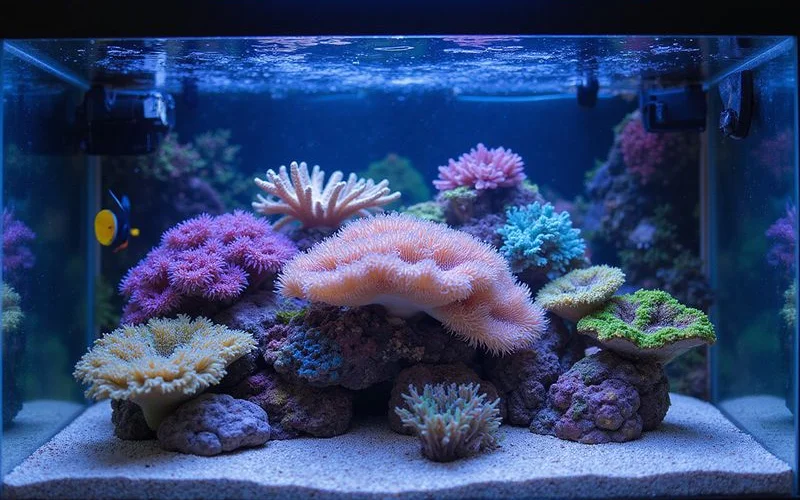
The classic upgrade path
Most of the successful reef keepers we work with didn’t start with a full-blown SPS coral reef. They followed a gradual path that allowed them to learn and adapt as their tank matured.
- Start with a FOWLR setup for 6 to 12 months. This is the time to master the fundamentals, including water chemistry, proper salt mixing, fish selection, and the critical importance of quarantining new arrivals.
- Add your first easy corals. Once the tank is stable, introduce hardy soft corals like Zoanthids, Discosoma mushrooms, and leather corals. You may need to upgrade your lighting at this stage.
- Move on to LPS corals. After success with soft corals, you can try Large Polyp Stony (LPS) corals like Euphyllia (hammers, torch corals, and frogspawn). This is the point where maintaining stable alkalinity becomes crucial for their health.
- Try SPS corals over time. Small Polyp Stony (SPS) corals like Acropora and Montipora are the final step. These are the most demanding corals, requiring intense light and pristine, stable water conditions. Most hobbyists don’t reach this stage until their second or third year.
Jumping straight into an SPS-dominant tank is a common and expensive mistake for beginners. The learning curve is steep, and it’s much better to grow into the complexity of a full reef.
Quick decision matrix
Still not sure? Here is a simple way to look at the choice.
| If you want… | Pick… |
|---|---|
| Big, colorful fish like angels and lionfish | FOWLR |
| An underwater coral garden | Reef |
| A lower upfront and running cost | FOWLR |
| A smaller weekly time commitment | FOWLR |
| A system that looks like a natural reef | Reef |
| Simpler water chemistry management | FOWLR |
| To eventually have a reef tank | Start FOWLR, but plan for a reef |
Plan for the future
Even if you decide to start with a FOWLR tank, we strongly advise buying key pieces of equipment that are reef-ready from day one. Specifically, choose a sump, return pump, and protein skimmer that are sized for the demands of a future reef tank.
The tank itself won’t need to change, but your filtration will be ready when you are. This simple step can save you from a costly $500 to $1,000 upgrade later on.
When you are ready to add corals, check out our coral stock and our guide on SPS vs LPS vs soft corals. For fish that work in either setup, you can see our quarantined saltwater stock.