How Much Does a Reef Tank Cost in Florida?
Real first-year totals for nano, small, medium and large reef tanks. Equipment, livestock, and ongoing costs broken out.
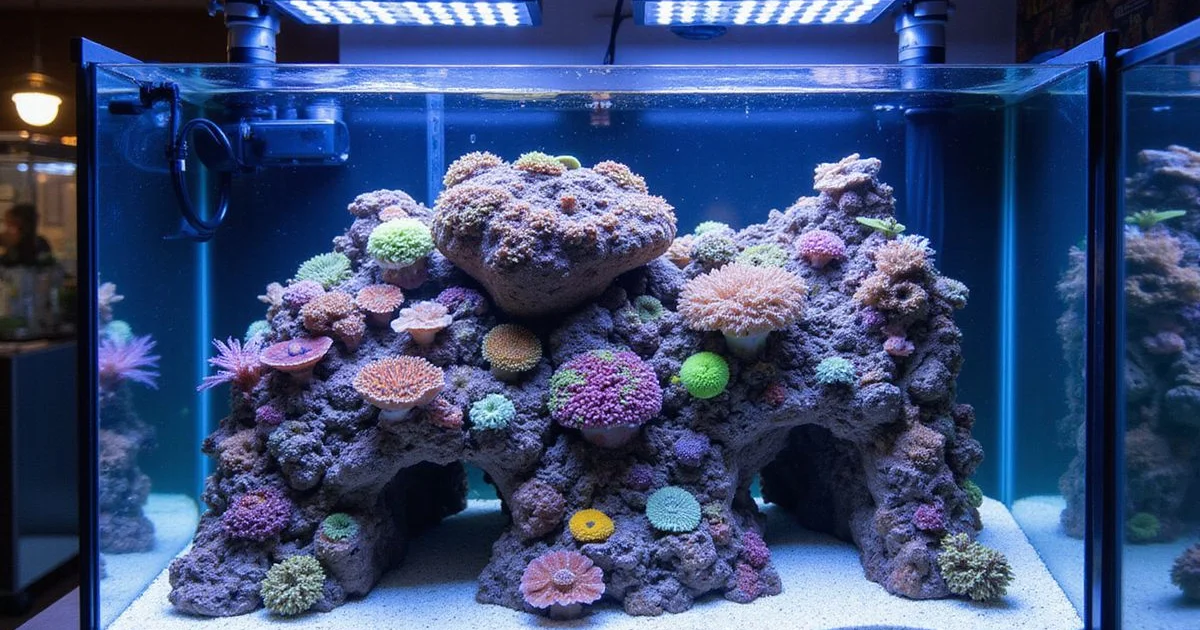
A reef tank is a real investment, and one of the first questions we hear is, “What’s this actually going to cost me?” You can get a tank running for under a grand or spend ten times that, so it’s a fair question.
The numbers below are realistic, all-in budgets for builds we’ve seen come together for our customers here in Sarasota over the past few years. We use them to set expectations honestly. The worst conversations in this hobby happen when someone budgets $500 for what turns out to be a $2,500 project.
To get a number tailored to your specific plan, our reef tank cost estimator is a great starting point. It lets you plug in your desired tank size, livestock, and lighting for a personalized estimate.
Let’s break down the typical costs for the most common reef tank sizes.
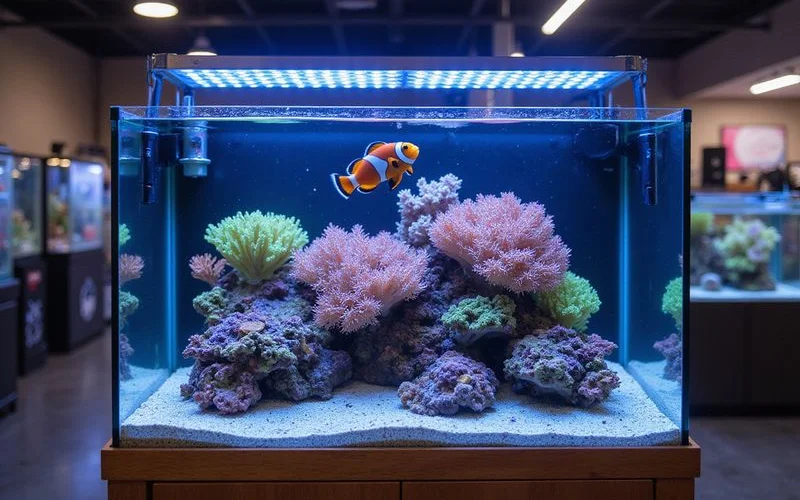
Nano Reef (10 to 20 gallon AIO)
This is the most affordable way to get into a true reef-keeping experience. All-in-One (AIO) tanks from brands like Innovative Marine or Fluval Sea have built-in filtration, so you just need to add a heater, light, and water.
| Item | Cost |
|---|---|
| 20-gallon Innovative Marine or Waterbox AIO | $250 |
| Heater (50W) | $25 |
| AI Prime 16HD or similar LED light | $350 |
| Live rock + sand | $80 |
| RO/DI water (initial fill) | $20 |
| Reef salt (first 6 months) | $80 |
| Test kits + refractometer (Salifert, Hanna) | $80 |
| First-year livestock (1 clown pair, 5 to 8 soft corals) | $200 |
| Year 1 total | ~$1,085 |
A nano tank is perfect for someone with a tight budget or limited space. It’s also a great way for a beginner to get a real feel for the hobby without a massive commitment.
Small Reef (30 to 40 gallon)
Moving up to a 30 or 40-gallon system gives you more stability and room for error than a nano. This size is where you start seeing proper sumps for hiding equipment, which makes the display tank look much cleaner.
| Item | Cost |
|---|---|
| 40-gallon AIO or sumped tank | $500 |
| Protein Skimmer (Bubble Magus Curve 5) | $200 |
| Heater (200W) | $40 |
| Kessil A360X or EcoTech Radion XR15 light | $400 |
| Powerhead (Sicce, Tunze) | $80 |
| Live rock + sand | $200 |
| RO/DI unit (BRS 4-Stage System) | $200 |
| Reef salt (full year) | $120 |
| Test kits + dosing supplements | $200 |
| First-year livestock | $400 |
| Year 1 total | ~$2,340 |
This size is ideal for an established hobbyist upgrading from a smaller tank or a family looking for a beautiful centerpiece for a living room.
Medium Reef (75 to 90 gallon)
This is the “classic” reef tank size that many hobbyists aim for. It’s large enough for a diverse mix of fish and corals, and big enough to require more serious equipment like an oversized skimmer, multiple lights, and automated dosing for chemical stability.
| Item | Cost |
|---|---|
| 90-gallon tank + sump + return pump | $900 |
| Reef-grade skimmer (Reef Octopus, Bubble Magus) | $400 |
| Heater (300W) | $60 |
| AI Hydra 32 (one or two) or similar | $700 to $1,400 |
| Powerheads (Maxspect, Tunze) | $250 |
| Live rock + sand (MarcoRocks, CaribSea) | $300 |
| RO/DI unit | $200 |
| Reef salt (full year) | $200 |
| Two-part dosing supplements + dosing pump | $300 |
| Test kits | $150 |
| First-year livestock (mixed reef) | $800 |
| Year 1 total | ~$4,260 to $4,960 |
Large Reef (120+ gallon SPS)
These are the serious, show-stopping builds. For a tank this size, especially one focused on sensitive SPS corals, high-end equipment isn’t a luxury, it’s a necessity. You’ll need multiple powerful lights, a large skimmer, precise dosing, and often a controller like a Neptune Systems Apex to monitor and automate everything.
| Item | Cost |
|---|---|
| 125-gallon tank + custom sump + plumbing | $1,500 |
| High-end skimmer (Royal Exclusiv, Reef Octopus) | $700 |
| Heaters (2x 300W) | $100 |
| Two AI Hydra 64 or Radion G6 Pro lights | $1,800 |
| Multiple controllable powerheads | $500 |
| Neptune Apex or GHL ProfiLux controller | $700 |
| Live rock + sand | $500 |
| RO/DI unit + auto top-off | $400 |
| Reef salt (large quantities) | $400 (year) |
| Two-part dosing setup or calcium reactor | $500 |
| Test kits + Hanna checkers (Alkalinity, Phosphate) | $300 |
| First-year livestock (SPS-dominant) | $1,500+ |
| Year 1 total | ~$8,900+ |
This setup is best for a serious hobbyist with at least a couple of years of experience, often with a dedicated “fish room” or as a major living room centerpiece.
Ongoing Monthly Cost
After the initial setup, you need to budget for consumables.
- Salt mix: $30 to $80 per month, depending on your tank size and water change schedule. Brands like Tropic Marin Pro-Reef are popular.
- RO/DI filter replacements: Around $20 to $40 per month.
- Dosing supplements: For a coral-heavy tank, expect to spend $20 to $80 per month on alkalinity and calcium.
- Test kit reagents: Plan for $15 to $40 per month to replace used testing chemicals.
- Electricity: This is a big one in Florida. Based on average state electricity rates of about 15-16 cents per kWh, a medium to large tank can add $50 to $100+ to your monthly bill.
Your total ongoing cost will typically be between $100 and $250 per month after the tank is established.
Hidden Costs to Plan For
A few expenses often catch new reefers by surprise.
- Equipment Replacement: High-end LED lights like the AI Hydras have a lifespan of over five years, but the performance of the LED chips will degrade over time. It’s wise to plan on a $700 replacement around year five.
- Pest and Disease Treatment: You will eventually deal with pests like Aiptasia or fish diseases like ich. Having treatments on hand like Seachem Cupramine or Chemiclean can save your livestock, costing about $50 for a basic emergency kit.
- Coral Fragging Supplies: As your corals grow, you’ll want to frag them. A basic kit with bone cutters, super glue gel, and frag plugs costs around $50.
- Quarantine (QT) Tank: A separate 10 to 20-gallon tank to quarantine all new fish and coral is the single best way to prevent introducing disease. A simple QT setup can cost between $200 and $400.
Where to Save Without Compromising
You can definitely save money with smart choices.
- Buy Used Equipment: Tanks, sumps, and skimmers can often be found used for a significant discount. You can also find good deals on used lights and pumps, but always ask for the age of the item to gauge its remaining lifespan.
- Skip a Controller (at first): An expensive controller like an Apex isn’t necessary on day one. You can manage a smaller tank effectively with reliable timers and a good auto top-off system.
- Start with Dry Rock: Buying dry rock from a brand like MarcoRocks and “seeding” it with a bottle of bacteria can save you up to 30% compared to buying live rock.
Where NOT to Save Money
Cutting corners in these areas almost always leads to problems.
- RO/DI Water: The tap water here in Sarasota is high in minerals and total dissolved solids (TDS), which can fuel algae growth. A reverse osmosis deionization (RO/DI) system to produce pure 0-TDS water is non-negotiable.
- Test Kits: Accurate test kits are essential for maintaining stable water chemistry. Don’t rely on guesswork. Reputable brands like Salifert, Hanna, and Red Sea are worth the investment.
- Lighting: Inadequate lighting is the number one reason corals fail to thrive. Your lighting must be powerful enough and provide the right spectrum for the types of corals you want to keep.
Free Planning Consultation
Feeling overwhelmed? That’s normal. Bring your ideas, room photos, and budget to our store. We’ll help you design a system that fits your goals and give you a straight, honest answer about whether your budget is realistic.
This consultation is completely free. Once your build is planned, you can check out our coral stock for inspiration or use the reef tank cost estimator to refine your numbers.