Coral Lighting Requirements — PAR, Kessil, AI, Current USA
PAR targets by coral type, fixture options, and how to actually light your reef without overspending or underbuilding.
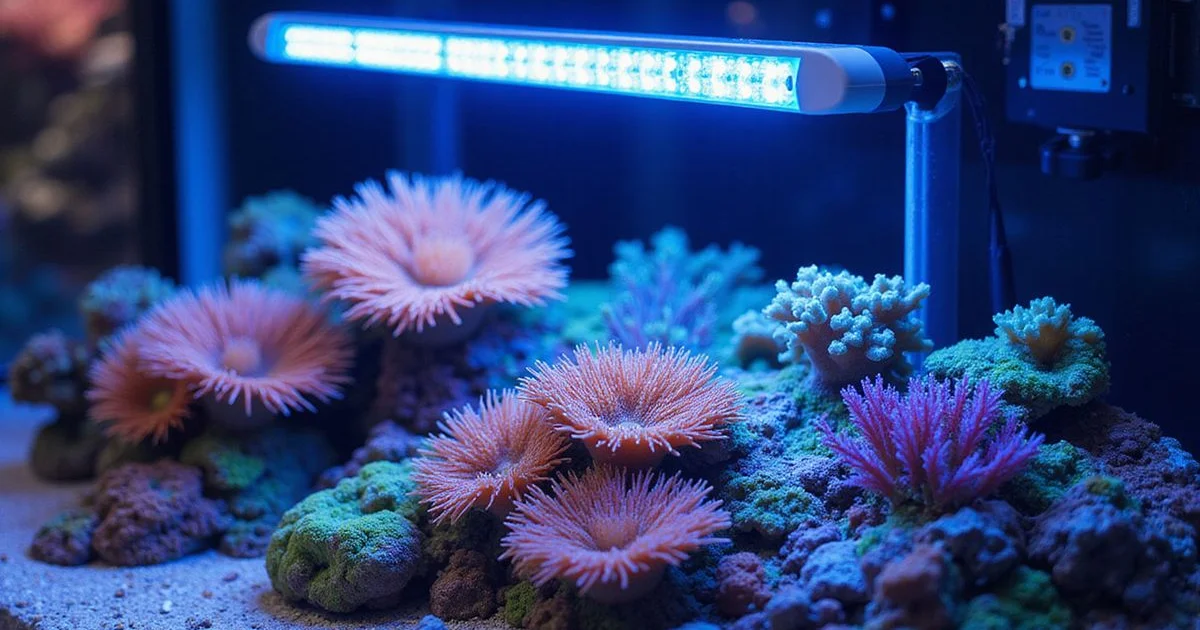
Getting the coral lighting right is often the first, and biggest, hurdle in building a successful reef tank.
It’s the single factor that determines whether you get brilliant color and steady growth, or just a tank of brown, bleached, or dying corals. The right fixture, matched to the right corals, makes all the difference.
Here, we’ll walk through what the numbers mean, which fixtures fit your goals, and how to use them correctly.
What is PAR
PAR stands for Photosynthetically Active Radiation. It’s the only truly useful measurement of the light corals actually use for photosynthesis, covering the 400 to 700 nanometer (nm) spectrum. The reading is given in micromoles per second per square meter (µmol/m²/s).
You’ll hear our staff talk about PAR because it cuts through the confusion of watts or lumens. It directly answers the question, “Is this enough of the right kind of light for this specific coral?”
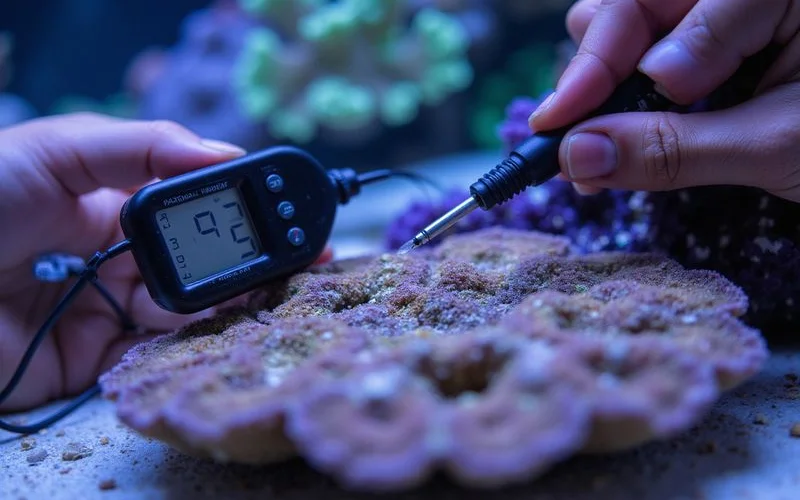
To get these numbers, we use a dedicated PAR meter, like the Apogee MQ-510, which is an industry standard for both hobbyists and marine biologists.
PAR targets by coral type
These numbers are the PAR readings you want at the specific spot where the coral is placed in your tank. The reading at the water’s surface will always be higher.
| Coral type | PAR at coral placement |
|---|---|
| Mushrooms, Green Star Polyps | 30 to 80 |
| Zoanthids, Leather Corals | 50 to 150 |
| LPS (Euphyllia, Hammers, Frogspawn) | 100 to 200 |
| Acans, Chalices, Favia | 75 to 150 |
| Montipora, Pocillopora | 200 to 350 |
| Acropora SPS | 300 to 500+ |
These are ideal targets. A new coral should always be started at a lower light level and slowly acclimated over several weeks to prevent shock.
Fixture tiers
Choosing a light often comes down to budget and the types of corals you plan to keep.
Budget: Current USA Orbit Marine
For around $150 to $250, the Orbit Marine is a solid entry point. It provides adequate PAR for most soft corals and many less demanding LPS corals.
Its built-in LOOP controller handles spectrum and timing, which is a great feature at this price. This light is a popular choice for nano reefs under 30 gallons or for dedicated soft coral tanks. Most reefers who start here plan to upgrade if they move into more demanding SPS corals.
Mid-range: Kessil A360X & AI Prime 16HD
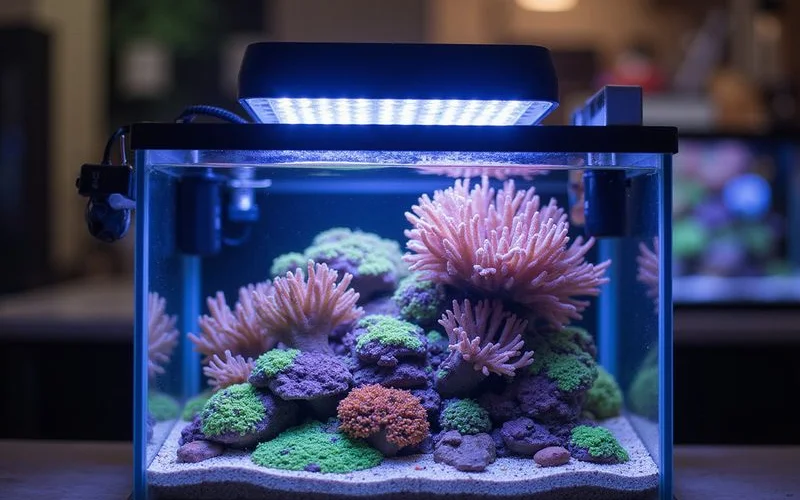
This tier, typically in the $300 to $450 range, is the sweet spot for most mixed reef tanks. These lights offer excellent color rendering and have enough power for a mix of soft corals, LPS, and even some easier SPS.
Most of our customers’ mixed reefs at home end up running one or two of these fixtures.
- Kessil A360X: Known for its brilliant “shimmer” effect that mimics sunlight on the ocean floor. Its pendant style looks clean, but it does require a gooseneck or rail for mounting.
- AI Prime 16HD: This fixture mounts nearly flush to the tank rim for a low profile. Its main advantage is the powerful myAI app, which gives you precise control over every color channel.
Both provide great coverage for tanks between 24 and 36 inches wide.
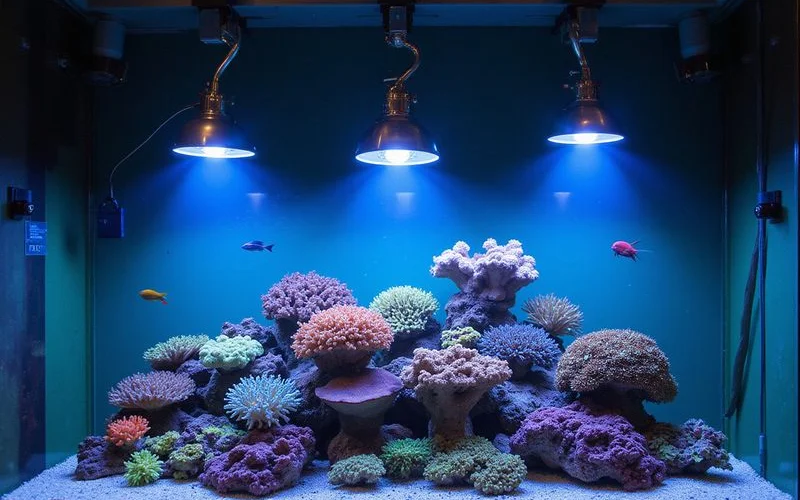
High-end: AI Hydra 32/64, Kessil A500X & EcoTech Radion
When you get into SPS-dominant systems or larger tanks (75 gallons and up), you need the power and control of a high-end fixture. These range from $550 to over $1,000.
Under-lighting a serious SPS tank is the number one reason corals fail to color up and grow. This tier ensures you have more than enough PAR.
- AI Hydra Series: The Hydra 32 and 64 are workhorses for SPS tanks. They provide wide, even coverage and connect seamlessly with AquaIllumination’s control app.
- Kessil A500X: This is Kessil’s high-power pendant, designed for deep tanks or aquarists who need to punch light down to demanding corals at the bottom of the reef.
- EcoTech Marine Radion: The Radion G6 series is another top contender, celebrated for its advanced scheduling options, including cloud cover simulation and scientifically developed spectrums like the popular AB+ setting.
Color-grading vs growth
You can tune modern LED lights to achieve two different goals.
Color-grading aims to maximize the visual “pop” of your corals. This usually involves running a higher percentage of blue and violet light (in the 400-450 nm range) to make the corals’ fluorescent proteins glow brightly. The tank looks amazing, but this isn’t always the fastest recipe for growth.
Growth-grading focuses on providing a broader spectrum with more white light mixed in. This fuels the symbiotic zooxanthellae inside the coral, leading to faster tissue and skeleton growth. The visual color might be slightly less dramatic, but the colonies expand more quickly.
Most home aquariums run a balanced spectrum that provides a bit of both. Our display reefs at the store run this way so you can see a realistic representation of how a coral will look in your own tank.
Photoperiod
A stable and consistent daily light cycle is critical. A typical reef photoperiod we recommend looks something like this:
- 8:00 AM: Blue lights begin a slow ramp-up.
- 9:00 AM: Full spectrum light reaches its peak intensity.
- 5:00 PM: The ramp-down begins, shifting back towards blue.
- 7:00 PM: All lights are off for the night.
The sweet spot is about 8 to 10 hours of full intensity. Less than six hours can starve the coral of energy, while more than twelve often leads to major algae problems.
Don’t overdo it
One of the most common mistakes we see is installing a powerful new light and running it at 100% from day one. Corals need time to adapt to changes in PAR, and a sudden, intense blast of light will cause them to bleach.
Whenever you upgrade your lighting or add a new coral, you must acclimate it. Start the fixture at 50% intensity and increase it by 5% to 10% each week. This slow ramp-up over two to four weeks prevents shock and allows the coral to adjust safely.
Free PAR check
Our team has an Apogee PAR meter here at the store. If you’ve installed a new fixture and want to be certain about the PAR levels your corals are receiving, just bring your light in.
We can put it over a test tank and give you precise readings in about ten minutes. This service is completely free and can save you a lot of guesswork.
Matching lights to coral plans
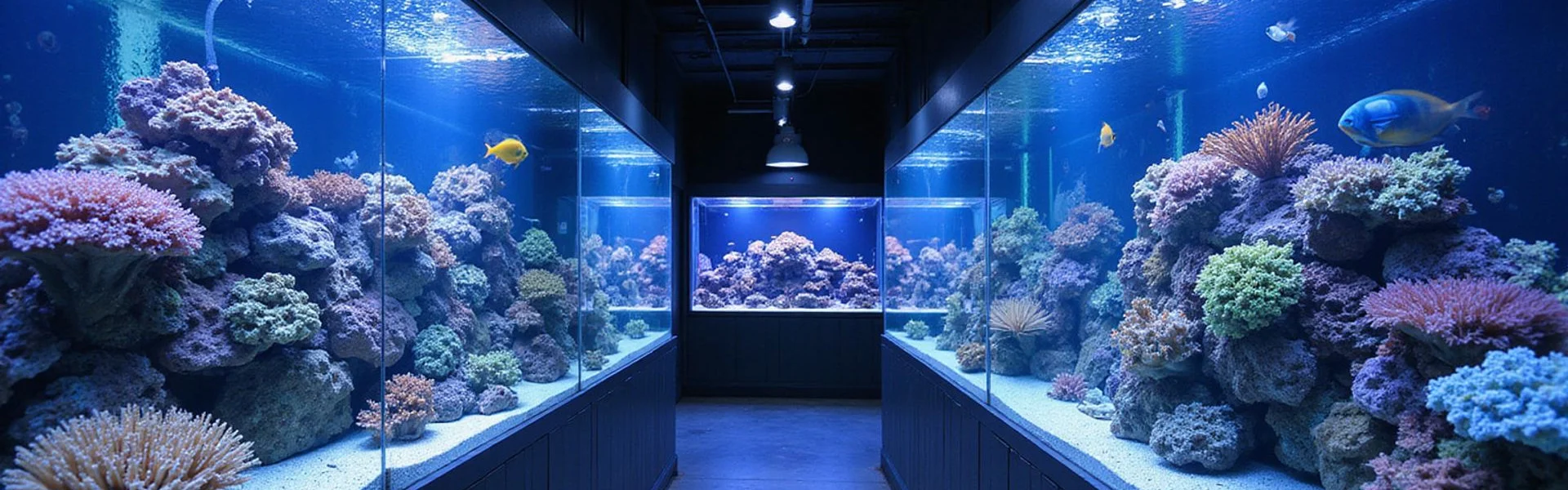
We have deliberately lit the display reefs for our coral stock with AI Hydra, Kessil A-series, and Current USA fixtures. This ensures that when you see a coral frag you like, you’re seeing how it colors up under the same lighting we sell. You get no surprises when you take it home.
For a deeper dive into coral types, see our guide on SPS vs LPS vs soft corals. If you’re planning an SPS tank, remember that lighting is only half the battle. Our guide to SPS water parameters is the essential next read.