Common Coral Pests and Diseases — RTN, STN, Flatworms
Acro red bugs, monti-eating nudibranchs, flatworms, and the tissue-necrosis events that wipe out colonies. Identification and treatment.
You know how it is. A reef tank can run perfectly for years, completely free of any trouble.
Then, a single new coral frag, maybe one you didn’t quarantine, introduces a pest. Suddenly you’re in a months-long battle against something like aiptasia or red bugs.
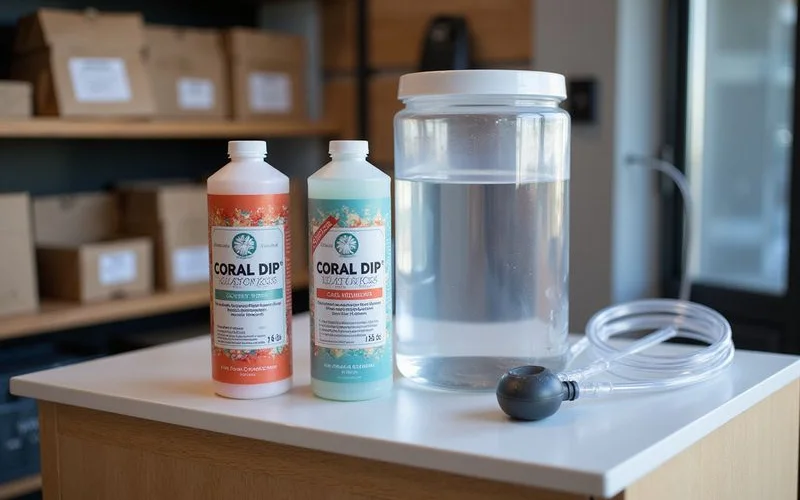
As a professional team, we’ve seen this happen countless times. The single most effective defense is having a strict process for every new coral you add. This starts with a proper dip, which is a critical part of acclimating new corals.
Here’s a breakdown of the most common coral pests and diseases you’re likely to face, along with the exact steps we take to handle them.
Pests
These are the most common unwanted hitchhikers we see in reef aquariums and how to deal with them.
Aiptasia anemones
ID. These are small, brown or tan anemones, usually a quarter-inch to an inch tall, that appear on live rock, plugs, and even the glass. They multiply very quickly and can sting and kill nearby corals.
Treatment.
- Targeted Injections. Products like Red Sea’s Aiptasia-X or Brightwell Aquatics’ F-Aiptasia come with a syringe to inject a solution directly into the anemone’s oral disc, which kills it within minutes.
- Peppermint Shrimp (Lysmata wurdemanni). These shrimp are natural predators of aiptasia. Their effectiveness can vary, as some individual shrimp have a better appetite for them than others.
- Berghia Nudibranchs. For severe infestations, these nudibranchs are a specialized solution. They exclusively eat aiptasia, but they work slowly and require a sustainable population of the pest to survive.
Acro red bugs (Tegastes acroporanus)
ID. On Acropora corals, these pests appear as tiny, 1mm yellow dots. You’ll often see them on stressed or bleached areas of the coral, and you’ll need magnification to confirm they are bugs.
Treatment.
- Interceptor (Milbemycin Oxime). This is a highly effective chemical treatment for the entire tank. It’s a prescription drug, so you may need to consult a veterinarian. A common treatment cycle involves three doses spaced seven days apart to kill both adults and newly hatched bugs. Be aware, this medication can be harmful to shrimp, crabs, and other crustaceans.
- Manual Removal. A turkey baster can be used to blast the bugs off the coral, but this is only a temporary fix with limited effectiveness.
- Aggressive Dipping. If you catch it early on a single colony, you can frag the coral and perform a series of dips to remove the bugs from the affected pieces.
Monti-eating nudibranchs
ID. These are tiny, white nudibranchs that are extremely well-camouflaged against the tissue of Montipora corals. The first sign of their presence is usually the damage they cause, which looks like white, eaten tracks across the coral’s surface.
Treatment.
- Manual Removal. During a coral dip, you can often see the nudibranchs fall off the coral. Use a pipette or tweezers to remove them from the dip container.
- Egg Removal. This is the most critical step. The eggs look like small white spirals and are resistant to dips. You must manually scrape them off with a razor blade or scalpel. A quarantine period of at least four weeks is recommended to observe for any newly hatched nudibranchs.
- Coral Dips. A dip in a product like Bayer is very effective at killing the adult nudibranchs.
Acropora-eating flatworms (AEFW)
ID. The adult worms are very difficult to see on the coral itself because they blend in perfectly. The most reliable signs of acro flatworms are their golden-brown egg clusters on the coral’s base and the small, circular bite marks they leave behind.
Treatment.
- Inspection and Dipping. Before dipping, use a turkey baster to blast the base of the Acropora with water. This can dislodge adult flatworms, confirming an infection. Heavy dipping with products like Bayer or medications such as Levamisole is the standard treatment.
- Wrasse Predators. Certain wrasses, like the Six-Line Wrasse or a Yellow Coris Wrasse (Halichoeres chrysus), may eat these flatworms. Their effectiveness can vary, and they are not a substitute for proper quarantine and dipping.
- Strict Quarantine. All incoming Acropora should be considered potential carriers and must be quarantined and dipped.
Bristleworms (Polychaete)
Most bristleworms are beneficial scavengers that are a natural part of a reef’s clean-up crew. Our team only recommends intervention if they become oversized, over 3 inches long, or their population explodes. If you need to remove them, a bristle worm trap or manual removal with long tweezers works well.
Diseases
Coral diseases are often triggered by environmental stress. Identifying the cause is just as important as treating the symptom.
RTN (Rapid Tissue Necrosis)
ID. This is one of the most feared RTN coral diseases. It appears as healthy coral tissue rapidly peeling or sloughing off the skeleton, almost like it’s melting. The tissue loss often starts at the base and can destroy an entire colony in as little as 12 to 48 hours.
Cause. RTN is typically a bacterial infection, often caused by pathogens like Vibrio coralliilyticus. A sudden stressor, such as a temperature spike, a significant alkalinity swing, or physical damage, usually triggers the infection.
Treatment.
- Frag Healthy Tissue. The original colony is almost always a complete loss. Your first and only move is to immediately cut off any remaining healthy branches and glue them to new, clean frag plugs.
- Stabilize Water Parameters. Check your alkalinity, calcium, and magnesium levels immediately and ensure they are stable. An alkalinity swing of more than 0.5 dKH is a common trigger.
- Iodine Dips. Some aquarists have success dipping the newly created frags in a Lugol’s iodine solution to help prevent the infection from spreading to the fresh cuts.
STN (Slow Tissue Necrosis)
ID. STN presents the same way as RTN, with tissue receding and exposing the white skeleton underneath, but it happens over days, weeks, or even months. It almost always begins at the base of the coral and slowly works its way up.
Cause. This condition is typically linked to chronic stress rather than a single acute event. Common causes include unstable water quality, particularly low alkalinity, lighting stress from being too high or too low, or persistent pests irritating the coral.
Treatment.
- Test and Correct. The first step is to test your key water parameters (alkalinity, calcium, magnesium, nitrate, phosphate) and correct any issues.
- Change Location. Move the affected coral to a different spot in the tank with lower flow and different lighting to see if the recession stops.
- Frag as a Last Resort. If the tissue loss continues, fragging the healthy portions is the best way to save part of the colony.
Brown jelly disease
ID. This looks exactly like its name suggests: a foul-smelling, slimy brown jelly that consumes the tissue of a coral. It is most common in Euphyllia (torch, hammer, frogspawn) and other LPS corals and can spread rapidly.
Cause. It is a protozoan infection that usually takes hold after a coral’s tissue is damaged, creating an entry point for the organisms.
Treatment.
- Immediate Removal. Remove the infected coral from the display tank right away to prevent it from spreading.
- Siphon and Dip. Use a turkey baster to siphon away as much of the brown jelly as possible. Then, dip the coral in an iodine solution.
- Frag Away Damaged Areas. You must remove all infected tissue. This often means fragging away the healthy parts of the coral and discarding the diseased sections completely.
Coral bleaching
ID. A bleached coral is one that has lost its color and turned pale or stark white. This is not an immediate death sentence, but it is a sign of severe stress.
Cause. Bleaching occurs when the coral expels its symbiotic algae, called zooxanthellae, which provide most of its food and color. This is a stress response triggered by sudden changes in lighting (light shock), high water temperatures (sustained above 82-84°F), or a major parameter swing.
Treatment.
- Identify and Fix the Trigger. You must correct the source of the stress. If you suspect light burn, move the coral to a lower-light area. If temperature was the issue, ensure it is stable.
- Be Patient. Recovery is possible if the stressor is removed quickly, but it can take weeks or months for the coral to regain its zooxanthellae and color.
Prevention rules
The best way to fight common coral pests and diseases is to prevent them from ever entering your tank. Our entire coral care protocol is built on this principle.
- Dip every new coral. This is not optional. A proper dip is the most effective way to eliminate adult pests before they can reproduce in your system. Different dips work better for different corals and pests.
- Quarantine new arrivals. A separate quarantine tank is the gold standard. Observing a new coral for a minimum of 4 to 6 weeks allows you to spot pests that survived the dip or egg cycles that have hatched.
- Maintain stable parameters. Consistency is more important than chasing a perfect number. Alkalinity swings greater than 0.5 dKH are a primary trigger for RTN and STN in SPS corals. We recommend testing key parameters at least twice a week.
- Minimize stress. Corals are sensitive to change. Plan any changes to your tank, like moving corals, adjusting lighting, or changing flow, and make them gradually.
All of Our coral stock is dipped and then observed for at least a week in our dedicated systems before being listed for sale. We maintain and document daily parameter logs, so you know the exact stable environment your new frag is coming from.