Best Beginner Soft Corals for New Reef Tanks
Eight forgiving soft corals to start your reef. Zoanthids, mushrooms, leathers, and the easy LPS that follows.
You know the feeling after your tank has been running for six months. The cycle is stable, the fish are happy, and you’re ready for that next step: your very first corals.
It’s an exciting milestone. We see new reefers in our shop every day who are eager to add color and movement to their tanks.
Our advice is always the same, start with soft corals. They are far more forgiving of the small parameter swings common in new tanks, thrive under a wide range of lighting, and many grow quickly, helping you fill out your aquascape without breaking the bank.
Here are the eight species our team consistently recommends as the best beginner soft corals for a successful start.
1. Zoanthids (Zoa, Palythoa)
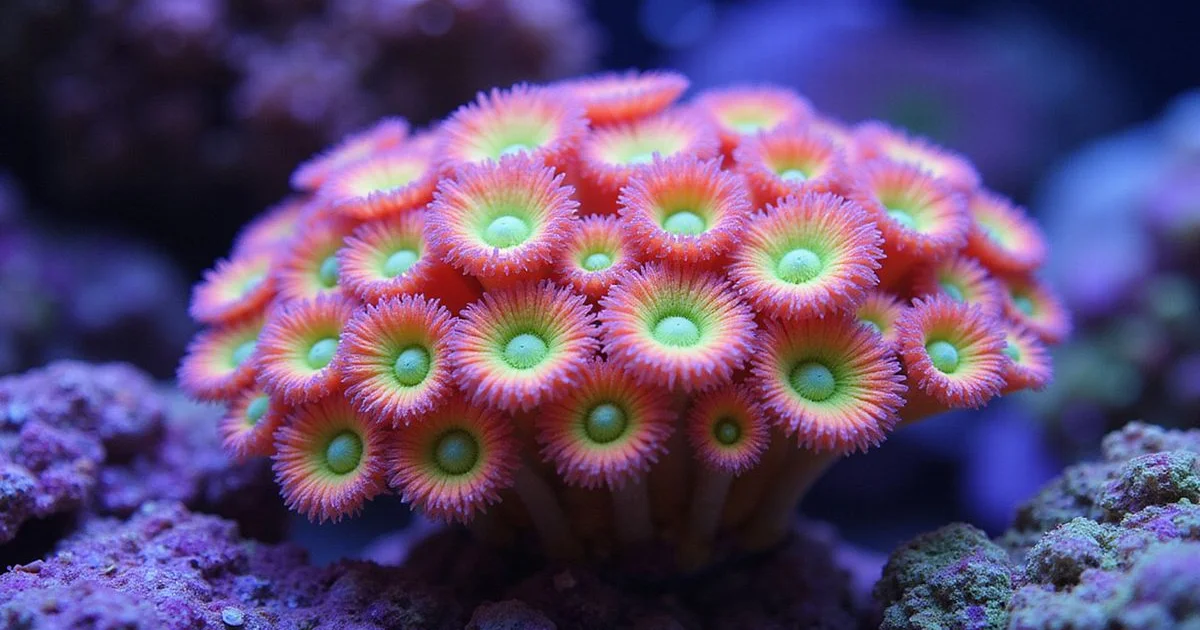
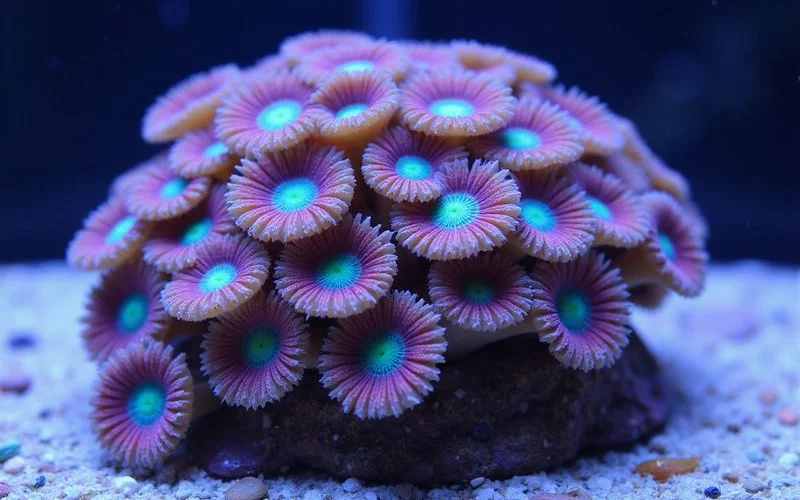
Zoanthids are the classic starter coral for a reason. They grow as mats of brilliantly colored polyps that come in every imaginable combination: fiery oranges, deep blues, electric greens, and vibrant pinks.
They spread quickly across rocks and are famously tolerant of most reef parameters. A 2021 study published in the journal Oceans confirmed their high resilience to fluctuations in both temperature and salinity, which is great peace of mind for a beginner.
- PAR Target: 50 to 150
- Pro-Tip: Most standard LED light fixtures, like the AquaIllumination Prime 16HD, are more than capable of growing healthy Zoanthids.
One critical warning, however, is to handle them with gloves and eye protection. Some varieties, particularly in the Palythoa genus, contain a potent neurotoxin called palytoxin. According to the CDC, it can be dangerous if it enters your bloodstream through a cut or is absorbed through your eyes or mouth.
2. Mushroom Corals (Discosoma, Rhodactis, Ricordea)
If you’re looking for something that is ultra-tolerant and requires very little light, mushroom corals are an excellent choice. They are available in a huge range of colors and patterns, from electric blue Discosoma to the bumpy texture of Rhodactis and the prized, multi-colored Ricordea.
This coral spreads by a process called pedal laceration, where it slowly moves and leaves behind small pieces of its foot that grow into new polyps.
- PAR Target: 30 to 80
- Good to Know: Their low light requirement means even budget-friendly lights like the Current USA Orbit Marine can sustain them. This makes them perfect for filling in lower, shadier areas of your rockwork.
3. Green Star Polyps (GSP)
Green Star Polyps offer incredible visual impact for a very low price point. This coral grows a purple mat over rocks, which is covered in thousands of tiny, bright neon green polyps that wave in the current.
It is not picky about lighting or flow, making it one of the most durable corals available. Many reefers use it to cover overflows, plumbing, or other unsightly equipment.
There is one major warning we always give our clients. This coral spreads aggressively. Do not place it on your main rock structure unless you want it to eventually cover everything. A common practice seen on forums like Reef2Reef is to place GSP on its own “island” rock that you can easily remove if it gets out of control.
4. Toadstool Leather (Sarcophyton)
For a beautiful centerpiece soft coral, it’s hard to beat a Toadstool Leather. This species grows into a large, mushroom-shaped colony with long, flowing polyps that sway gracefully in the current.
They come in shades of green, yellow, and brown and can grow quite large over time.
- PAR Target: 80 to 150
- Insider Tip: About once a month, your Toadstool will retract its polyps and develop a waxy coating which it then sheds. This is a normal cleaning process called sloughing. You can help the process along by pointing a powerhead at it. We recommend running activated carbon in a reactor, not just a bag, to effectively remove the chemicals released during this period.
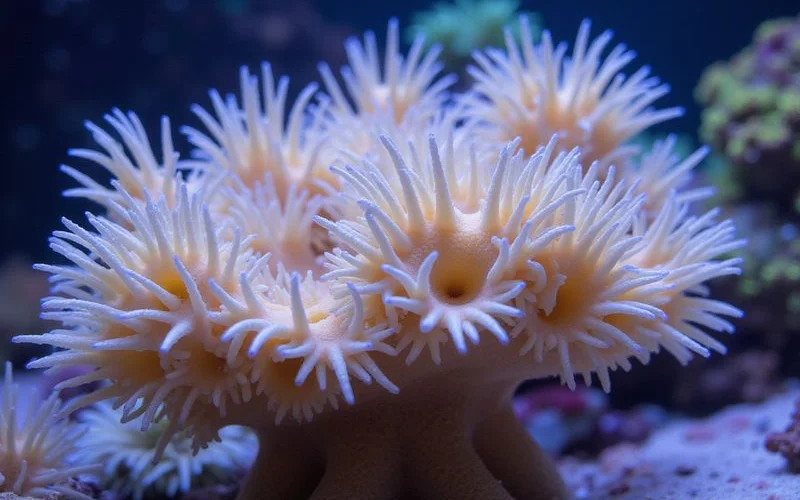
5. Pulsing Xenia (Xenia, Heteroxenia)
This coral is visually mesmerizing. The polyps of a Xenia colony rhythmically pulse open and closed, creating a unique sense of movement in your tank.
It spreads very quickly, with some reefers considering it a weed, while others love its fast growth for filling empty space. Under ideal conditions, a small frag can double in size in just a few months.
- PAR Target: 50 to 100
- Placement: Like Green Star Polyps, we suggest placing Pulsing Xenia on a rock you can easily remove if its growth becomes more aggressive than you’d like.
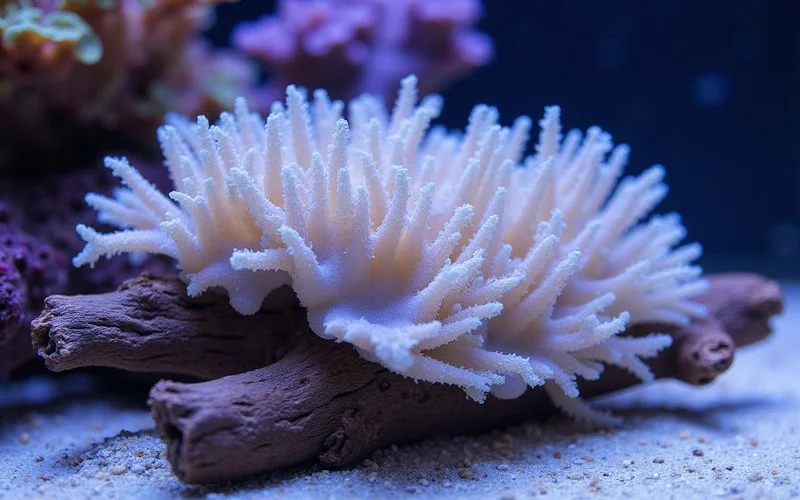
6. Kenya Tree (Capnella)
The Kenya Tree coral is a branching soft coral that, as its name suggests, resembles a small tree. It’s incredibly easy to propagate, a method often called “fragging.”
This coral naturally drops small branches that will attach to nearby rock and grow into new colonies. You can also easily create new frags yourself by simply snapping off branches with sterile bone cutters or scissors and gluing them to a frag plug.
- PAR Target: 75 to 125
- Flow: It prefers moderate, indirect water movement.
7. Devil’s Hand (Lobophytum)
Devil’s Hand is another type of leather coral, but it grows with distinct finger-like projections. It’s a slower-growing centerpiece coral, making it a great choice for larger tanks where you want a substantial, but manageable, focal point.
It’s a very hardy species and can become a true showpiece in a soft coral dominant tank, sometimes reaching over a foot in diameter in mature systems.
- PAR Target: 100 to 150
- Placement: Give it plenty of room to grow, as it will cast a shadow on anything directly beneath it.
8. Easy LPS: Hammer / Frogspawn (Euphyllia)
While technically a Large Polyp Stony (LPS) coral, corals from the Euphyllia genus like Hammer and Frogspawn are often considered the perfect next step. They are slightly more demanding than the other corals on this list but are widely considered “easy” for LPS.
This is where maintaining stable water chemistry starts to become more important.
- PAR Target: 100 to 200
- Water Parameters: You’ll want to start testing and maintaining your calcium and alkalinity. We recommend an alkalinity target of 8 to 9 dKH and a calcium level between 420 and 440 ppm. Using a reliable test kit, like the Hanna Instruments Alkalinity Checker, is a great investment at this stage.
What to avoid in your first 6 months
- Acropora SPS. These corals demand extremely stable water parameters, high flow, and intense, specific lighting spectrums.
- Goniopora. Famous in the hobby for slowly perishing over several months, they require dedicated feeding and specific trace element dosing that is difficult for beginners.
- Sun Corals (Tubastrea). These are beautiful but non-photosynthetic, meaning they need to be actively fed enriched foods like brine shrimp multiple times a week.
- Anemones (any). They are not corals. They can move around the tank, sting other inhabitants, and require very strong, established lighting to thrive.
Setup essentials
To set up a successful tank for these easy starter corals, you don’t need the most expensive gear, but you do need the right basics.
| Equipment | Recommendation | Why It’s Important |
|---|---|---|
| Reef-Grade Lighting | Current USA Orbit Marine or AI Prime 16HD | Provides the right spectrum and intensity for photosynthesis. The AI Prime offers more control via a smartphone app. |
| Stable Parameters | Weekly testing with quality kits (e.g., Salifert, Hanna) | Soft corals are forgiving, but stability is still key. Check out our guide to SPS water parameters as many of the principles apply here too. |
| Protein Skimmer | Reef Octopus Classic 110-INT or similar | Even soft coral tanks produce dissolved organic waste. A skimmer removes this before it breaks down, keeping your water cleaner. |
| Water Flow | One or two powerheads like the Hydor Koralia | Soft corals prefer moderate, indirect flow which helps bring them food and removes waste. Avoid blasting them directly. |
For a more detailed breakdown of lighting, our guide on coral lighting requirements and PAR is the perfect next read. To understand the broader differences in care, this article on SPS vs LPS vs soft corals lays out all the trade-offs.
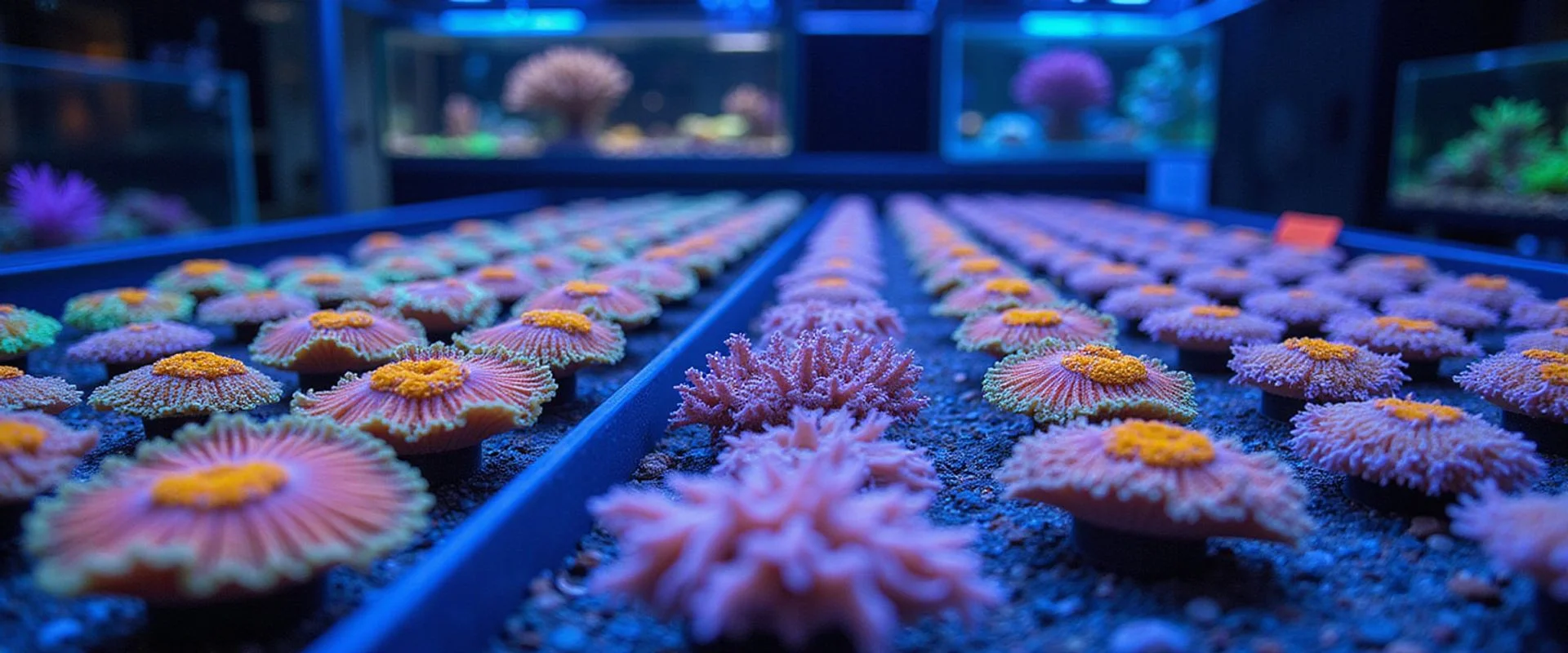
Our in-store coral stock changes every week. We clearly mark all the beginner-friendly soft corals, and our team will always make sure you go home with specific care notes for every frag you purchase.