African vs South American Cichlids
Two completely different cichlid worlds. Water chemistry, behavior, decor and cost compared.
You know how it is when you first get into cichlids. You make one decision, to keep these fascinating fish, and it immediately leads to a much bigger one.
Are you setting up a tank for African cichlids, or are you going with South American species?
This choice sets the direction for everything that follows, from your water chemistry and tank decor to the daily behavior you’ll see in the aquarium. Our team has set up countless tanks for both, and the right answer always depends on the kind of aquarium experience you want.
We’re here to walk you through the key differences so you can choose the biotope that best fits your home or business. Let’s break down what to expect from each.
Water chemistry
The biggest dividing line between these two groups is water chemistry. African Rift Lake cichlids need hard, alkaline water, while South American cichlids from the Amazon basin prefer soft, acidic water.
| African (Malawi/Tanganyika) | South American (Amazon) | |
|---|---|---|
| pH | 7.8 to 8.6 | 6.0 to 7.0 |
| Hardness (GH) | 12 to 20 | 2 to 8 |
| Alkalinity (KH) | 12+ | 2 to 4 |
| Sarasota tap fit | Close, easy buffer | Far, RO route preferred |
Here in Sarasota, our tap water is moderately hard with a pH that usually sits between 7.6 and 7.9. This makes it an almost perfect starting point for an African cichlid tank. We find that using a crushed coral or aragonite substrate, paired with a buffering product like Seachem’s Cichlid Lake Salt, easily and safely raises the parameters to the ideal range.
Creating the soft water needed for many South American species requires more effort. The most reliable method involves using a reverse osmosis/deionization (RO/DI) system to strip tap water of all minerals. From there, you add back specific minerals using products like Seachem Equilibrium to hit the target parameters. This approach gives you complete control but also means more equipment and a more involved water change process.
Decor and aquascape
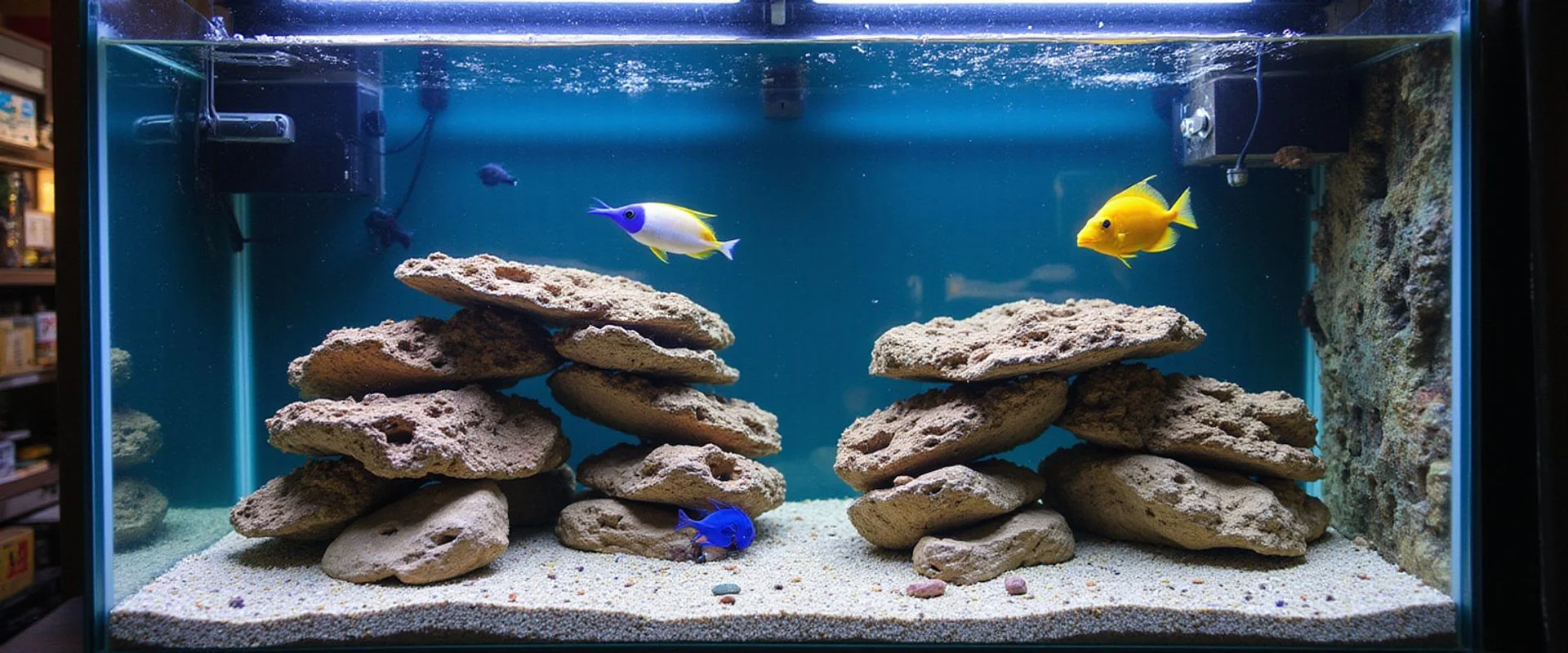
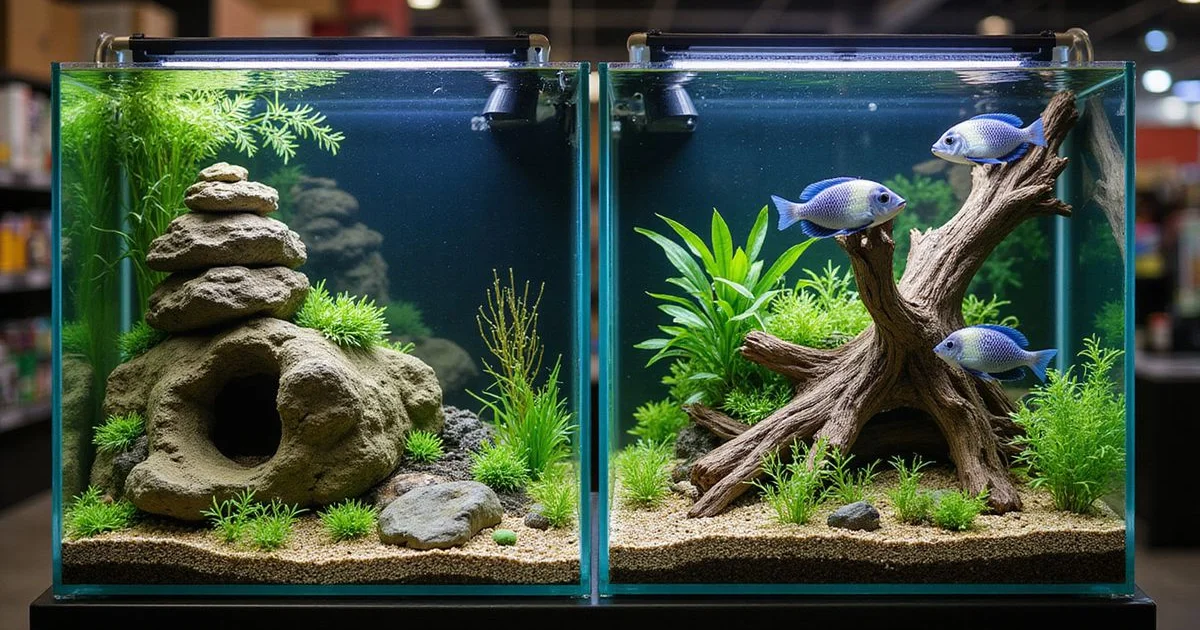
African. The classic look for a Lake Malawi or Tanganyika tank is built around rockwork. We use Texas Holey Rock, lace rock, and slate to create complex structures with plenty of caves and territories. It’s critical to make sure these structures are stable and rest on the bottom glass of the tank, not the substrate, because these fish love to dig. The substrate itself should be crushed coral or aragonite sand to help buffer the water. Most live plants are a bad idea, as Mbuna will either eat them or uproot them. If you want greenery, tough plants like Anubias barteri or Java Fern attached to the rocks are your best bet. The final look is a vibrant, rocky, undersea landscape.
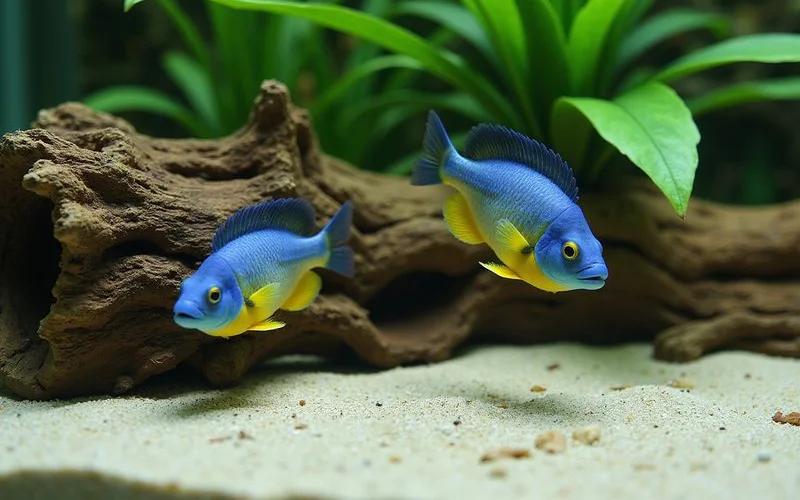
South American. A South American setup is all about creating a slice of the riverbed. We use driftwood like Mopani or Manzanita as the central hardscape feature. These woods release tannins, which can gently lower pH and give the water a natural, tea-stained look. Live plants are a huge part of the aesthetic. Hardy species like Amazon swords, Vallisneria, and various Cryptocoryne species thrive in these conditions. The look is a lush, natural, and often calmer environment.
Behavior
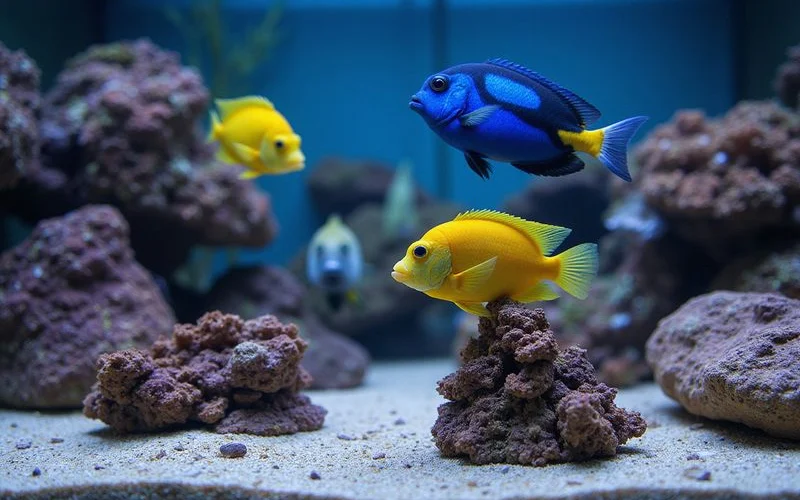
African Mbuna. These fish are built for constant activity and controlled chaos. The key to a successful Mbuna tank is to stock it heavily, with a goal of around 15 to 20 fish in a 75-gallon tank, to spread out aggression. No single fish can become a tank bully for long because there are too many other targets. You will see constant motion, territorial disputes, and fascinating social interactions. It is also vital to maintain a proper male-to-female ratio, typically one male to every four or five females, to prevent males from harassing a single female to death.
South American. These setups are usually centered around a “centerpiece” pair or a small group of fish. A pair of German blue rams or Apistogramma will claim a small territory around a piece of driftwood or a cave, but the rest of the tank remains relatively peaceful. Their aggression is typically focused on defending their spawning site. For larger, more solitary cichlids like Oscars, dither fish such as silver dollars or large tetras can help them feel more secure and stay out in the open. The overall vibe is much calmer, with a focus on individual personalities and breeding behaviors.
Tank size
African Mbuna. We consider a 75-gallon tank (which is typically 48 inches long) the absolute minimum for a proper Mbuna community. This size provides enough horizontal space for multiple territories and allows subdominant fish to escape aggression.
Tanganyikan shell dwellers. For something different from the African Great Lakes, species like Neolamprologus multifasciatus are perfect for smaller setups. A colony can thrive in a 20 or 30-gallon tank with a sandy bottom and plenty of empty snail shells.
South American (rams, kribensis, apistos). A pair of these dwarf cichlids can be comfortably housed in a 30 to 40-gallon tank.
Angelfish or larger SA cichlids. For fish like Angelfish or Electric Blue Acaras, a 55 to 75-gallon tank is a more appropriate size to accommodate their adult height and need for swimming room.
Cost over time
The initial and long-term costs for these two setups diverge in different areas.
- African Mbuna Stocking: With individual fish costing between $15 and $40, stocking a 75-gallon tank with 15-20 fish can easily run from $300 to $700 for just the livestock. Texas Holey Rock can also be expensive, though we source it to keep costs reasonable.
- South American Stocking: A quality pair of German blue rams or a trio of Apistogramma might cost between $25 and $80. The cost of live plants and driftwood can add up, but the initial fish cost is much lower.
- Water Chemistry Equipment: This is where South American setups can become more expensive. A reliable RO/DI unit like an Aquatic Life RO Buddie can cost between $70 and $150, with annual filter replacement costs around $50. For an African setup, the ongoing cost is limited to buffering salts and minerals, which is significantly less.
An African tank has a higher upfront cost for livestock and rock. A South American tank can have a higher equipment cost if your tap water isn’t suitable.
Quick decision matrix
| Pick African if… | Pick South American if… |
|---|---|
| You want a busy, colorful tank full of action | You want a centerpiece pair to observe |
| You have a 75-gallon tank or larger | You have a 30 to 55-gallon tank |
| Your local tap water is moderately hard and alkaline | You are willing to manage RO water |
| You prefer a clean, rock-heavy aquascape | You enjoy the look of a planted, natural aquascape |
| You want to see complex social hierarchies | You are interested in watching breeding behavior |
For more detailed setup guides, you can see our article on African cichlid tank setup or check out our peaceful cichlid picks which features many popular South American species.
When you’re ready to get started, our cichlid stock includes carefully sourced fish for both biotopes. Bring a photo of your tank and water parameters, and our team will help you select the perfect species for your setup.