Choosing the Right Aquarium Filter for Your Tank Size
GPH targets, HOB vs canister, and the brands we'd run on freshwater and saltwater builds.
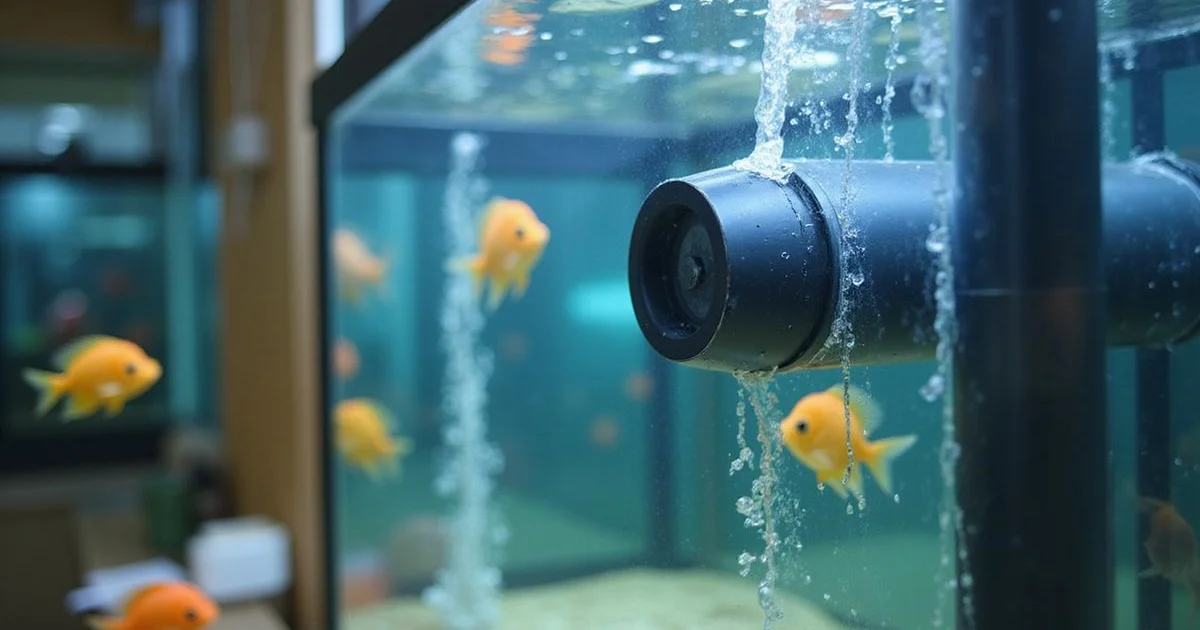
You know how the heart of any healthy aquarium isn’t the fish, but the filtration system that supports them. It’s the single most important piece of equipment.
Choosing the wrong size is the number one reason new tanks fail. Too small, and waste builds up faster than the filter can process it. Too strong, and your fish are constantly fighting a current, which causes stress.
Getting the size right is about matching the filter’s power to your tank’s specific needs.
So, we’re going to break down how to choose the right aquarium filter for your tank size. We will cover the GPH rule, the best filter types for different tanks, and the essential media you’ll need.
The GPH rule
The best place to start with aquarium filter sizing is the “Gallons Per Hour” or GPH rating. This number tells you how many gallons of water the filter pump can move in one hour.
A good rule of thumb is that your filter should turn over the total volume of your aquarium at least four to five times per hour.
Target GPH = Tank Gallons × 5 to 10
A 20-gallon freshwater community tank needs a filter rated for at least 100 to 200 GPH. A 75-gallon saltwater tank requires 600 to 750 GPH, and even more if it’s a reef setup.
The exact multiplier depends on your tank’s bioload, which is the amount of waste produced by its inhabitants.
| Tank Type | GPH Multiplier | 20 gal | 55 gal | 75 gal |
|---|---|---|---|---|
| Planted Community | 5x | 100 | 275 | 375 |
| Standard Community | 6x | 120 | 330 | 450 |
| Cichlid / Goldfish (Heavy Bioload) | 8x to 10x | 160 to 200 | 440 to 550 | 600 to 750 |
| Saltwater FOWLR | 8x to 10x | 160 to 200 | 440 to 550 | 600 to 750 |
| Saltwater Reef | 10x to 20x | 200 to 400 | 550 to 1100 | 750 to 1500 |
Reef tanks need that higher turnover rate not just for filtration, but also to provide the strong, indirect flow that corals depend on for health.
HOB filters (Hang-on-Back)
Best for tanks from 5 to 75 gallons, HOBs are the most popular choice for their simplicity and effectiveness.
Our professional service team has worked with countless filters over the years, and AquaClear remains the gold standard in this category. They are famously reliable, easy to service, and have a large media basket you can customize. The AquaClear 50 is a perfect fit for a 20-gallon tank, while the AquaClear 70 is ideal for 40 to 55 gallons, and the AquaClear 110 handles a 75-gallon community tank with ease.
Good alternatives include the Seachem Tidal series, which is praised for its self-priming internal pump, and the Marineland Penguin, known for its BIO-Wheel that provides extra surface area for beneficial bacteria. We carry AquaClear because of its proven track record as a dependable workhorse.
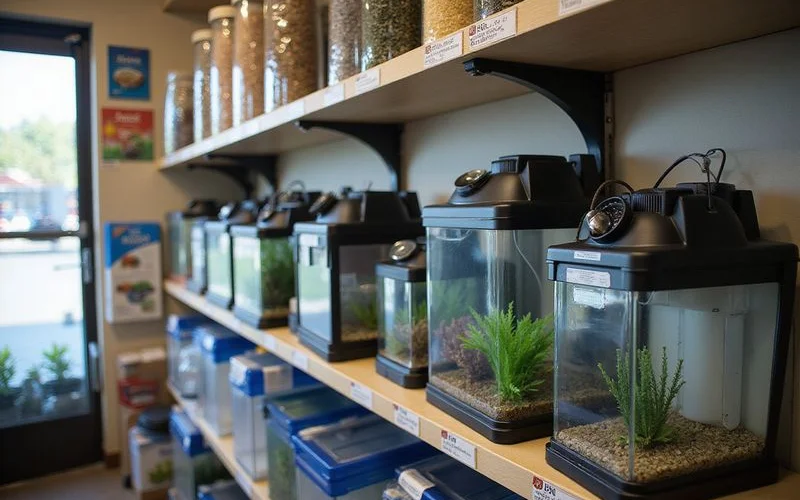
Canister filters
For tanks from 30 to over 240 gallons, canister filters are the premium choice. They offer massive media capacity, nearly silent operation, and much longer intervals between maintenance.
Fluval’s 07 series (107, 207, 307, 407) are the modern industry standard, known for being powerful yet energy-efficient and up to 25% quieter than previous models. The Fluval 407 is our go-to recommendation for a standard 75-gallon tank, typically running between $250 and $300.
For sheer reliability, the Eheim Classic series is legendary. Their German engineering means they often run for decades with minimal fuss, though they come at a slightly higher price point. A newer brand, OASE, is quickly gaining popularity in the US for its excellent build quality and convenient features, like the integrated heater in their Thermo models and an easy-to-clean pre-filter.
Sponge filters
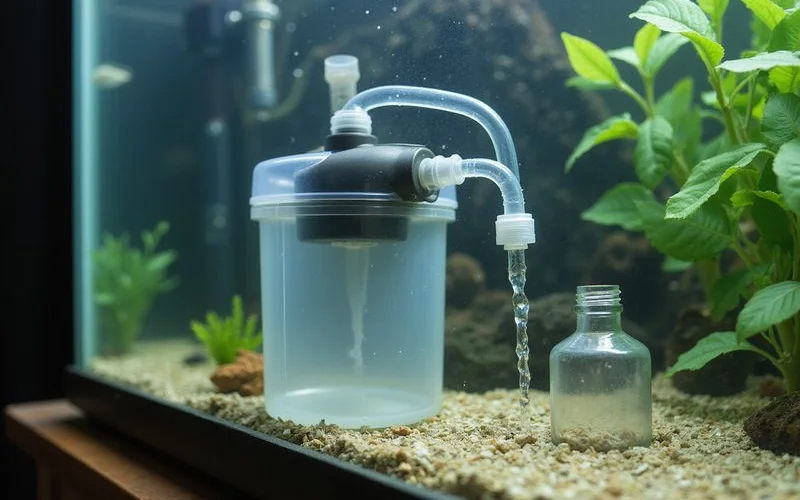
These are the best choice for nano tanks (under 10 gallons), shrimp tanks, and hospital or quarantine setups. They are inexpensive, provide gentle flow, and are masters of biological filtration.
Powered by a simple air pump, a sponge filter creates minimal current, making it perfect for betta tanks. Brands like Aquarium Co-Op have popularized easy-to-use models with weighted bases, while the Hikari Bacto-Surge is excellent for its high-density foam that maximizes surface area for bacteria.
Sumps
For saltwater tanks over 75 gallons, a sump is the professional standard. A sump is a second, smaller tank hidden below the main display that houses all your equipment: the protein skimmer, heater, return pump, and reactors.
This approach keeps equipment out of sight, increases your system’s total water volume, and allows for oversized, high-performance filtration. The main drawback is the need for plumbing and a more complex initial setup. If you are planning a serious reef tank, we recommend designing the system around a sump from day one.
Mechanical, biological, chemical: layered approach
An effective filter uses three different types of media to keep water pristine.
- Mechanical (sponges, filter floss): This is the first stage, physically trapping debris like fish waste and uneaten food. These should be rinsed in old tank water about once a month.
- Biological (ceramic rings, bio-balls, sintered glass): This media provides a high-surface-area home for the beneficial bacteria that power the nitrogen cycle. You should never replace all of your biological media at once, as it would crash your cycle.
- Chemical (activated carbon, GFO, Purigen): This media removes dissolved impurities, medications, and tannins that can color the water. Popular all-in-one products like Boyd Chemi-Pure Elite can be a great choice for polishing the water. Use this media as needed rather than full-time.
For a typical freshwater community tank, a combination of mechanical and biological filtration is usually sufficient.
Don’t oversize a betta tank
Bettas have long, flowing fins and originate from still waters, so they dislike strong currents. A powerful filter will exhaust them. The best options are a gentle sponge filter or a small HOB filter with an adjustable flow, like the Forza 5-15, which allows you to dial the current way down.
What we’d put on each tank size
Here are our team’s go-to recommendations for common aquarium setups.
- 5 to 10 gallon (betta, nano): A quality sponge filter, like one from Aquarium Co-Op, paired with a reliable air pump.
- 20 gallon (community): The AquaClear 50 HOB is the perfect workhorse for this size.
- 40 to 55 gallon: An AquaClear 70 HOB provides excellent filtration, or you can upgrade to a Fluval 207 canister for a cleaner look and less maintenance.
- 75 to 90 gallon: A large HOB like the AquaClear 110 combined with a powerful canister like the Fluval 407 offers incredible performance and redundancy. A sump is also a top-tier option here.
- 125+ gallon: At this size, a sump is the undisputed best choice for stability and performance.
For our complete aquarium and equipment selection, we stock all of the filter types mentioned above. Bring your tank dimensions into the store, and our team will help you choose the perfect filter for your specific needs, free of charge.
For information on other essential equipment, see our guide on aquarium lighting basics. To figure out the right heater, our page on heater wattage by tank size explains the calculations.