Heater Wattage by Tank Size
The 5 watts per gallon rule, plus the brand picks and Florida-specific notes.
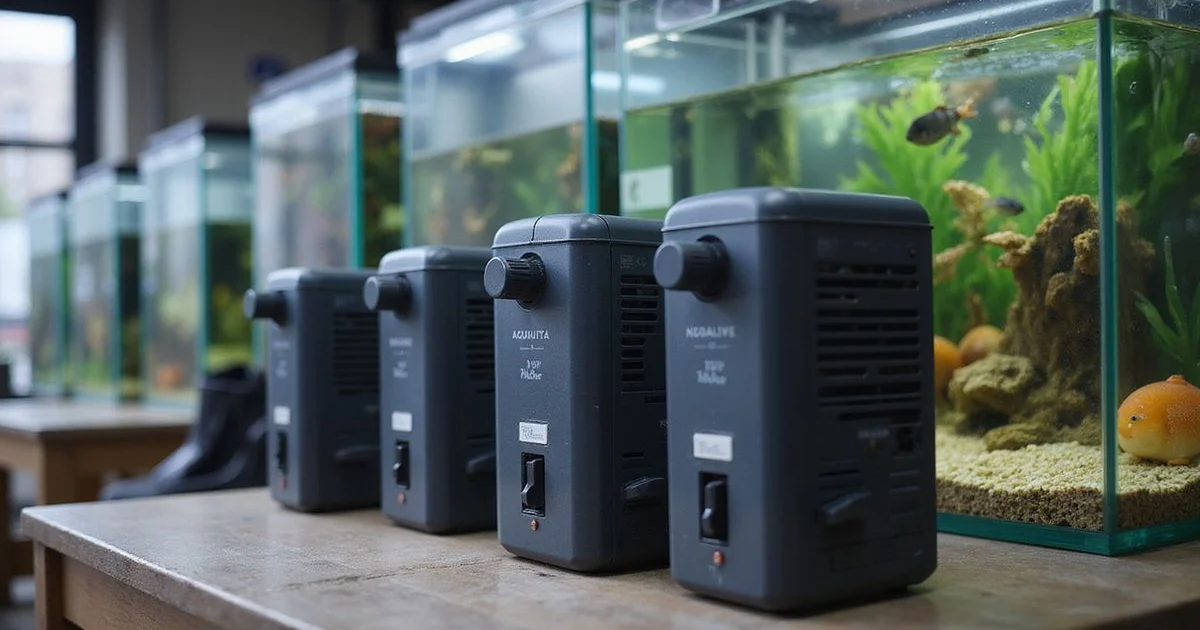
Getting your aquarium heater wattage right is one of the few things in fishkeeping that doesn’t need to be complicated.
You see a lot of variables in this hobby, but heater sizing is thankfully straightforward.
When you get it right, you set it and forget it. Get it wrong, and your fish are at risk of getting chilled or, even worse, cooked. We’re here to make sure that doesn’t happen. In this guide, we’ll walk through the main formula, why adjustable heaters are the only way to go, and some specific tips we’ve learned over the years.
The 5 watts per gallon rule for aquarium heater wattage
The basic formula for choosing a heater size for a fish tank is simple: multiply the gallons of water in your tank by 5. This will give you the target wattage.
Heater wattage = tank gallons × 5
A more detailed approach also considers the temperature difference between the room and the tank. For every 9°F you need to raise the water temperature above the room’s ambient temperature, you should add about 2.5 to 5 watts per gallon. For most climate-controlled homes in the US, the simple 5-watt rule is a reliable starting point.
| Tank size | Recommended Heater Wattage |
|---|---|
| 5 gallon (betta) | 25 watts |
| 10 gallon | 50 watts |
| 20 gallon | 100 watts |
| 30 gallon | 150 watts |
| 55 gallon | 200 to 250 watts |
| 75 gallon | 300 watts |
| 90 gallon | 300 watts (or 2 × 150) |
| 125 gallon | 2 × 200 watts |
Most homes are kept warm enough that you might get away with slightly less wattage. However, we strongly recommend staying near the formula. Aggressive air conditioning in the summer can easily drop a room’s temperature overnight, forcing an undersized heater to run constantly and fail prematurely.
Adjustable, not preset
We only sell and install adjustable heaters, and there are a few critical reasons why.
- Disease Treatment: Many common fish diseases, especially Ich (Ichthyophthirius multifiliis), require you to raise the tank temperature to 86°F to speed up the parasite’s life cycle. A preset heater, typically fixed at 78°F, makes this effective treatment impossible.
- Failure Mode: While any heater can fail, preset models are notorious for failing in the “on” position. This can turn your aquarium into a hot tub in a matter of hours, which is almost always fatal for your fish. Adjustable heaters more commonly fail in the “off” position, which is less immediately catastrophic.
- Species-Specific Needs: Not all fish thrive at the same temperature. Sensitive species like Discus and German Blue Rams prefer warmer water, often around 84°F, while many common livebearers are comfortable at 76°F. An adjustable heater gives you the control to provide the ideal environment.
Brand picks
Choosing a reliable heater is one of the most important equipment decisions you can make. Here are the brands we trust for our clients’ tanks.
| Tier | Brand & Models | Price Range | Key Feature |
|---|---|---|---|
| Budget | Cobalt Aquatics Neo-Therm | $50 to $70 | Its slim, flat design is nearly indestructible and great for hiding. |
| Mid-range | Eheim Jager TruTemp | $30 to $80 | The workhorse of the hobby, known for its reliability and accurate calibration dial. Most of our customers use these. |
| Premium | Fluval E-Series | $60 to $120 | Features a built-in LCD that displays the real-time water temperature and alerts you with a color-coded warning if it’s too high or low. |
Redundant heaters for larger tanks
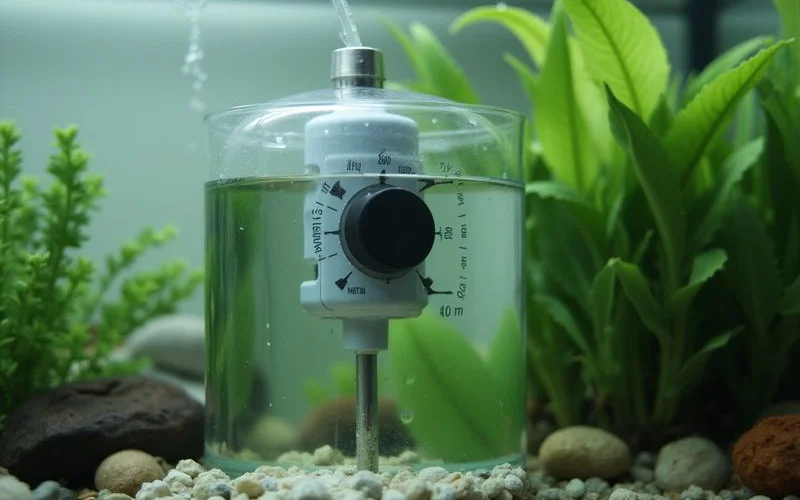
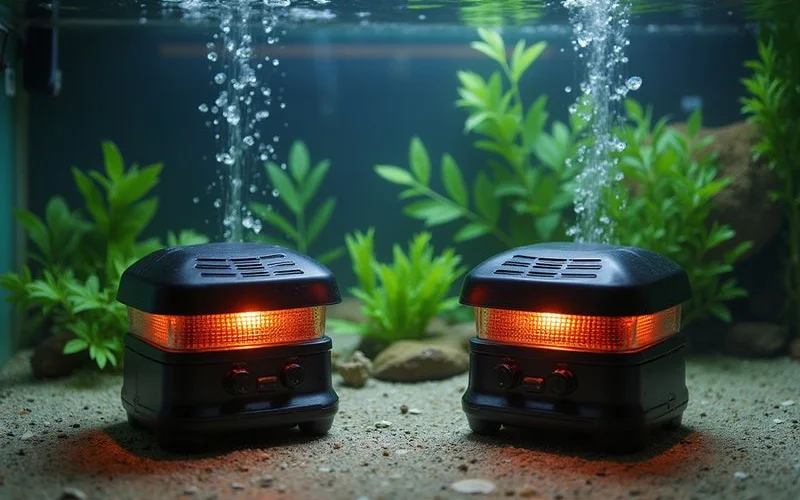
For any tank 75 gallons or larger, we recommend using two smaller heaters instead of one large one. Installing two 150-watt heaters in a 90-gallon tank provides a huge safety advantage.
This setup gives you:
- A Built-in Backup: If one heater fails in the “off” position, the second one is still running to prevent a dangerous temperature drop.
- Failure Protection: If one heater gets stuck on, it’s only half the total required wattage. This significantly reduces the risk of overheating the tank and gives you more time to notice the problem.
- Even Heating: Two heat sources placed at opposite ends of the tank create better heat distribution and reduce potential cold spots.
Many serious reef keepers with thousands of dollars in coral and fish consider this a non-negotiable practice. The extra $40 for a second heater is one of the cheapest insurance policies you can buy for your aquarium.
Placement
Where you put the heater is just as important as what wattage it is.
- Submerge It Fully: Always let a new heater acclimate to the water temperature for about 20-30 minutes before plugging it in to prevent the glass from cracking due to thermal shock.
- Put It In High Flow: Place the heater near the filter intake or outlet. This ensures the heated water is quickly and evenly distributed throughout the entire aquarium.
- Keep It Off The Gravel: Never bury the heater in the substrate. This traps heat, prevents proper circulation, and can cause the glass to crack.
- Mount It Horizontally: For best results, use the included suction cups to mount the heater horizontally near the bottom of the tank. Heat rises, and this position helps it distribute more evenly.
Calibration
You should never fully trust the temperature dial on the heater itself. The internal thermostats can be off by several degrees.
Always use a separate, reliable thermometer to verify the actual water temperature. We recommend a digital thermometer with a probe, like those from Hanna Instruments or Lifegard Aquatics, for the most accurate readings. Place it at the opposite end of the tank from the heater to get a true reading of the average water temperature. Adjust the heater’s dial up or down until your trusted thermometer shows the correct temperature.
Notes for US climates
- Power Outage Prep: In the event of a power outage, a well-insulated tank will lose heat slowly. For critical systems you can’t afford to lose, a small battery backup system like an EcoFlow or Jackery can power heaters and filters for hours.
- Year-Round Use: Even in warmer months, central air conditioning can keep a house between 70-75°F. Most tropical fish come from water that is consistently warmer, so they still need a heater to stay healthy.
- Replacement Schedule: Heaters are wear-and-tear items. The internal components degrade over time. We recommend replacing aquarium heaters every 3 to 5 years as a preventative measure to avoid failures.
Don’t
- Don’t use a glass heater in a tank with large, boisterous fish like Oscars or Flowerhorns. They can, and will, break it. Use a titanium heater from a brand like Finnex or Hygger, which is virtually indestructible.
- Don’t run an undersized heater. A 25-watt heater in a 20-gallon tank will run constantly and still fail to keep the water warm, leading to a premature death for the heater.
- Don’t run a wildly oversized heater. A 300-watt heater in a 10-gallon tank is a safety risk; if it fails in the “on” position, it will cook the tank very quickly.
- Don’t plug a heater in while it’s outside of the water. The heating element is designed to be cooled by the surrounding water and can shatter almost instantly if it heats up in the open air.
For our aquarium equipment, we stock all the brands above. For paired filtration, see aquarium filter sizing. For lighting, aquarium lighting basics.