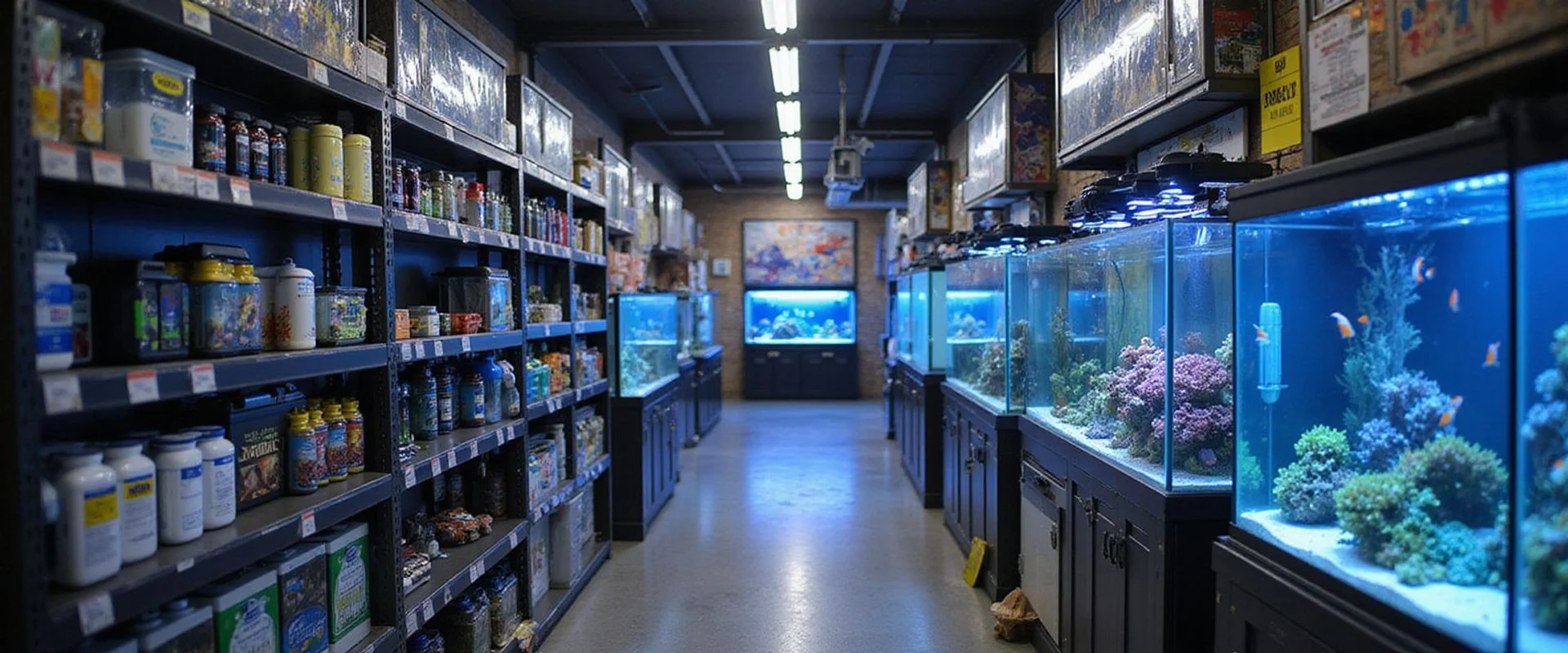
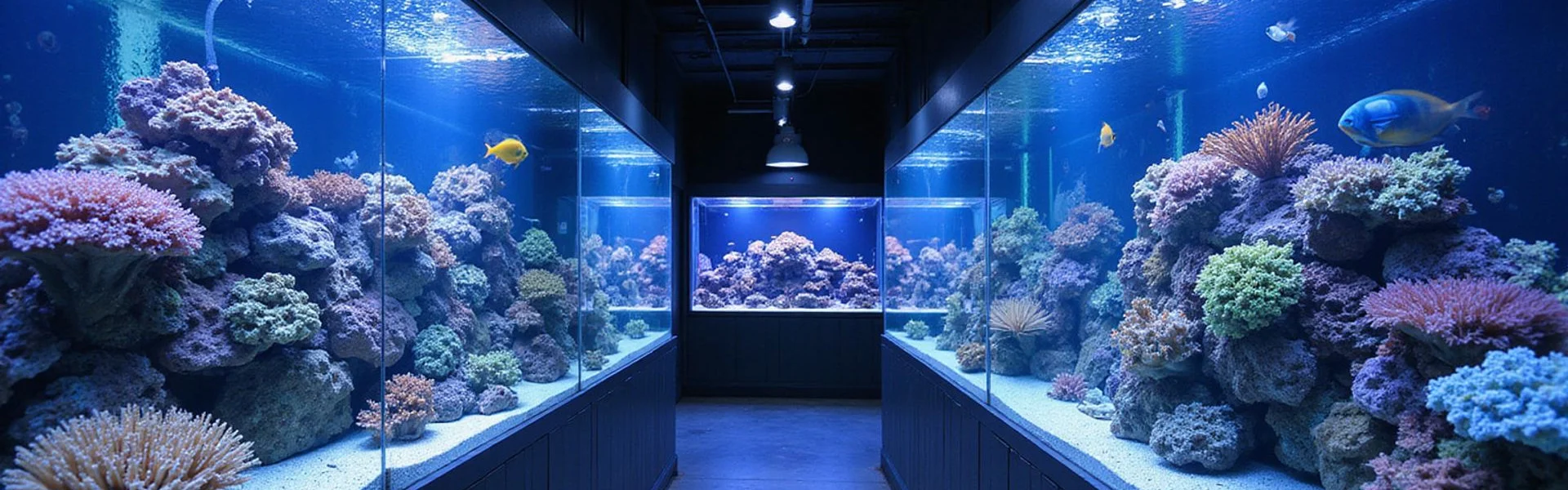
Aquarium Lighting Basics — Freshwater vs Reef
Watts per gallon is dead. Here's how to think about modern aquarium lighting for fish, plants, and corals.
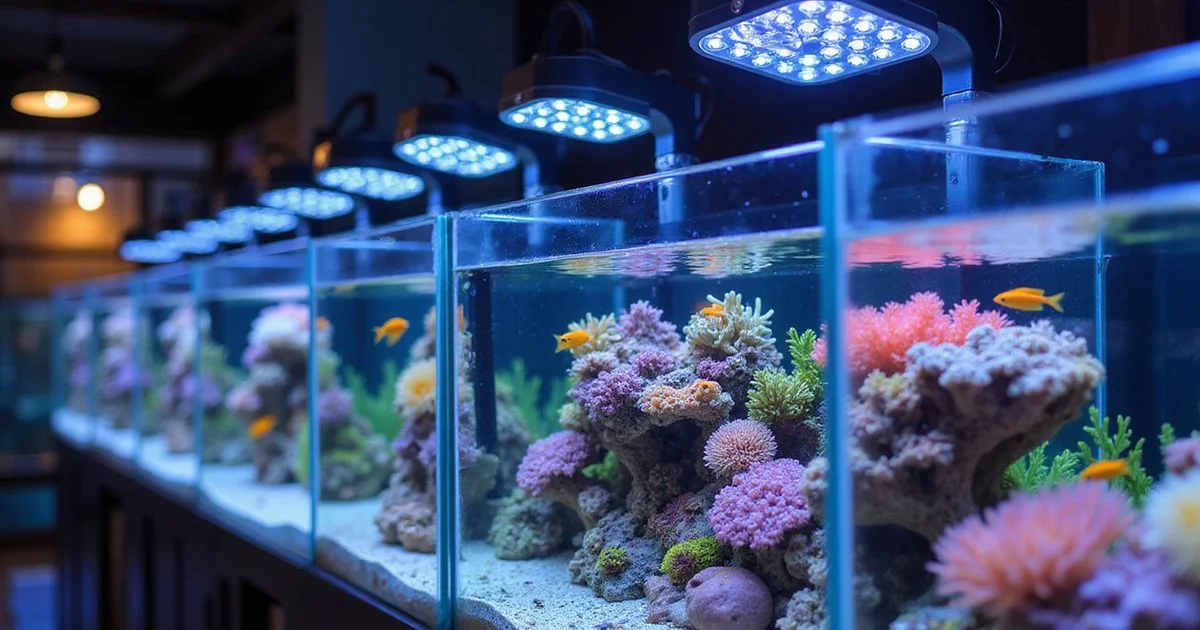
You know how confusing aquarium lighting can get, especially since powerful LEDs became the standard. It feels like you need an engineering degree just to sort through the marketing claims and technical specs.
Our team sees this all the time. A customer comes in with a beautiful tank but is fighting algae or seeing their plants and corals struggle, and the lighting is often the core issue.
The key is understanding that you’re lighting the tank for one of three distinct reasons, and each one has a different measurement for success.
We’re going to walk through the goals for each type of aquarium, the specific lighting you need to achieve them, and the common mistakes we see that can easily be avoided.
Three goals, three measurements
You light an aquarium for one of three reasons, and it’s critical to match the light to the job.
- Visual Appeal: This is all about making your fish look good. We measure this with the light’s spectrum and its color temperature, which is rated in Kelvin (K). A higher Color Rendering Index (CRI), a score out of 100, also indicates how accurately colors will appear.
- Plant Growth: This is about providing energy for photosynthesis. While loosely related to brightness (lumens), the precise measurement is Photosynthetically Active Radiation, or PAR.
- Coral Growth: Corals also rely on photosynthesis from the symbiotic algae called zooxanthellae living in their tissues. PAR is the essential measurement here as well.
For a tank that only houses fish, the lighting is purely for visual enjoyment. Once you add live plants or corals, you need a light fixture that delivers the right kind and amount of energy for them to thrive.
Fish-only freshwater lighting
For a fish-only aquarium, any decent LED fixture will do the job. Your goals are simple: make sure the tank is bright enough to see everything clearly and that the light’s color temperature brings out the best in your fish.
Color temperature. We recommend a range between 6500K and 8000K. This mimics natural daylight and offers a clean, bright look. Fixtures that are 10000K or higher can create a sterile, “icy” blue appearance that washes out the warm reds and oranges in many popular fish.
Spectrum. The standard white LEDs in most fixtures are perfectly fine. Some models, like the Fluval Aquasky 2.0, include separate red and blue LEDs that you can adjust. These let you fine-tune the look and make specific fish colors pop.
Brand picks. Good, reliable options we often recommend are the Fluval Aquasky or the Marineland LED Hidden Hood Light. Both fall in the $40 to $100 range and provide excellent visual lighting for this purpose.
Planted freshwater lighting
Live plants require both a sufficient quantity of light (measured in PAR) and a specific light spectrum to fuel their growth.
Spectrum. Look for fixtures specifically marketed for growing plants or those labeled “full spectrum.” A key indicator is the inclusion of dedicated red and blue LED diodes, not just white ones. Plants primarily use light from the red and blue parts of the spectrum for photosynthesis, a measurement known as PUR (Photosynthetically Usable Radiation).
Brightness target. The amount of light you need depends entirely on the plants you want to keep. We use PAR readings at the substrate level as our guide.
| Plant Difficulty | PAR Target (at substrate) | Example Plants |
|---|---|---|
| Low-Light | 30 to 50 PAR | Anubias, Java Fern, Cryptocoryne |
| Medium-Light | 50 to 100 PAR | Amazon Sword, Vallisneria, most stem plants |
| High-Light | 100+ PAR | Monte Carlo, Dwarf Hairgrass, demanding red stems |
Brand picks.
- Budget: The NICREW and Hygger brands offer great entry-level fixtures for $30 to $60. They provide enough power for low to medium-light plants.
- Mid-range: The Fluval Plant 3.0 is our most commonly recommended light for serious planted tanks, priced from $120 to $200. Its main advantage is the FluvalSmart app, which gives you complete control over the spectrum and schedule from your phone.
- High-end: For aquascaping professionals, the Twinstar S series is a top choice. Starting at $300, these lights are known for their high CRI that renders plant colors with incredible vibrancy.
A common mistake we see is running a powerful light at 100% intensity from day one. This is a primary cause of algae blooms. Our team suggests starting at 50% to 60% power and slowly increasing it over several weeks as your plants settle in.
Saltwater FOWLR lighting
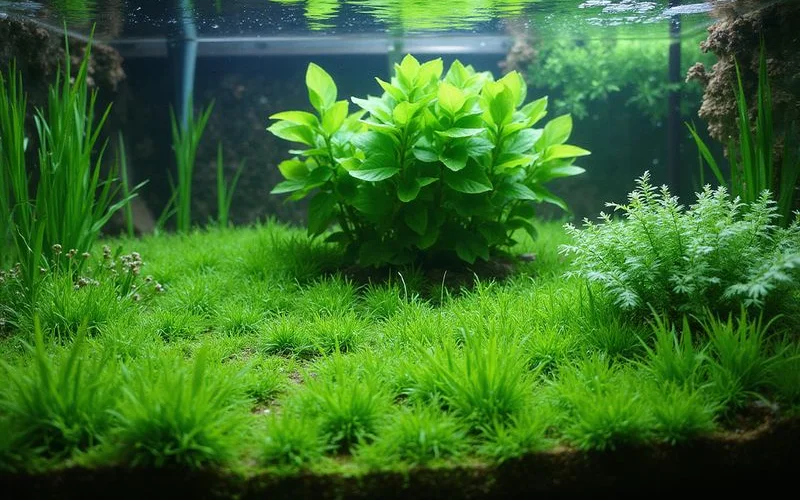
A FOWLR (Fish-Only-With-Live-Rock) tank has lower lighting demands than a full reef setup. The main goals are to enhance fish coloration and provide a spectrum that supports the beneficial life on your live rock, like coralline algae.
An actinic blue spectrum, typically around the 420-460nm wavelength, is key here. It makes fluorescent pigments in fish shimmer and encourages the growth of purple and pink coralline algae.
Brand picks. The Current USA Orbit Marine ($150 to $200) or the Marineland Reef Capable LED ($150) are excellent choices. You should avoid high-end, reef-grade fixtures for these tanks, as you’d be paying a premium for PAR levels your tank simply doesn’t need.
Reef lighting
This is where your lighting choice has the biggest impact. The health, growth, and coloration of your corals are directly tied to getting the right PAR levels with the proper spectrum. It’s the most critical piece of equipment for a successful reef tank.
For a full breakdown of coral needs, you can read our guide on coral lighting requirements with PAR targets.
Here is a quick summary of brands we trust at different levels.
| Tier | Brand/Model | Best For |
|---|---|---|
| Budget Reef | Current USA Orbit Marine | Soft corals and low-light LPS corals only |
| Mid-Range | AI Prime 16HD, Kessil A360X | Mixed reefs with LPS and some SPS corals |
| High-End | AI Hydra 32/64, EcoTech Radion G6 | Demanding SPS corals and deeper tanks |
A common mistake for new reefers is “spectrum chasing.” High-end lights from AI and EcoTech offer nearly infinite control via apps like Mobius. Constantly changing the color and intensity stresses corals. We advise our clients to pick a proven professional schedule, like the popular AB+ spectrum setting, and stick with it for several months to allow corals to acclimate properly.
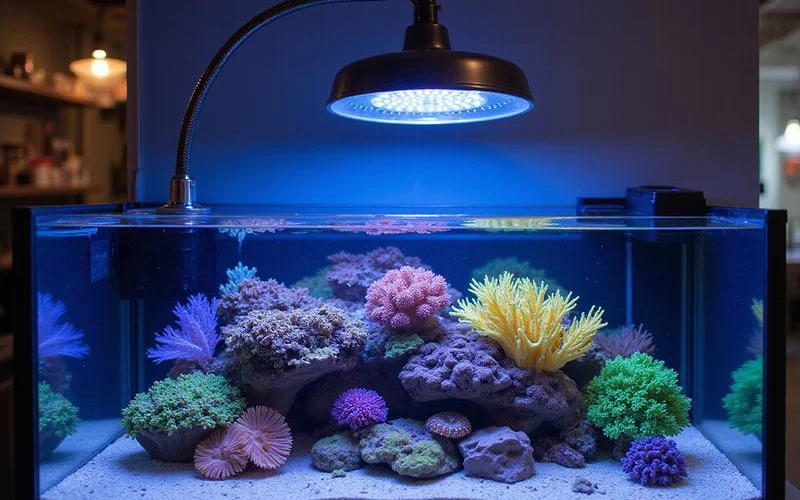
Photoperiod
For most freshwater and reef tanks, a daily light cycle, or photoperiod, of 8 to 10 hours is ideal. This should include a 30 to 60-minute ramp-up and ramp-down period to simulate sunrise and sunset.
A typical schedule looks like this:
- 8:00 AM: Blue lights begin to ramp up.
- 9:00 AM: The light reaches its full programmed intensity.
- 5:00 PM: The ramp-down sequence begins.
- 7:00 PM: All lights are off for the night.
Modern programmable LEDs, like the Fluval Plant 3.0, Kessil, and AI models, handle this scheduling and ramping automatically through their apps. If your light doesn’t have this feature, a simple $20 digital outlet timer, like those from BN-LINK, will work just fine.
Common mistakes
We regularly help customers troubleshoot issues that come down to a few common lighting mistakes.
- Too long photoperiod. Running lights for 12 hours or more doesn’t help plants or corals grow faster, it just gives algae a huge competitive advantage.
- Too short photoperiod. Less than 6 hours of light a day is usually not enough for photosynthesis.
- No ramp period. A sudden blast of high-intensity light can be very stressful for fish and corals, especially any new additions to the tank. Use the ramp feature if you have it.
- Right fixture, wrong height. Light intensity decreases significantly with distance. A light that provides high PAR at 8 inches might provide low PAR at 16 inches. Always follow the manufacturer’s mounting height recommendations for your specific tank depth.
- Wrong spectrum. A simple 6500K white LED from a hardware store won’t provide the specific red and blue wavelengths plants need. Similarly, a pure blue actinic light won’t properly support most corals on its own.
When to upgrade
Sometimes, the light that came with your starter kit just isn’t enough. Here are signs that your lighting may be inadequate for what you’re trying to keep.
- Your plants look “leggy,” with long stems and lots of space between the leaves as they stretch towards the light.
- Your corals are turning brown. This is a sign they are creating extra zooxanthellae to compensate for low light, which masks their natural color.
- Corals are receding from their base or are failing to open their polyps.
- You have a persistent algae problem, yet your plants or corals are not growing well.
Get sized
For our aquarium equipment selection, we carry a wide range of lighting options from all the tiers mentioned above.
Bring in your tank dimensions, let us know what you plan to keep (fish-only, a low-light planted tank, or an SPS-dominant reef), and tell us your budget. Our team will match you with the right fixture. We even have an Apogee PAR meter in-store to test your current setup so you know exactly what you’re working with.
For more detailed information on related equipment, see our guide on coral lighting requirements. You can also learn about pairing the right filter in our aquarium filter sizing guide or find the correct heater with our guide to heater wattage by tank size.